



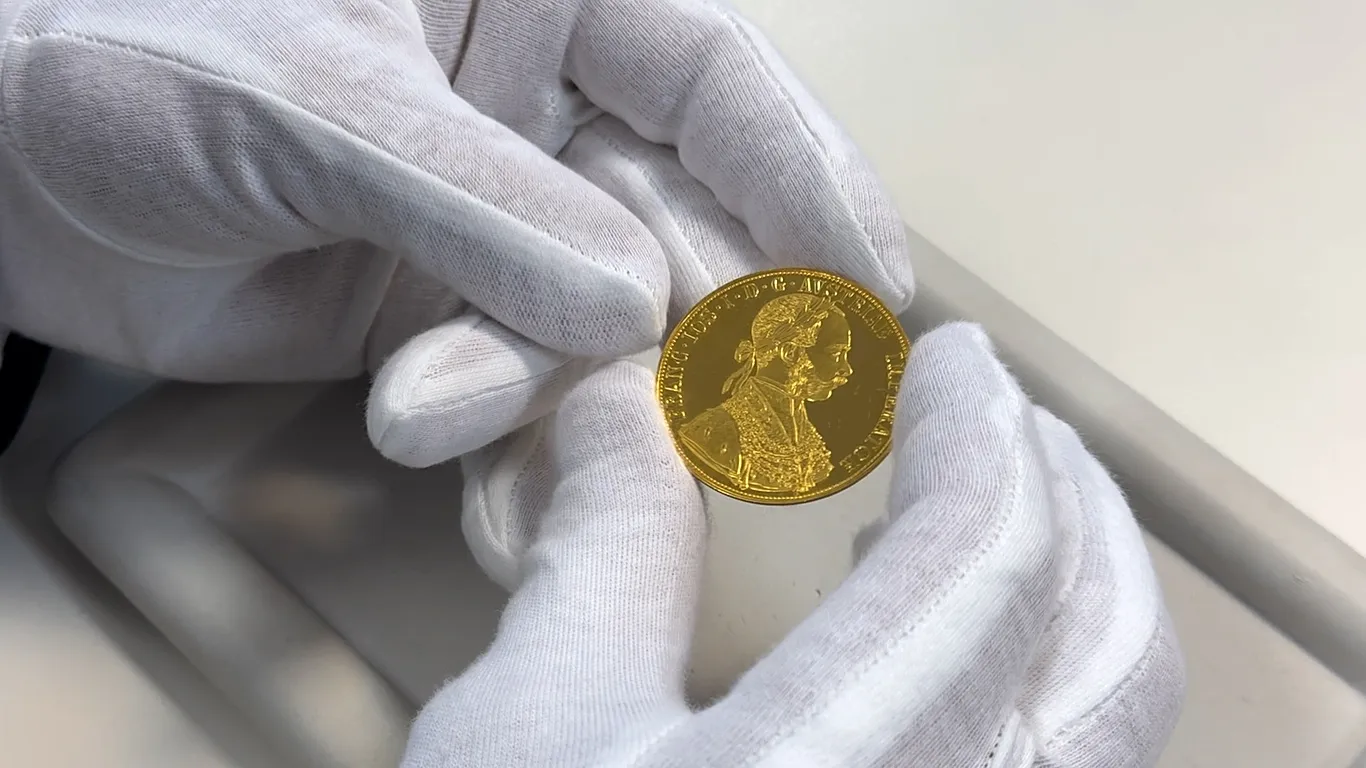

Escalating geopolitical tensions in the Middle East are driving investors around the world to seek safety in physical gold, as prices surge to historic highs and demand for bullion bars and coins accelerates.London
Following recent US and Israeli strikes on Iran, gold prices climbed to a record $5,420 per ounce, triggering a sharp flight toward traditional safe-haven assets.
Buyers in Shanghai were reportedly paying premiums of about $30 above market prices, reflecting a surge in demand for physical bullion.
Industry leaders say the shift toward tangible assets has been immediate and significant.
Pawel Mazurek, president of Poland’s Mazovia Mint, said orders for gold bars and coins spiked shortly after the strikes.
“Some purchases are for hedging purposes, but some are unfortunately driven by emotions and fears of escalation,” Mazurek said.
According to Mazurek, similar patterns were observed at the outbreak of the war in Ukraine in 2022, when demand for gold rose dramatically as investors rushed to secure assets perceived as safe during crises.
“We saw an exponential increase in interest in buying gold, with queues forming outside the company,” he recalled. “The war was a factor that influenced people to buy gold en masse in panic.”
Recent figures suggest the trend has continued to grow steadily. Data from Forex Club indicates that 21% of Poles began investing in gold in 2025, with most entering the market between April and November.
Mazurek said demand at the Mazovia Mint has increased by 30% to 50% annually, primarily driven by individual buyers. Smaller gold bars ranging from 1 to 50 grams, along with bullion coins, have become the most popular entry points for new investors.
Despite the growing interest, Poland still trails other European countries in private gold ownership. Analysts estimate that 10% to 15% of Poles hold gold in their investment portfolios.
In Germany, private households possess significantly larger reserves, estimated between 9,000 and 9,300 tonnes, exceeding the Bundesbank’s holdings of around 3,350 tonnes.
By comparison, Poland’s central bank holds roughly 550 tonnes, while private citizens collectively own between 200 and 500 tonnes.
Globally, private gold ownership remains heavily concentrated in Asia. India leads with an estimated 26,000 to 34,600 tonnes, largely in the form of family jewelry passed through generations. China holds between 23,000 and 31,000 tonnes, while the United States is estimated to hold around 26,000 tonnes.
Turkey has also emerged as a major buyer in recent years. According to the World Gold Council, Turkish purchases reached 80 tonnes in 2022, driven by soaring inflation and declining trust in the national currency.
Meanwhile, central banks worldwide have been increasing their gold reserves for four consecutive years. Institutions across Europe, China, and India are accumulating bullion as part of efforts to diversify reserves and reduce reliance on the US dollar.
Financial analysts believe this institutional trend is influencing private investors.
“Since central banks are making such large purchases and keeping large stockpiles of physical gold, it sends a signal that individuals should also consider securing their wealth in bullion,” Mazurek said.
Experts also highlight practical advantages of physical gold, including portability, tax benefits under European Union regulations, and global liquidity.
In times of crisis, these qualities become especially valuable. During the 2022 war in Ukraine, many refugees carried gold jewelry or coins when fleeing the country because the assets were compact and easily transportable.
With gold ending 2025 near $4,000 per ounce and analysts forecasting prices potentially exceeding $6,000 by the end of 2026, market observers believe the global appetite for physical bullion is likely to remain strong as geopolitical uncertainty persists.