



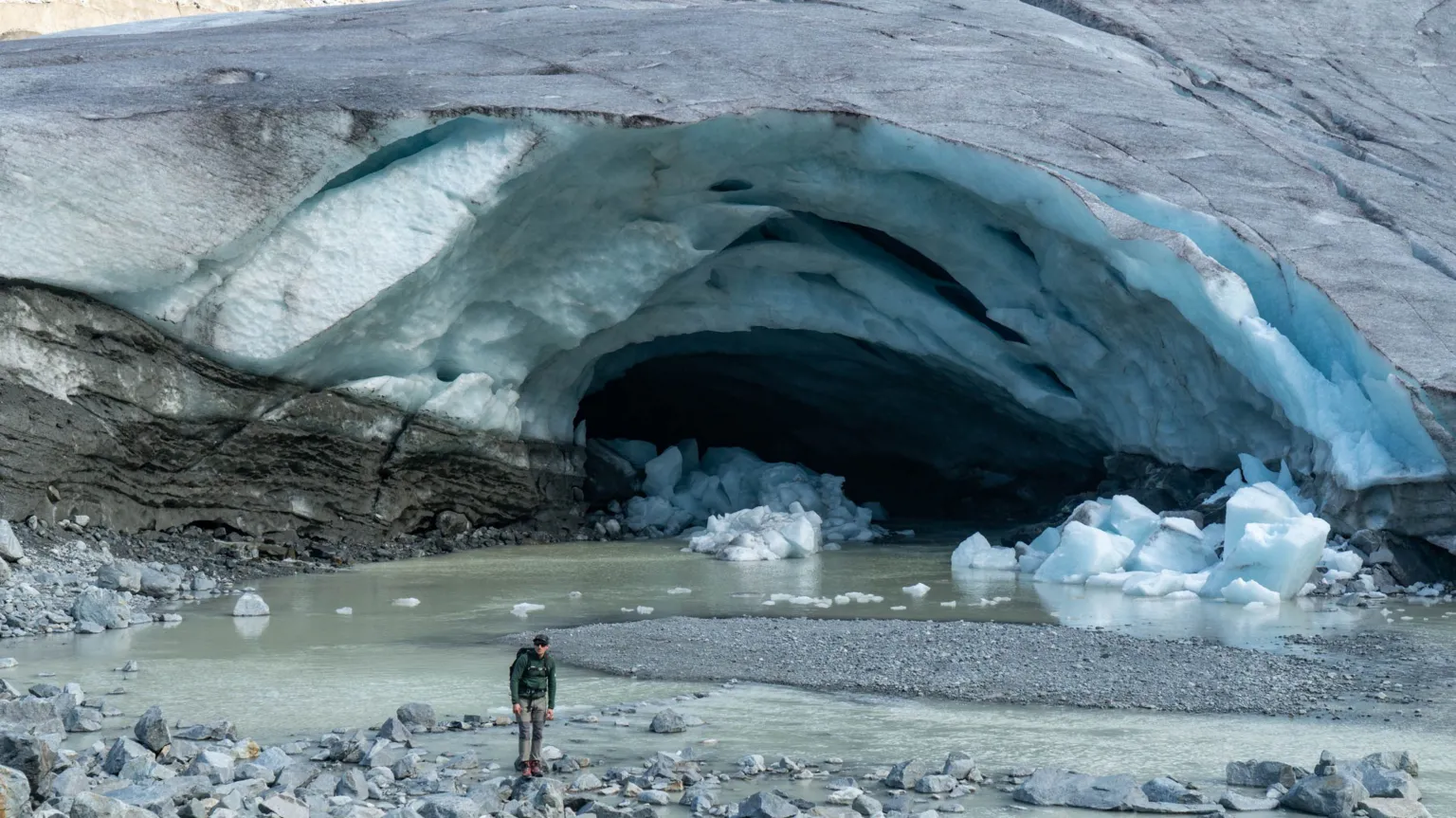

Switzerland’s Alpine glaciers face unprecedented ice loss as repeated summer heatwaves accelerate melting across high-altitude mountain regions
Switzerland’s glaciers have experienced an extraordinary loss of ice over the past year, with researchers estimating that around 5.5% of the country’s remaining glacier volume disappeared as intense summer heatwaves accelerated melting across the Alps
The scale of the decline has alarmed glaciologists because annual losses of this magnitude were previously considered exceptional. Researchers monitoring Switzerland’s glaciers say the latest figures demonstrate how rapidly warming conditions are transforming Alpine landscapes and threatening the long-term survival of many glaciers.
According to Glacier Monitoring Switzerland, more than 5% of the country’s remaining glacier ice disappeared during the latest measurement period. Scientists described the estimated 5.5% loss as extraordinary, particularly because the melting occurred across glaciers and at elevations previously considered comparatively resilient.
Until recently, Alpine glaciologists regarded the loss of approximately 2% of glacier ice in a single year as an extreme event. The latest figures therefore represent a dramatic escalation, reflecting the increasingly severe conditions affecting glaciers throughout Switzerland during recent summers.
Dr Matthias Huss, director of Glacier Monitoring Switzerland, described the latest situation as disastrous. He said the speed of ice loss was particularly concerning, although the increasingly rapid deterioration is consistent with what climate scientists have expected as global temperatures continue rising.
Swiss glaciers entered the summer already weakened by unusually low snowfall during a mild winter. The limited snow cover was then rapidly removed during intense heatwaves in May and June, exposing large areas of darker glacier ice to stronger solar radiation.
Fresh snow reflects much of the Sun’s energy, helping protect the ice beneath it. Once the snow disappears, exposed glacier ice absorbs more energy, increasing melting and creating conditions that can accelerate further ice loss during subsequent periods of unusually high temperatures.
Dr Fabien Maussion, a glaciologist at the University of Bristol who was not involved in the Swiss report, said the speed of the recent changes would have been difficult to imagine a decade ago. However, he said they were consistent with climate science projections.
The effects extend beyond the disappearance of spectacular Alpine landscapes. Glaciers act as natural water reservoirs, storing precipitation as ice for years, decades or even centuries before releasing meltwater during warmer and drier periods when rivers and communities can depend on additional supplies.
Researchers estimate that Swiss glaciers released around 2.2 trillion litres of meltwater between July and September. That enormous volume helped reduce water shortages during a hot and dry summer, but scientists warned that the temporary benefit comes at the cost of diminishing long-term reserves.
Meltwater contributes to irrigation, hydropower generation and river systems that support transportation. The Rhine, one of Europe’s major waterways, reached record low levels in some locations during the summer, affecting navigation and increasing transport costs as unusually dry conditions reduced available water.
Scientists caution that increasingly rapid glacier loss could eventually reverse the temporary benefits created by additional meltwater. As glaciers become smaller, their capacity to release large quantities of stored water during future heatwaves will also decline.
“Every drop” released during extreme heat represents water that was stored in glacier ice for decades or centuries, Huss explained. The process can provide immediate relief, but it cannot continue indefinitely because the frozen reserves are being progressively depleted.
The latest observations are particularly concerning at high elevations. Researchers found that even around 3,500 metres above sea level, where temperatures are normally lower and glaciers traditionally retain substantial snow cover, some measurement locations had no snow remaining by the end of summer.
At certain glaciers, scientists recorded as much as four metres of ice loss at their highest measured points. Under normal conditions, these areas would be expected to retain several metres of winter snow, which provides essential protection and eventually contributes to rebuilding glacier mass.
Snow is effectively the source material that allows glaciers to survive. When accumulated snow survives through summer, it can gradually compress into dense ice. If it disappears before winter arrives, however, the glacier cannot replace the ice being lost lower down.
This imbalance causes glaciers to shrink progressively. Glaciers gain mass at higher elevations and move downhill, creating a complex system governed by temperature, snowfall, precipitation and ice movement. But sustained warming increasingly disrupts that balance, leaving many Alpine glaciers with insufficient replenishment.
Some Swiss glaciers have already disappeared completely. Plattalva in eastern Switzerland is among the glaciers that researchers say have vanished, illustrating how warming conditions are moving individual Alpine ice bodies beyond their ability to recover.
The consequences may also extend to mountain stability. Long-term glacier thinning and the thawing of permanently frozen ground can weaken slopes, increasing the potential for rockfalls and landslides in vulnerable areas. In extreme circumstances, such failures can contribute to destructive flash floods.
Scientists have observed similar risks elsewhere in mountainous regions, including the Himalayas. A major collapse involving bedrock and glacier ice in Nepal in August highlighted how unstable high-altitude environments can produce sudden and dangerous downstream consequences, although multiple factors contributed to that event.
The Swiss experience also provides a visible indicator of broader climate change. Researchers say the primary driver of the long-term warming responsible for accelerating glacier retreat is the accumulation of greenhouse gases, particularly emissions associated with the continued burning of fossil fuels.
Despite the alarming figures, scientists stress that the future is not predetermined. Strong reductions in carbon emissions could still limit the amount of glacier ice lost globally, particularly in regions containing enormous ice reserves such as the Himalayas and polar areas.
Protecting those ice masses could help limit future sea-level rise and preserve freshwater resources for populations dependent on mountain water. However, Swiss researchers warn that many smaller Alpine glaciers are already experiencing conditions that make continued survival increasingly difficult.
The latest measurements therefore represent more than another annual record of retreat. They reveal how quickly the Alpine cryosphere is changing, while highlighting the consequences for water resources, ecosystems, infrastructure and communities that depend on stable mountain environments.
As temperatures continue to rise, Switzerland’s glaciers are becoming increasingly important indicators of a changing climate. Their rapid disappearance offers scientists a stark measurement of warming already underway, while demonstrating that the consequences extend well beyond the mountains themselves.