



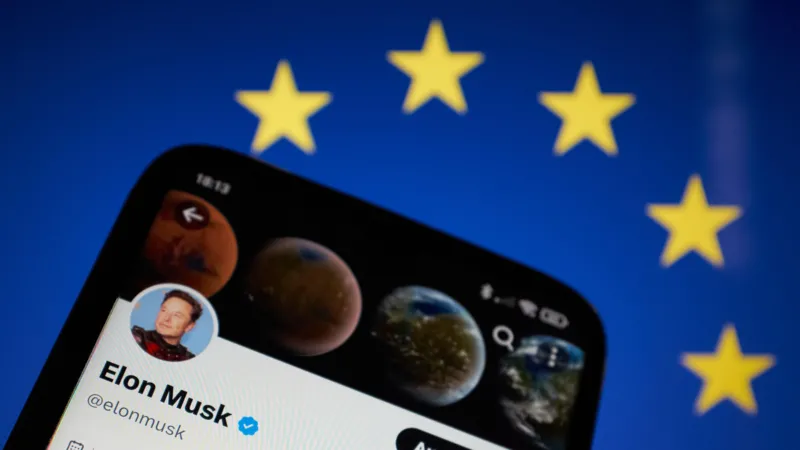

X has blocked the European Commission from advertising on its platform, just days after EU regulators imposed a €120m (£105m) fine over the company’s controversial blue tick verification system. The move deepens tensions between the Elon Musk-owned platform and European authorities.
The advertising block was confirmed after Nikita Bier, a senior product figure at X, publicly accused the European Commission of misusing the platform’s advertising tools. He claimed the regulator attempted to exploit a rarely used feature to boost visibility of a post announcing the fine.
“It seems you believe that the rules should not apply to your account,” Bier wrote on X. He added that the Commission’s advertising account had been terminated, accusing it of behaviour never previously seen on the platform.
The European Commission rejected those accusations. A spokesperson told BBC News that the institution “always uses all social media platforms in good faith” and was merely operating within the tools provided to corporate accounts by platforms themselves.
The dispute follows Friday’s announcement that X had been fined €120m under the European Union’s Digital Services Act (DSA). It marked the first major enforcement action taken under the landmark legislation designed to regulate large online platforms.
According to the Commission, X’s blue tick system was deceptive because it no longer meaningfully verifies users’ identities. Instead, users can obtain the symbol by subscribing, which regulators say undermines its original purpose.
“This deception exposes users to scams, including impersonation frauds, as well as other forms of manipulation by malicious actors,” the Commission said in a statement outlining the reasons for the fine.
EU regulators also accused the platform of failing to meet transparency requirements around advertising. They said X does not provide sufficient information on who pays for adverts or how they are targeted.
In addition, the Commission said the platform had restricted access for researchers seeking public data, limiting independent scrutiny of potential risks such as misinformation and manipulation.
Under the DSA process, X has 60 days to respond formally to the Commission’s findings. If it fails to address the concerns, it could face additional financial penalties or further regulatory action.
Elon Musk reacted sharply to the decision. Posting on X, he said the European Union “should be abolished” and reshared posts comparing EU regulation to fascism, escalating the political tone of the dispute.
Support for Musk also came from parts of the US government. Secretary of State Marco Rubio and the Federal Communications Commission accused the EU of targeting and censoring American technology companies.
“The days of censoring Americans online are over,” they said, framing the enforcement action as an attack on free expression rather than consumer protection.
Bier, meanwhile, claimed the controversy began when the Commission activated an old advertising account to amplify its enforcement announcement. He said the post included a link that appeared to be a video, allegedly misleading users and increasing reach.
He described this practice as an “exploit” that had “never been abused like this,” adding that X has since removed the feature from the platform.
Advertising accounts on X operate separately from personal or organisational profiles. They allow businesses and institutions to run paid campaigns, analyse performance and promote posts to wider audiences.
The European Commission rejected the accusation, saying it expects platform tools to comply with both internal terms of service and EU law. It insisted it had acted transparently and within established rules.
The clash is the latest in a series of confrontations between X and global regulators. In 2024, Brazil’s Supreme Court lifted a temporary ban on the platform after it agreed to fines and blocked accounts accused of spreading misinformation.
Australia’s online safety regulator also fined X in 2023 for failing to cooperate with investigations into anti-child abuse measures, highlighting ongoing scrutiny of the company worldwide.
As enforcement of the Digital Services Act gathers pace, the dispute signals a potentially prolonged battle between Brussels and Silicon Valley over how power and responsibility are shared in the digital public square.
This article was created using automation technology and was thoroughly edited and fact-checked by one of our editorial staff members