



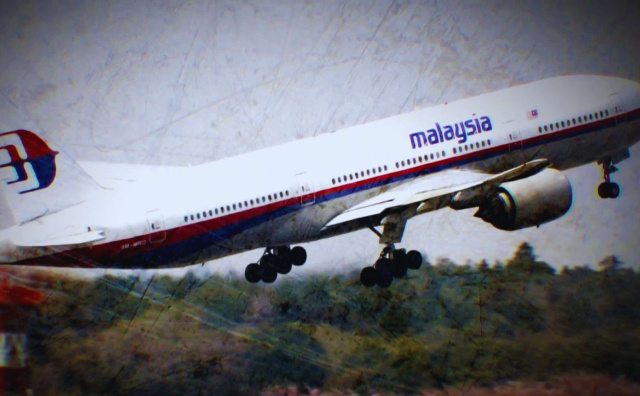

Malaysia will restart the search for Malaysia Airlines flight MH370 on 30 December, marking the most significant renewed effort in years to solve aviation’s most enduring mystery. The Transport Ministry confirmed on Monday that deep-sea operations will resume with US-based Ocean Infinity leading a new 55-day mission in carefully selected high-probability zones.
Officials have not disclosed the precise search coordinates but emphasized that the upcoming campaign will focus on areas assessed using updated modelling, drift analysis and seabed mapping. The search will unfold in phases, allowing teams to narrow down targets as new data emerges during the operation.
MH370 disappeared on 8 March 2014 during an overnight flight from Kuala Lumpur to Beijing. On board were 239 people—12 Malaysian crew and 227 passengers from more than a dozen countries, including China, Malaysia, Australia, India, France, the US and several Southeast Asian nations.
The disappearance triggered one of the largest and most complex search missions in aviation history. Despite extensive efforts across vast stretches of the Indian Ocean, most of the aircraft has never been recovered, leaving families in prolonged uncertainty.
For many relatives, Malaysia’s decision to relaunch a full-scale operation brings renewed hope. Danica Weeks, whose husband Paul was among the missing passengers, said she felt “relieved and grateful” following the announcement.
She expressed optimism that the new search could finally offer clarity to families who have waited more than eleven years for answers. “We’ve held on for so long,” she said. “This may finally lead us to the truth.” Ocean Infinity previously conducted search operations under a “no find, no fee” arrangement, a rare model in maritime investigations.
The company will again be compensated only if it locates the aircraft or its wreckage, with the contract value potentially reaching up to 70 million dollars. The operator briefly resumed work earlier this year, but severe weather and rough seas forced an early suspension.
Malaysia had signaled last year that it was prepared to reopen the investigation if compelling new information surfaced. Officials have now concluded that improved ocean-drift modelling, refined satellite data interpretation and advances in autonomous underwater vehicle technology justify a renewed mission.
The original multinational search, coordinated by Australia, scanned 120,000 square kilometers of the southern Indian Ocean over two and a half years before ending in 2017.
Only small pieces of debris—confirmed or suspected to belong to MH370—have ever been found, including fragments that washed ashore in Tanzania, Mozambique and Madagascar. In 2016, some families even traveled to Madagascar to examine beaches themselves as official efforts stalled.
Malaysia’s 2018 official investigation offered few definitive answers. It concluded that MH370 made a manual turnback after losing contact with air traffic controllers and did not follow its programmed autopilot route.
Investigators ruled out mechanical failure and did not dismiss the possibility of unlawful interference, though they stressed there was no evidence implicating the pilots. The report described the continuing lack of closure for families as “unimaginable in modern aviation.”
The absence of crucial evidence—such as the aircraft’s flight recorders—has long hampered investigators. Experts hope that advances in seabed-scanning capabilities may now make it possible to locate the jet even in difficult terrain.
In its latest announcement, Malaysia’s Transport Ministry said resuming the search underscores the government’s commitment to “providing closure to all affected by this extraordinary tragedy.” Officials added that the operation will be closely monitored and that updates will be shared when significant findings emerge.
As Ocean Infinity prepares to redeploy its fleet of autonomous underwater vehicles, aviation experts say the new mission may represent the best remaining chance to solve the MH370 mystery.
With families nearing twelve years of unanswered questions, expectations remain high that this renewed effort could finally reveal what happened on the quiet March morning when MH370 vanished from radar—and into history.