



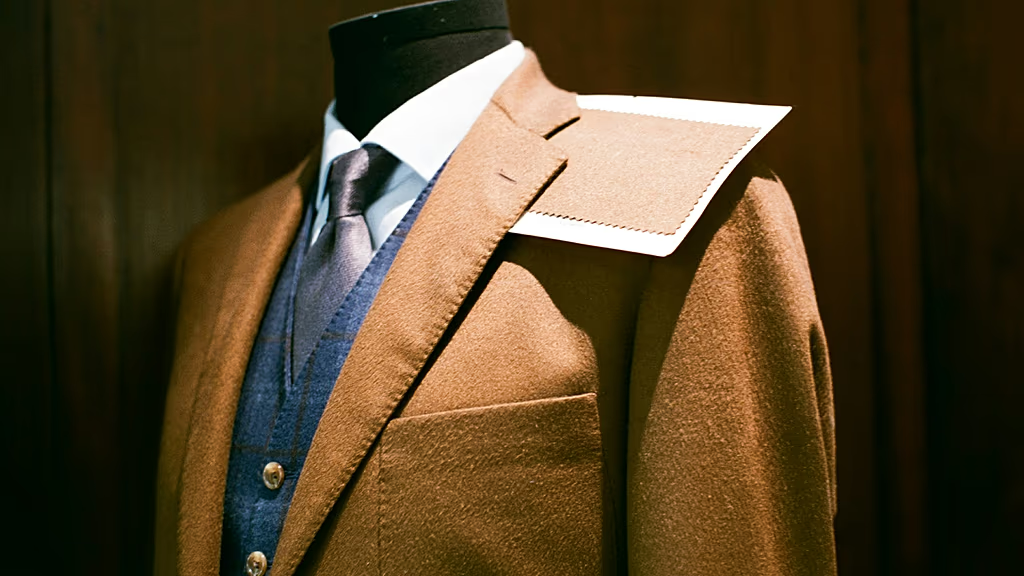

Italy’s world-renowned fashion industry, famed for its leather shoes, wool jumpers, and tailored suits, is confronting a growing crisis. Once the gold standard of global craftsmanship, “Made in Italy” is now under pressure from a declining artisanal workforce and the disruptive rise of artificial intelligence in design.
At the heart of Italian fashion lies a proud heritage of hand-made craftsmanship—an art form that demands years of rigorous apprenticeship. Yet, industry experts warn that the next generation is turning away from the painstaking traditions that made Italian tailoring iconic.
In Naples, where bespoke tailoring defines the city’s identity, independent ateliers that once flourished are now struggling to find apprentices.
“Young people today aren’t attracted to this work,” said master tailor Giuseppe Attolini, who, along with his brother Massimiliano, has dressed global leaders and Hollywood stars. “They’re looking for quick rewards and short career paths, not years of training at a sewing table.”
Across Tuscany’s leather workshops and Piedmont’s wool mills, the story is the same. According to artisan industry group Confartigianato Imprese, over 1,000 clothing and leather companies closed in the second quarter of 2025, citing labor shortages as a major cause.
The overall value of Italy’s fashion industry has fallen from €104 billion in 2023 to an expected €80 billion this year. Adding to the strain is the growing influence of artificial intelligence. While some celebrate AI’s design potential, many fear it undermines the human touch that defines Italian luxury.
“It takes at least five years of apprenticeship and ten to achieve mastery,” said Simone Balducci, president of Federmoda Florence. “Technology cannot replace artisanal intelligence or the emotional connection to the craft.”
Amid these challenges, a vision for renewal is emerging. At the recent Venice Sustainable Fashion Forum, industry leaders called for a fundamental redefinition of what “Made in Italy” means. Transparency and sustainability were central themes, seen as vital to restoring global trust in Italian fashion.
Industry group Confindustria Moda announced plans for a digital platform to trace every step of the production process, helping consumers distinguish authentic craftsmanship from low-quality imports. Meanwhile, the National Chamber of Fashion is developing sustainability standards and certification systems to ensure responsible production.
“A clear message is emerging from Venice,” said Luca Sburlati, president of Confindustria Moda. “Sustainability is not a cost—it is our industrial identity and the true engine of Made in Italy’s competitiveness.”
Despite the grim statistics, many within the industry remain hopeful. With renewed focus on eco-conscious practices and transparent supply chains, experts believe Italy can reclaim its fashion supremacy—provided it can also reignite passion for craftsmanship among its youth.
For now, the future of Italian fashion hangs in the balance, poised between heritage and innovation, tradition and technology. Whether the world continues to value “Made in Italy” may depend on how Italy itself chooses to redefine it.