



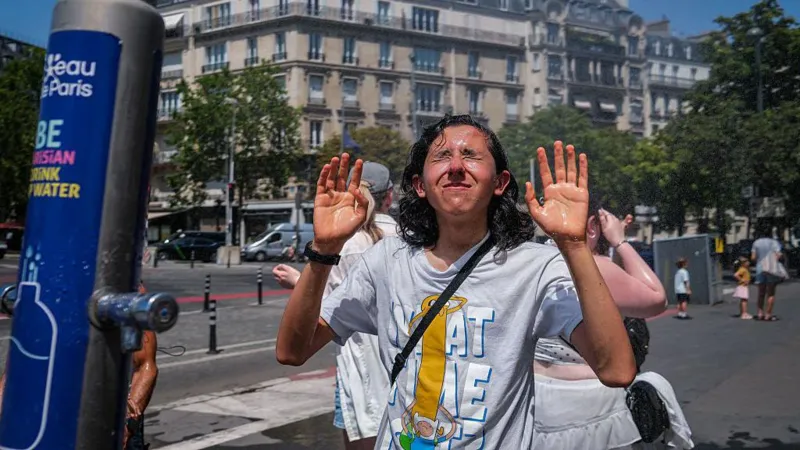

France, Île-de-France: Authorities impose alcohol restrictions across Paris as soaring temperatures overwhelm hospitals and Europe braces for intensifying heatwave conditions
Paris has introduced temporary restrictions on public alcohol consumption and takeaway alcohol sales as French authorities attempt to ease mounting pressure on hospitals during one of the most severe heatwaves to hit Europe in recent years.
The emergency measures, announced by French authorities, prohibit drinking alcohol in public places across the capital from noon on Friday until 07:00 on Saturday. The same restrictions will apply from Saturday afternoon until Sunday morning.
Takeaway alcohol sales will also be suspended from 18:00 to 07:00 during both nights. However, licensed restaurants and bars will continue operating normally.
The restrictions come as temperatures across France remain exceptionally high, placing unprecedented strain on emergency medical services and hospitals already struggling with an influx of heat-related patients.
French Prime Minister Sébastien Lecornu confirmed that the country’s health emergency response had been elevated to its highest alert level under the Orsan emergency plan, enabling hospitals to increase staffing levels and prioritise care for vulnerable residents.
Officials say the enhanced measures are necessary to ensure the healthcare system remains operational as the prolonged heatwave continues.
Paris police chief Patrice Faure warned that hospitals in the capital were approaching their limits.
“We are reaching a saturation point in hospital facilities,” he said while explaining the need for temporary restrictions aimed at reducing alcohol-related emergencies during the extreme weather.
Health officials have repeatedly urged residents to modify their daily routines and avoid unnecessary physical activity during the hottest parts of the day.
French Health Minister Stéphanie Rist stressed that the dangers extend beyond elderly people traditionally considered most at risk during heatwaves.
She warned that younger adults were also suffering serious medical complications, including cardiac arrests linked to prolonged exposure to extreme temperatures.
According to Rist, ambulance services in Paris recorded approximately four times the normal number of cardiac arrest cases over a 24-hour period, although authorities have not yet confirmed the number of deaths directly attributable to the heatwave.
Paris deputy mayor Emmanuel Grégoire also warned that mortality rates were increasing in the capital. Addressing residents, he criticised people continuing to exercise outdoors despite official advice.
“We must not believe we are invulnerable,” he said, recalling seeing numerous joggers on Paris streets during the evening despite dangerous temperatures.
Officials have advised residents to postpone strenuous exercise, remain hydrated and limit outdoor exposure throughout the current heat emergency. The human toll of the heatwave continues to grow.
A three-year-old child was found dead inside a parked vehicle in the Paris region only days after two other young children died in similar circumstances in the southern French town of Carpentras.
Meanwhile, emergency physicians in the north-western city of Rennes reported several suspected heat-related deaths among older residents found in their homes after welfare checks.
Professor Louis Soulas, head of Rennes’ Accident and Emergency department, said emergency services discovered five or six people who had likely succumbed to the extreme temperatures after relatives became concerned when telephone calls went unanswered.
He warned that intensive care units in the region had become saturated due to the surge in emergency admissions. France continues to shatter weather records.
Météo-France reported that average overnight minimum temperatures reached record highs, with cities experiencing unusually warm nights that offered little relief from daytime heat.
Rennes recorded successive daily temperature records exceeding 40 degrees Celsius, while Nantes experienced exceptionally warm overnight conditions. The heat has also affected critical infrastructure.
Three French nuclear power plants have temporarily gone offline because of the extreme temperatures, while western France now faces the additional threat of severe thunderstorms.
Meteorologists have forecast powerful winds reaching 110 kilometres per hour along parts of the Atlantic coast.
The dangerous weather forced organisers to cancel the opening day of the Garorock music festival in the Lot-et-Garonne region, where temperatures could climb as high as 42 degrees Celsius.
Elsewhere across Europe, the heatwave is shifting eastward while maintaining its intensity.
Germany is forecast to experience temperatures approaching 40 degrees Celsius, with national weather officials warning that the current conditions could become one of the country’s most significant heat events on record.
Meteorologists also reported tropical overnight temperatures that matched Germany’s historical records. The Czech Republic has issued extreme weather warnings as temperatures are expected to climb towards 40 degrees during the weekend.
Authorities have urged residents to avoid unnecessary travel, while Czech Railways advised passengers to postpone journeys where possible. Transport disruptions have spread across Europe.
Germany’s national railway operator, Deutsche Bahn, is allowing passengers to cancel tickets free of charge due to the dangerous conditions, while Hamburg’s scheduled half marathon has been cancelled.
Luxembourg has extended its highest thermal stress alert after recording its hottest June temperature, while Switzerland remains under maximum weather warnings because of worsening drought conditions.
Austria is also preparing for temperatures approaching 40 degrees Celsius in Vienna. The Netherlands has activated code red alerts across much of the country amid forecasts of exceptionally high temperatures.
Britain continues to experience dangerous conditions, with the Met Office extending its highest-level temperature warning across London and south-east England. Southern Europe remains under intense heat as well.
Italy expects temperatures exceeding 40 degrees Celsius early next week.
Florence’s world-famous Uffizi museum has suspended general ticket sales after indoor temperatures overwhelmed its air-conditioning system, allowing entry only to visitors holding advance reservations.
Spain, which recorded temperatures above 45 degrees Celsius earlier this week, has already reported more than 200 suspected heat-related deaths over several days, according to its national monitoring system.
Scientists continue to link Europe’s increasingly frequent and intense heatwaves to climate change.
United Nations climate chief Simon Stiell described the current event as another example of the growing impacts of global warming, urging faster investment in renewable energy, stronger forest protection and greater climate resilience.
Climate experts note that Europe is warming at approximately twice the global average rate, increasing the frequency of prolonged heatwaves, severe droughts and destructive wildfires.
As emergency measures expand across the continent, governments continue urging citizens to remain indoors during peak temperatures, stay hydrated and regularly check on elderly relatives and vulnerable neighbours until cooler conditions return.