



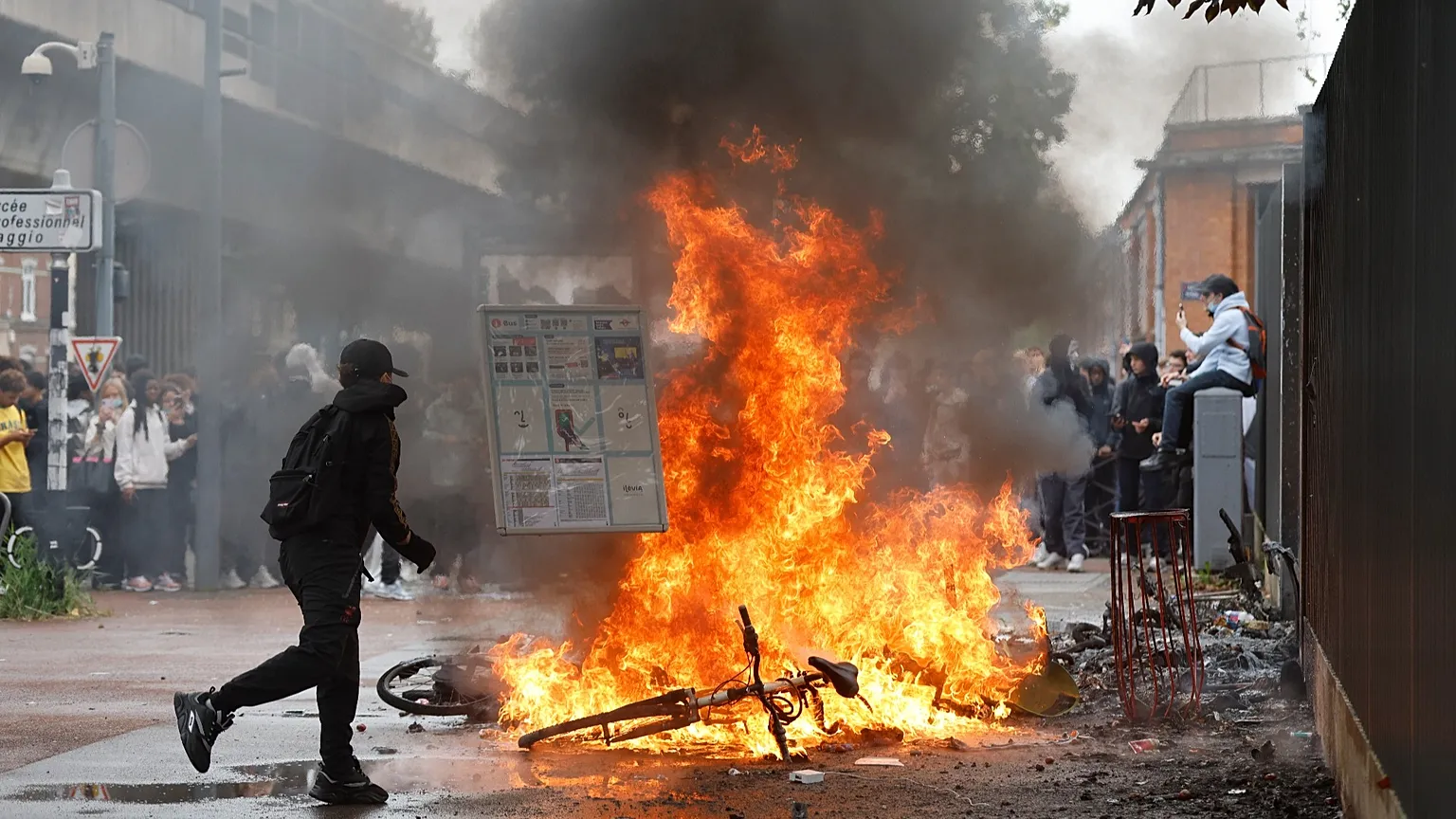

France, Île-de-France: Student blockades spread nationwide as overcrowded classrooms, teacher shortages and violence intensify pressure on authorities
A wave of student protests over overcrowded classrooms, teacher shortages and deteriorating school conditions has spread across France, with demonstrations now affecting hundreds of secondary schools. Authorities have reported arrests, injuries and clashes as blockades intensify in several major cities.
The movement began in the Paris region last week before spreading to cities including Dijon, Lyon, Strasbourg, Lille, Marseille and Nancy. Students have blocked school entrances, erected barriers and, in some locations, confronted police during increasingly tense demonstrations.
The protests have become a major national issue at a sensitive moment for France, coinciding with wider public-sector strikes and preparations for the government’s 2027 budget. Students say education services are struggling with insufficient staffing, overcrowded classes and inadequate facilities.
France’s Education Minister Édouard Geffray has acknowledged that some student complaints are legitimate, while strongly condemning violence accompanying parts of the demonstrations. He said injuries have affected students and school staff, including teachers and principals, during the unrest.
The latest figures reported by Reuters on Wednesday were higher than earlier official estimates. Interior Minister Laurent Nuñez said more than 440 people were detained on Tuesday and another 625 were detained Wednesday, mostly minors, amid nationwide school protests.
Reuters also reported that Geffray had put the number of injured students and staff at 119 since the demonstrations began. Earlier reports had cited 76 injuries, showing how quickly the scale of the unrest has changed as protests spread.
Officials said several incidents involved violence, including projectiles thrown at police and fires outside schools. Nuñez also said authorities recorded seven incidents involving hydrochloric acid being thrown at law enforcement officers, allegations that have further heightened concerns over public safety.
In Strasbourg, firefighters were called after rubbish bins were set alight outside a school, while reports from Dijon described police using tear gas to disperse groups of students. Lille and Lyon also saw confrontations between protesters and police.
One student suffered a serious eye injury near a school in Tours on Wednesday, amid unconfirmed reports that the injury involved a police flashball. Authorities have not established publicly all circumstances surrounding the incident or assigned responsibility for it.
The unrest has also affected teachers. Geffray said several staff members were injured, while reports from Lille described a teacher being attacked after attempting to contact firefighters about a burning bin near a school on Tuesday.
Students insist the protests are primarily about conditions inside classrooms. A 17-year-old student in Saint-Denis told Reuters that schools faced problems including pests and uncomfortable temperatures, while other pupils have highlighted classes containing more than thirty students.
The Secondary School Students’ Union, known as USL, has claimed that hundreds of France’s roughly 3,700 lycées have been affected by blockades. The organisation has called for further mobilisation, including university participation, and announced another national protest.
The protests are particularly visible in Saint-Denis, north of Paris, where students have maintained a blockade at the Lycée Paul-Éluard. Part of the school’s entrance was damaged, while police have remained nearby as demonstrations continued around the site.
Students at the Saint-Denis school told French media that they felt their concerns were being met with tear gas rather than dialogue. They said overcrowding, teacher shortages and deteriorating facilities had created conditions they considered increasingly difficult for learning.
The demonstrations have also acquired a political dimension. Government officials have accused figures from the left-wing La France Insoumise party of encouraging confrontation, while party representatives and local politicians have publicly expressed support for students’ complaints.
Bally Bagayoko, the La France Insoumise mayor of Saint-Denis, appeared alongside protesting students during demonstrations outside the school. His remarks about the possible legitimacy of violence when protesters face police tactics have drawn criticism from political opponents.
Bagayoko has said his comments were taken out of context, while conservative Île-de-France regional president Valérie Pécresse criticised his presence at the protests and called for him to contribute toward damage caused at the school.
Interior Minister Nuñez defended the police response, saying officers had acted in an extremely proportionate manner. His comments came as student groups and some politicians criticised the use of tear gas and other crowd-control measures during school blockades.
The government has sought to separate legitimate concerns about education from violent incidents. President Emmanuel Macron said high schools should remain places for learning and acknowledged that difficulties within the education system need to be addressed.
Prime Minister Sébastien Lecornu had earlier warned that escalating disruptions at schools would be irresponsible, while also recognising that problems affecting secondary education needed to be heard. His comments reflected the government’s effort to balance order with education concerns.
The student movement coincided Tuesday with nationwide industrial action involving teachers, hospital staff, civil servants and other public-sector workers. Reuters reported that the broader demonstrations drew at least 200,000 participants, although most public-sector protests passed without serious incidents.
The wider strikes were linked to opposition to planned government spending reductions and concerns over wages and working conditions. Their overlap with the student protests has given the education demonstrations greater national visibility and placed additional pressure on policymakers.
The government’s 2027 budget is due to be unveiled as the protests continue. Spending reductions are expected to feature prominently, making education funding a particularly sensitive issue for students, teachers and unions demanding additional resources and improved working conditions.
For students involved in the blockades, however, the immediate focus remains schools themselves. They say overcrowded classrooms, missing teachers and poor facilities directly affect daily learning, while authorities insist that disruption and violence cannot become a substitute for dialogue.
The next test for the movement will come with further demonstrations planned across France. Student organisers have called for nationwide action on October 6, raising the possibility that school blockades and clashes could continue unless tensions ease.
As officials assess the damage and investigate injuries, France faces a debate over education resources, policing and public spending. The protests have brought long-standing complaints from students into the national spotlight while exposing disagreements over how those concerns should be addressed.
This article was created using automation technology and was thoroughly edited and fact-checked by one of our editorial staff members