



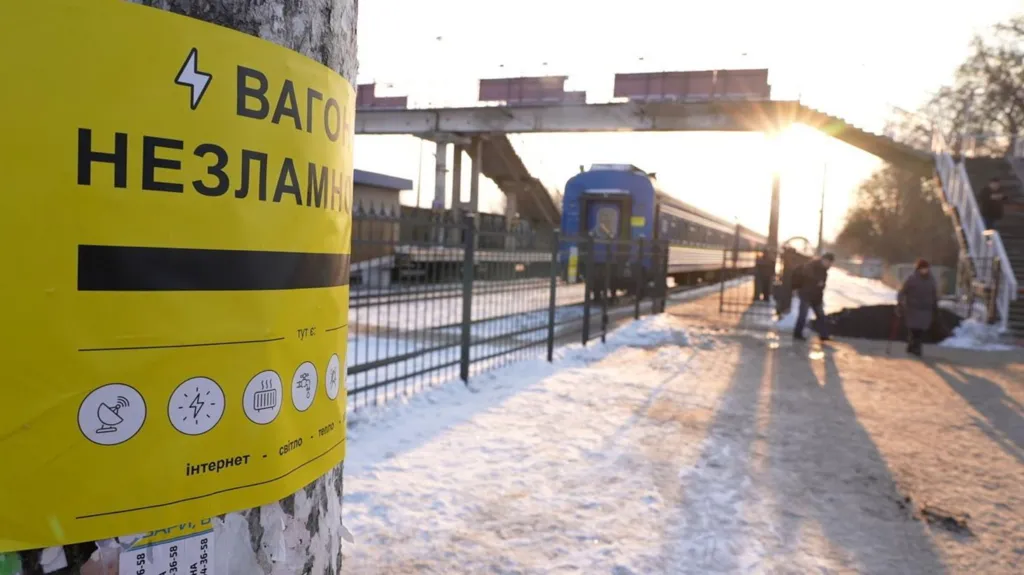

At a suburban railway station in Kyiv, two blue-and-white Ukrainian Railways carriages stand motionless on the platform, diesel engines humming as snow falls steadily around them.
The train is not heading anywhere, but for dozens of residents left without electricity, water or heating, it has become a vital lifeline.
These are Ukraine’s “Invincibility Trains”, mobile shelters designed to boost morale and provide warmth as intensifying Russian strikes collide with one of the harshest winters in years.
Inside, families sit wrapped in coats, charging phones, sipping hot drinks and trying to escape the biting cold outside.
Alina, a young mother, watches her infant son Taras play with donated toys in one of the carriages. Outside, temperatures in Kyiv have plunged as low as minus 19 degrees with wind chill. At home, she says, conditions are unbearable.
“I live on the 17th floor of a new building, but there’s no elevator, no electricity and no water,” she explains. The train, she adds, is not only warm but relatively safe.
Yet her voice falters as she recalls her father, killed two years ago while fighting near Bakhmut. The train offers momentary comfort, but the grief remains close to the surface.
Ukraine’s President Volodymyr Zelensky has accused Russia of deliberately exploiting winter conditions by targeting power stations and energy infrastructure.
Kyiv Mayor Vitali Klitschko recently suggested that residents who can leave the capital temporarily should do so, to ease pressure on strained resources – remarks seized upon by Moscow as evidence of weakness.
Despite the hardship, many Kyiv residents remain stoic. Yulia Mykhailiuk and Ihor Honcharuk are caring for their one-year-old son in a small, temporary apartment after their home was damaged in an August strike.
With electricity available for only minutes at a time, they heat bricks on a gas stove and dress their baby in multiple layers.
“The batteries we bought help charge phones, but they’re useless for heating,” Yulia says. The family plans to leave the city temporarily, not out of fear, she insists, but necessity.
Engineers across Kyiv work around the clock to repair cables and substations damaged by repeated attacks. According to energy experts, frozen ground and overstretched equipment make repairs increasingly difficult, with the system operating close to collapse.
Among those seeking refuge on the train is 11-year-old Stanislav, known as Stas. He remembers the first day of the war and says the sound of drones still keeps him awake at night. “You don’t know if it will explode or fly past,” he says, smiling despite the fear.
As another air raid alert echoes across the city, passengers are ordered to leave the train and head for shelters. Many will return to cold, dark apartments – but most say they will be back tomorrow. In Kyiv, resilience has become a daily routine.