



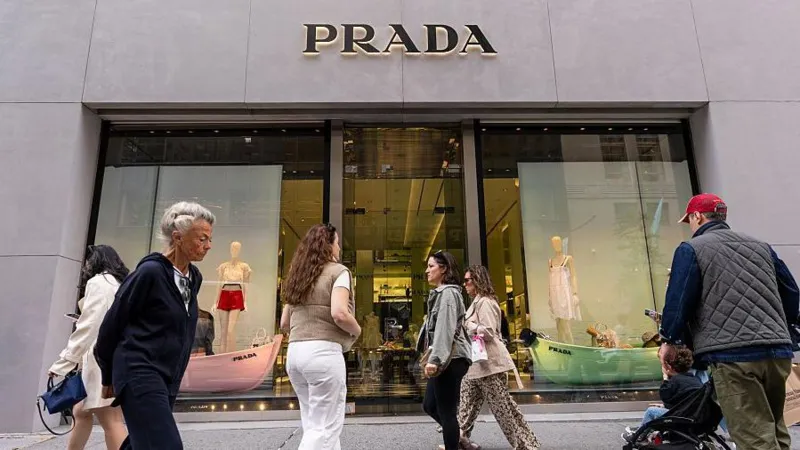

Prada announced on Tuesday that it has completed the $1.38bn (£1.04bn) acquisition of Versace, bringing two of Italy’s most storied luxury fashion houses under one roof.
The deal is significantly lower than the nearly $2bn paid by Capri Holdings when it purchased Versace in 2018. It marks a major strategic move for Prada as it seeks to expand its brand portfolio and sharpen its competitive edge against global luxury giants like LVMH.
With the addition of Versace, Prada strengthens its design empire, which already includes the youth-focused luxury label Miu Miu. Industry analysts say the acquisition positions Prada to better rival French conglomerates that dominate the high-end fashion landscape.
The acquisition also comes during a period of transition for Versace. In March, Donatella Versace stepped down after 27 years as the brand’s creative chief. Known for her bold glamour, high-octane runway shows, and the iconic Medusa logo, she helped steer the brand following the murder of her brother Gianni in 1997.
Her departure marked the end of an era. She was succeeded by Dario Vitale, formerly a design director at Miu Miu, suggesting a creative synergy between the brands even before the acquisition was finalized.
Versace’s recent performance played a pivotal role in the sale. Both the brand and its sister labels under Capri Holdings — Michael Kors and Jimmy Choo — have reported slowing sales in recent years. Despite raising prices and shifting toward a more minimalist aesthetic, Versace struggled to maintain growth, culminating in its sale at a loss of roughly $700m.
Under Capri Holdings’ ownership, the house moved away from its signature ornate designs, opting instead for a more subdued direction. While the shift aligned with global fashion trends, it also diluted the brand identity that had long set Versace apart.
Prada confirmed in a brief statement that it had secured all necessary regulatory approvals and officially completed the acquisition. The move is expected to bring fresh investment and renewed creative vision to the historic label.
For Capri Holdings, the sale offers financial relief. The company said proceeds from the deal would be used to reduce debt, improving liquidity following years of weakened performance.
Capri chief executive John D. Idol noted that the transaction will “substantially strengthen our balance sheet,” emphasizing the necessity of stabilizing the group’s financial position.
Meanwhile, Prada executives have expressed optimism about Versace’s future. CEO Andrea Guerra reiterated the brand’s strong untapped potential earlier this year, while acknowledging the time and discipline required to rebuild momentum.
“The journey will be long and will require disciplined execution and patience,” Guerra said, hinting at a gradual yet ambitious revitalization strategy.
Industry observers say the merger of Prada and Versace creates one of the most powerful luxury alliances in Europe. With Prada’s focus on craftsmanship and innovation and Versace’s legacy of glamour and bold design, the combined group has the potential to reshape the luxury marketplace.
As the brands move forward under shared leadership, the fashion world will watch closely to see how Prada reimagines Versace while preserving the identity that made it a global icon for decades.
This article was created using automation technology and was thoroughly edited and fact-checked by one of our editorial staff members