



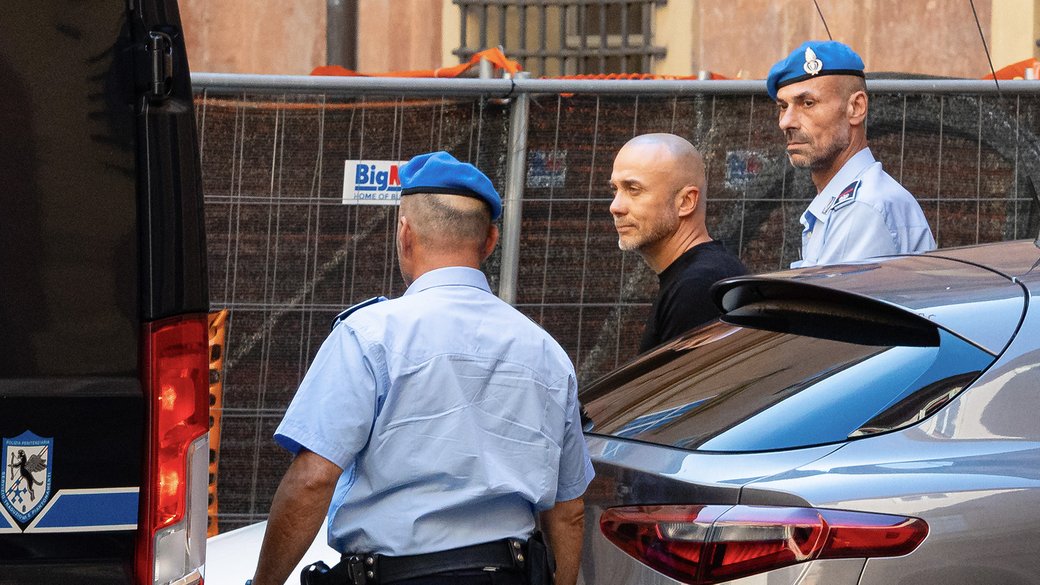

A Ukrainian former military officer has entered the tenth day of a hunger strike in an Italian prison, alleging mistreatment and coercion to confess to the 2022 Nord Stream gas pipeline explosions.
Serhiy Kuznetsov, detained in Italy in August under a German arrest warrant, is accused of involvement in the sabotage of the pipelines that once carried Russian gas to Germany. The high-profile attack under the Baltic Sea remains unsolved, with no party admitting responsibility.
In a handwritten letter shown to the BBC by his lawyer, Kuznetsov said he was being treated as “criminal no.1” and held in a high-security facility alongside suspected Islamic State members. He claimed the Italian authorities were “cynically ignoring” his vegetarian diet to pressure him into confessing.
“They think these restrictions can affect my position and make me confess my guilt. But such efforts are futile,” Kuznetsov wrote.
His family told the BBC they had attempted to deliver food that met his dietary needs but were refused. They expressed concern that he looked “exhausted” and had lost significant weight.
Kuznetsov’s lawyer, Nicola Canestrini, said his client had already lost nine kilograms but remained “clear of mind” despite refusing all solid food. “He is held under maximum restrictions and forced to exercise in isolation under armed guard,” Canestrini said.
The Italian court in Bologna approved Kuznetsov’s extradition to Germany last month during a closed hearing. His appeal against the decision is ongoing, with a final hearing expected in the coming weeks.
German prosecutors have charged Kuznetsov and another Ukrainian, Volodymyr Zhuravlyov, with “anti-constitutional sabotage.” Zhuravlyov, detained in Poland, was spared extradition after a Warsaw court ruled the attack could be considered an act of “legitimate self-defence” amid Russia’s invasion of Ukraine.
Kuznetsov’s lawyer criticized Ukraine for not intervening on his behalf. “He was in the army — if he was there, they should protect him; if not, they should protect him anyway,” Canestrini told the BBC. “He feels abandoned by his own country, like an old boot.”
Ukrainian officials have consistently denied any involvement in the Nord Stream sabotage. The human rights ombudsman in Kyiv, Dmytro Lubinets, said an adviser had been assigned to review Kuznetsov’s case and assess his prison conditions.
In his letter, Kuznetsov wrote that he understood his government’s current focus on ending the war but concluded with a patriotic declaration: “I love Ukraine very much and am happy to have the honour of being an officer in its armed forces.”
His hunger strike and legal battle have drawn attention to the complex intersection of international justice, wartime alliances, and the lingering mystery surrounding one of Europe’s most consequential acts of energy sabotage.
This article was created using automation technology and was thoroughly edited and fact-checked by one of our editorial staff members