




United States, California: MLS aims to convert World Cup excitement into sustained growth through youth development, global stars and expanding fan engagement
Major League Soccer (MLS) is aiming to turn the excitement generated by the 2026 FIFA World Cup into long-term growth, launching an ambitious campaign to attract millions of new football supporters as the league resumes its regular season.
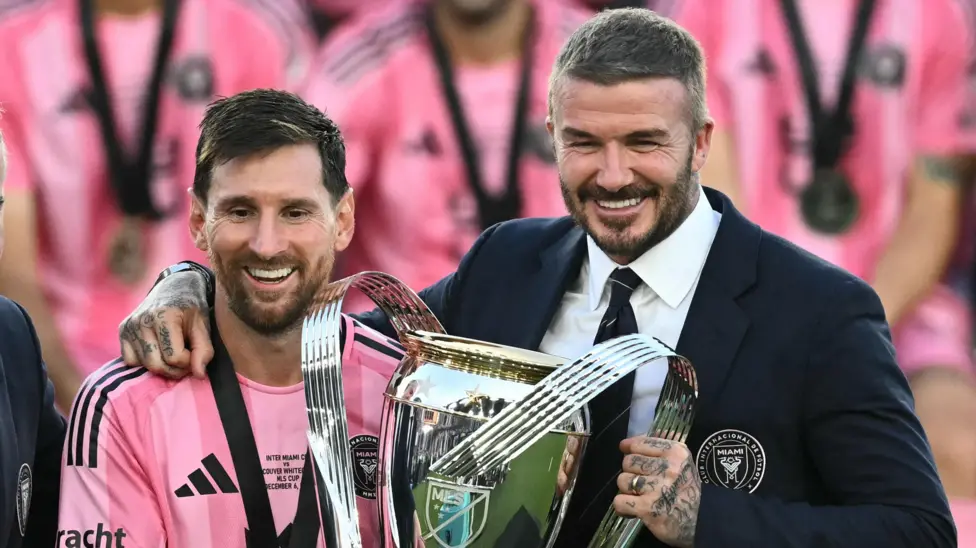
The campaign features some of football’s biggest names, including Lionel Messi, Son Heung-min, David Beckham and several other MLS stars. Their message to new fans is simple: “Thanks world, We’ll take it from here.”
The advertisement encourages supporters inspired by the World Cup to continue following football through MLS, with the league even offering free match tickets to first-time attendees as part of its fan engagement strategy.
MLS executives believe the tournament has significantly increased the league’s visibility across the United States and internationally, presenting what they consider a once-in-a-generation opportunity to accelerate its development.
Executive vice-president Dan Courtemanche, who has been with the league since its inception in 1995, said the World Cup had introduced millions of people to Major League Soccer.
According to Courtemanche, the organisation intends to build on that momentum by converting casual viewers into regular supporters while expanding the league’s commercial and sporting influence.
The World Cup itself highlighted football’s growing popularity across the United States. Stadiums remained packed throughout the tournament despite concerns over expensive ticket prices, while television audiences reached historic levels.
The United States’ round-of-16 defeat to Belgium attracted more than 33 million viewers on Fox, making it the most-watched football match ever shown on a single American television network.
That record was later surpassed when England’s victory over Mexico attracted a combined audience of approximately 45 million viewers across English-language broadcaster Fox and Spanish-language network Telemundo.
Although those figures remain below the audience generated by the NFL’s Super Bowl, they demonstrate football’s growing appeal in a country traditionally dominated by American football, baseball and basketball.
MLS itself is a product of an earlier World Cup legacy. FIFA required the United States to establish a professional football league after awarding the country hosting rights for the 1994 World Cup.
The league officially began in 1996 with only ten clubs and no football-specific stadiums. Three decades later, MLS has expanded to 30 teams, with nearly every club playing in a purpose-built venue designed specifically for football.
League commissioner Don Garber believes MLS has already become one of the world’s strongest commercial football competitions, but acknowledges that further sporting progress is needed.
Garber said the league has successfully established itself as a commercial success and is now focused on matching that achievement through improved on-field quality and player development.
One sign of the league’s increasing international relevance was its representation at the 2026 World Cup, where 45 MLS players competed for their national teams. Among them were Argentina’s Lionel Messi and Rodrigo De Paul, who both featured in the World Cup final while representing MLS clubs.
For years, MLS earned a reputation as a destination for ageing superstars nearing retirement, welcoming famous players after successful European careers.
However, league officials argue that image no longer reflects reality. Courtemanche noted that the average age of newly recruited international players has fallen to just 23.8 years, highlighting a greater emphasis on younger talent.
Many of those players continue to view Europe as their long-term destination, but MLS increasingly serves as an important stepping stone in their professional development.
Beginning in 2027, MLS will also adopt a summer-to-spring calendar that aligns more closely with European football seasons, making international transfers smoother and reducing scheduling conflicts.
Youth development has become another central pillar of the league’s long-term strategy. Every MLS club now operates its own academy, providing structured development pathways for promising young footballers.
At Los Angeles Galaxy’s public viewing event during the World Cup, children could be seen playing football on nearby pitches instead of simply watching the match, illustrating the sport’s growing popularity among younger generations.
Eight-year-old Landon, named after American football legend Landon Donovan, dreams of one day representing Los Angeles FC after attending MLS youth camps and competing in travel leagues.
Despite those encouraging signs, critics argue that the United States’ “pay-to-play” youth system continues to limit opportunities for talented players from less affluent backgrounds.
While MLS academies themselves provide free elite training, many families spend thousands of dollars annually on private coaching and travel teams before young players receive academy attention.
League officials maintain that youth development systems continue improving and point to scholarship programmes that provide opportunities for gifted players regardless of financial circumstances.
Garber said MLS remains committed to producing stronger domestic talent capable of strengthening both club football and the United States men’s national team. Beyond football itself, celebrity ownership has also become a defining feature of MLS.
More than two dozen entertainers and athletes now own stakes in clubs across the league, including Will Ferrell, Reese Witherspoon, Matthew McConaughey and NBA legend Magic Johnson.
The financial value of MLS franchises has risen dramatically alongside the league’s growing popularity. Seattle Sounders joined MLS in 2009 after paying a 30-million-dollar expansion fee and are now valued at more than 900 million dollars.
David Beckham’s agreement with LA Galaxy famously included the option to purchase an MLS expansion franchise for 25 million dollars. Today, his club, Inter Miami CF, has reportedly surpassed a valuation of one billion dollars.
Despite football’s rapid growth, many observers believe American football will remain the country’s dominant sport for the foreseeable future.
Parents and coaches acknowledge that many gifted young athletes eventually choose American football because of its greater cultural prominence, school support and commercial opportunities.
Nevertheless, football’s standing has strengthened considerably compared with previous decades. New York Red Bulls coach Michael Bradley believes the World Cup has fundamentally changed perceptions of football within American society.
He said the United States had long struggled with an inferiority complex regarding football but argued that the success of the World Cup has given supporters greater confidence in the sport’s future.
For MLS, the challenge now extends beyond capitalising on short-term excitement. League leaders hope that stronger youth pathways, international stars, commercial investment and record-breaking public interest will help transform Major League Soccer into one of football’s leading domestic competitions.
If those ambitions are realised, the lasting legacy of the 2026 FIFA World Cup may not simply be memorable matches or packed stadiums, but the emergence of MLS as a genuine force in global football.