



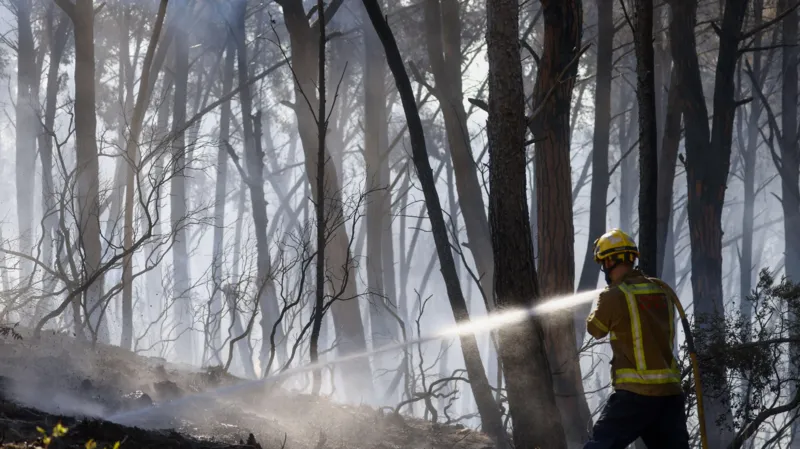

Spain, Andalusia: A catastrophic wildfire near Los Gallardos has claimed at least 11 lives, left 19 missing, and forced mass evacuations amid an intense summer heatwave
At least 11 people have died and 19 others remain missing after a fast-moving wildfire swept through southern Spain’s Andalusia region, making it one of the country’s deadliest forest fires in recent history. Authorities warned that the death toll could rise as emergency teams continue searching affected areas around Los Gallardos in Almería province.
The blaze erupted in a wooded area near Los Gallardos before rapidly spreading toward nearby communities, including the village of Bédar. Hundreds of firefighters, emergency responders, military personnel, and aircraft have been deployed in a large-scale operation to contain the flames and protect surrounding towns.
Andalusian regional president Juanma Moreno described the disaster as a tragedy that has deeply affected the region. He said early investigations indicate the wildfire may have started after a power line pole collapsed, although officials stressed that a full investigation is still underway to determine the exact cause.
Moreno said maintenance responsibilities would be carefully examined if the preliminary findings are confirmed. Authorities are treating the investigation as a priority while continuing rescue and firefighting operations.
Emergency officials reported that the bodies of the victims were discovered in and around Bédar. According to Andalusia’s Health and Emergencies Minister Antonio Sanz, the wildfire spread with exceptional speed, giving many residents and visitors little time to escape.
Among the victims were four people who were found trapped inside a vehicle. Officials said initial evidence suggests they were British nationals because the vehicle featured a right-hand steering wheel. The remaining victims were found in different locations, apparently attempting to flee the advancing flames.
The United Kingdom’s Foreign Office has been contacted regarding the reports of British casualties. Authorities have not yet officially confirmed the identities or nationalities of all those who died, and identification efforts remain ongoing.
Antonio Sanz described the wildfire as the most devastating ever experienced in Andalusia. He cautioned that the confirmed death toll remains provisional and could increase as search teams continue examining burned areas where nearly 20 people are still unaccounted for.
Medical officials confirmed that at least four people suffered severe burns and were admitted to hospital for specialist treatment. Another four individuals received treatment for minor burns and smoke inhalation after being rescued from dangerous conditions.
The fire also forced the evacuation of approximately 1,000 residents from threatened communities. Emergency services established temporary shelters while police closed several roads to ensure public safety and allow firefighters unrestricted access to the affected zones.
Spain’s Military Emergency Unit (UME), which responds to major national emergencies, joined local firefighting teams to reinforce containment efforts. Additional aircraft, helicopters, and specialized wildfire units have also been deployed to prevent the fire from spreading further into populated areas.
Officials said strong winds, dry vegetation, and exceptionally high temperatures significantly complicated firefiring operations. Flames advanced rapidly through forested terrain, overwhelming natural firebreaks and making access difficult for ground crews.
Southern Europe has endured a prolonged summer heatwave, with temperatures frequently reaching or exceeding 40 degrees Celsius across parts of Spain. Meteorological agencies had already warned that dry conditions and extreme heat created ideal circumstances for severe wildfires.
The current disaster follows several weeks of major fires across Spain, Portugal, and France, where thousands of residents have been evacuated from homes threatened by advancing flames. Firefighters throughout the region have faced repeated emergencies fueled by unusually hot and dry weather.
Spanish Prime Minister Pedro Sánchez announced earlier this year that the country would deploy its largest-ever summer wildfire response in anticipation of an increasingly dangerous fire season. That expanded emergency response is now being tested as crews battle multiple large-scale incidents across the country.
Wildfires have become an increasingly serious challenge for Spain. According to the European Forest Fire Information System (EFFIS), approximately 393,000 hectares burned across Spain last year—more than six times the country’s average annual burned area recorded between 2006 and 2024.
Scientists say rising global temperatures are contributing to longer and more intense wildfire seasons across Europe. The Copernicus Climate Change Service has repeatedly reported that Europe is warming at roughly twice the global average, increasing the likelihood of prolonged heatwaves and severe drought.
These conditions leave forests exceptionally dry, allowing even relatively small fires to spread rapidly into large-scale disasters. Climate experts warn that southern European countries are becoming increasingly vulnerable to destructive wildfires as temperatures continue rising.
Research by the World Weather Attribution group has also linked worsening wildfire conditions across the Mediterranean directly to climate change. Experts argue that higher temperatures, lower soil moisture, and prolonged periods without rainfall are significantly increasing wildfire risks throughout the region.
For communities around Los Gallardos and Bédar, the immediate focus remains on saving lives and preventing additional destruction. Firefighters continue working around the clock to establish containment lines while helicopters and water-dropping aircraft attack hotspots from the air.
Authorities have urged residents to follow evacuation orders, avoid restricted areas, and remain alert for further emergency instructions as weather conditions continue to pose significant challenges to firefighting efforts.
With rescue operations still underway and dozens of emergency personnel searching burned landscapes for the missing, Spain faces one of the darkest moments of this year’s wildfire season.
Officials have pledged a full investigation into the cause of the blaze while promising support for affected families and communities struggling to recover from the devastating disaster.
This article was created using automation technology and was thoroughly edited and fact-checked by one of our editorial staff members