




England promised to expand visa rights and give 300,000 Hong Kong British nationals (abroad) identification holders with a way to citizenship should China force a dubious security law that would reduce opportunities in the domain.
“On the off chance that China goes down this way and actualizes this national security enactment we will be required to change the status of BN(O) identification holders and set in train game plans which permit them to go to the UK for longer than the present half-year time frame and to apply for extendable times of a year of work and study, which itself will give a pathway to citizenship,” Foreign Secretary Dominic Raab said on Thursday.
His video message came after the UK discharged a joint articulation with Australia, Canada and the United States in which they emphasized their “profound worry” over the new security law.
“China’s choice to force the new national security law on Hong Kong lies in direct clash with its worldwide commitments under the standards of the legitimately authoritative, UN-enrolled Sino-British Joint Declaration,” they included.
Western nations have cautioned that the proposed Chinese enactment would subvert the “one nation, two frameworks” arrangement the UK and China settled upon before the former British province was given over to Beijing in 1997.
The new law, which has been sponsored by China’s parliament and is required to kick in June, would permit Beijing to introduce its security organizations in the district and to condemn withdrawal, disruption — activities subverting the intensity of the power — and outside impedance.
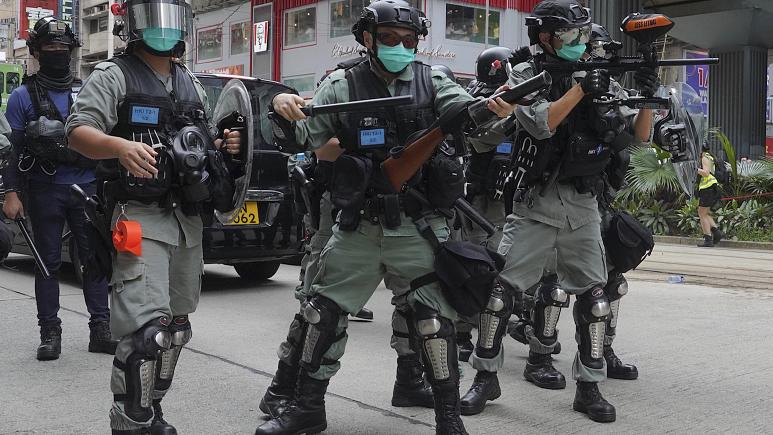
It has prompted restored mass exhibitions in Hong Kong and to fierce conflicts among nonconformists and police.
China has dismissed analysis with a representative for the remote service contending on Wednesday that “the issue of enactment to shield national security in Hong Kong is simply China’s interior undertakings”.
However, US Secretary of State Mike Pompeo reported on Thursday that with the law, the US no longer considers the former British province to have “a high level of self-governance from China” and that in that capacity, it doesn’t warrant being dealt with uniquely in contrast to terrain China any more.
This could have enormous ramifications for the region. It could prompt the suspension of special US levies and leave the entryway open to monetary approvals which would shake trust in the region’s status as a worldwide money related centre point.
England initially gave the BN(O) identification in 1987, two years after the Hong Kong Act that would stop the UK’s sway over the Chinese region was agreed upon.
The new class of identification was distributed to perpetual inhabitants of Hong Kong up until the region they stopped to be British Dependent Territories residents in 1997.