



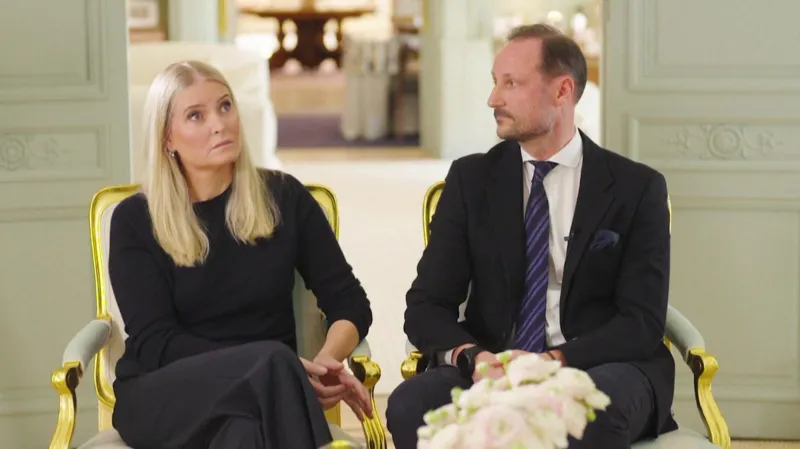

NORWAY, OSLO: Crown Princess Mette-Marit addresses controversial past links to Jeffrey Epstein, expressing regret and acknowledging poor judgement amid national scrutiny
In a rare and emotional television appearance, Crown Princess Mette-Marit has expressed deep regret over her past association with disgraced financier Jeffrey Epstein, acknowledging that she wishes she had never met him.
Speaking to Norway’s public broadcaster NRK, the crown princess described feeling “manipulated” and admitted to failing to properly investigate Epstein’s background during their period of contact between 2011 and 2014.
The interview marked her first public comments in seven weeks, following revelations about the extent of her communications with Epstein. “I feel so manipulated,” she said, at times visibly emotional. “When you are manipulated, you don’t realise it from the start.”
The controversy erupted after documents released by the US Department of Justice revealed that Mette-Marit had exchanged hundreds of emails with Epstein and had stayed at his Florida residence, albeit in his absence. The disclosures triggered widespread debate in Norway about transparency within the monarchy.
The crown princess, 52, admitted that she should have exercised greater caution. “It is incredibly important for me to take responsibility for not checking his background more carefully,” she said, adding that she deeply regrets her actions.
Epstein, who was convicted in 2008 for soliciting underage sex and later faced federal charges before his death in 2019, has been at the center of numerous high-profile investigations involving powerful individuals across the globe.
Despite the seriousness of his record, Mette-Marit maintained during the interview that she did not fully understand the extent of his crimes at the time of their association. She acknowledged, however, that she had concerns.
In one 2011 email, she wrote that she had searched for information about him online and found that it “didn’t look too good.” When questioned about this, she said she could not recall the details, citing the passage of time.
Sitting beside her husband, Crown Prince Haakon, she described an incident during her stay at Epstein’s Palm Beach home that left her feeling uneasy. Though she declined to elaborate, she confirmed that she had contacted Haakon at the time.
The crown prince supported her account, recalling the phone call and stating that his wife had felt unsafe. Despite this experience, the crown princess continued to maintain contact with Epstein for some time afterward.
“I am overly trusting,” she admitted. “I tend to think the best of people.”
Her decision to speak publicly comes amid mounting pressure from political figures, including Norwegian Prime Minister Jonas Gahr Støre, who has called for greater clarity regarding the matter.
Critics argue that as a senior member of the royal family, Mette-Marit has a responsibility to uphold transparency and accountability. Some commentators have suggested that her responses during the interview raised more questions than they answered.
Tove Taalesen, a royal correspondent, described the interview as a missed opportunity for full disclosure. “Something must have happened and she didn’t want to tell us that,” she said in media remarks.
Others have questioned the broader implications for the monarchy. Historian Ole-Jørgen Schulsrud-Hansen argued that prioritizing privacy over institutional responsibility reflects a misunderstanding of royal duties.
“The Norwegian royal family must recognise what it means to be royal,” he said, warning that similar controversies could arise again if lessons are not learned.
The timing of the interview has also drawn attention. It was recorded on the same day that the trial of Mette-Marit’s son, Marius Borg Høiby, concluded. The high-profile case, which involved serious allegations, has added further strain to the royal household’s public image.
Although the crown princess did not directly link the two matters, analysts believe her decision to delay speaking publicly until after the trial reflects the sensitivity of the situation.
Beyond the Epstein controversy, Mette-Marit also addressed concerns about her health and future role within the monarchy. She has been diagnosed with pulmonary fibrosis, a chronic lung disease that affects her ability to carry out official duties.
“I live with a serious illness,” she said. “That is the very thing that decides whether I can continue to perform in the role I hold.”
Her condition has raised questions about whether she will be able to assume the role of queen when Crown Prince Haakon eventually ascends the throne. Despite these uncertainties, she expressed a strong desire to continue supporting her husband.
“I would very much like to stand by him in that project,” she said, referring to their shared responsibilities.
The use of the term “project” drew criticism from some observers, who argued that it framed the monarchy in overly professional terms rather than as a lifelong duty.
Public reaction in Norway has been mixed. While some have expressed sympathy for the crown princess, particularly in light of her health challenges, others have called for greater accountability and transparency.
The Norwegian monarchy has long enjoyed relatively high levels of public trust compared to other European royal institutions. However, recent controversies have tested that confidence and sparked renewed debate about the role and relevance of the royal family in modern society.
As the Epstein revelations continue to reverberate, the focus remains on whether Mette-Marit’s apology and explanations will be sufficient to restore public confidence.
For now, her admission of regret marks a significant moment in the unfolding controversy—one that underscores the enduring impact of Epstein’s network and the complex challenges faced by public figures navigating private associations.
Whether this episode will have lasting consequences for the Norwegian royal family remains to be seen, but it has undeniably prompted a broader conversation about responsibility, transparency, and the expectations placed on those in positions of privilege and influence.