



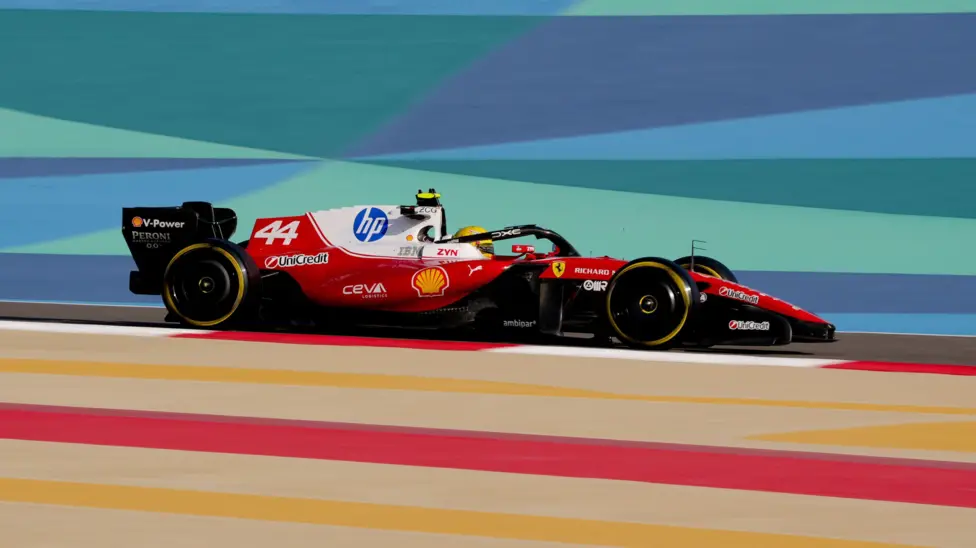

Lewis Hamilton has offered a refreshing counterpoint to the growing criticism surrounding Formula 1’s sweeping technical revolution, insisting the sport’s new-generation cars are “more fun” and rewarding to drive despite complaints from several rivals.
The seven-time world champion, now racing for Ferrari, said the dramatic overhaul has injected a fresh challenge into the cockpit rather than frustration.
While others have focused on the limitations created by hybrid energy management, Hamilton believes the reduced downforce and altered handling characteristics have revived the driving experience.
This season marks one of the most extensive rule changes in the history of Formula 1. Engineers have had to rethink almost every component of the cars, from chassis and aerodynamics to tyres, engines and sustainable fuel systems.
The goal is to promote efficiency, closer racing and environmental responsibility. But for drivers, it has meant adapting to machines that behave very differently from their predecessors.
Reigning champion Max Verstappen has been among the most vocal critics. The Dutch driver has argued that the new hybrid systems demand too much energy management, forcing drivers to concentrate heavily on battery deployment rather than pure racing.
Two-time champion Fernando Alonso has echoed similar sentiments, suggesting that the complexity detracts from the natural flow of competition and makes overtaking less instinctive.
Hamilton, however, sees the changes through a different lens. “We just have less downforce,” he explained during a paddock media session. “But you still have to discover the grip. There are still so many elements completely under our control.”
Rather than feeling restricted, the British driver described the cars as more alive and responsive, requiring greater driver input to extract performance. That unpredictability, he suggested, is precisely what makes them enjoyable.
“So it’s just different, and new, and I still find it quite fun,” he said. “The cars are more fun to drive. They’re easier to correct. You have snaps and keep them on track. The previous year’s cars were a bit too on edge.”
The reduction in aerodynamic dependency has shifted the balance back toward mechanical grip and driver skill. With less airflow pinning the cars to the asphalt, slides are more frequent, and drivers must react quickly to maintain control.
For Hamilton, this element of correction and recovery brings back memories of earlier eras in Formula 1, when cars demanded finesse rather than precision-perfect setups.
Observers say his remarks highlight a philosophical divide within the grid. Some drivers prefer stable, planted machines that deliver maximum predictability. Others, like Hamilton, thrive on a looser platform that allows creativity behind the wheel.
Ferrari engineers have also noted that the new regulations reward adaptability. Setup windows are narrower, tyre management is trickier, and race strategies must account for fluctuating energy deployment patterns.
That complexity has placed a premium on experience — something Hamilton has in abundance after nearly two decades in the sport.
The Briton’s enthusiasm could also reflect his adjustment to Ferrari’s environment. After years of driving highly refined cars, the challenge of mastering a fundamentally different package may provide the kind of mental stimulation he has long sought.
Still, not everyone shares his optimism. Several teams have privately expressed concerns about reliability and the learning curve associated with the hybrid systems, particularly on circuits that demand heavy energy harvesting.
Fans, meanwhile, remain divided. Some appreciate the visible driver corrections and closer battles, while others worry the technical complications risk overshadowing pure racing spectacle.
As the season progresses, opinions may evolve. Performance gaps will narrow, and drivers will grow more comfortable with the new technology. For now, Hamilton appears content to embrace the unpredictability.
At a time when many competitors are still adjusting, he sounds energised by the very traits others find frustrating — a reminder that in Formula 1, adaptation often separates the good from the great. And if the early signs are anything to go by, Hamilton is more than ready for the challenge.