



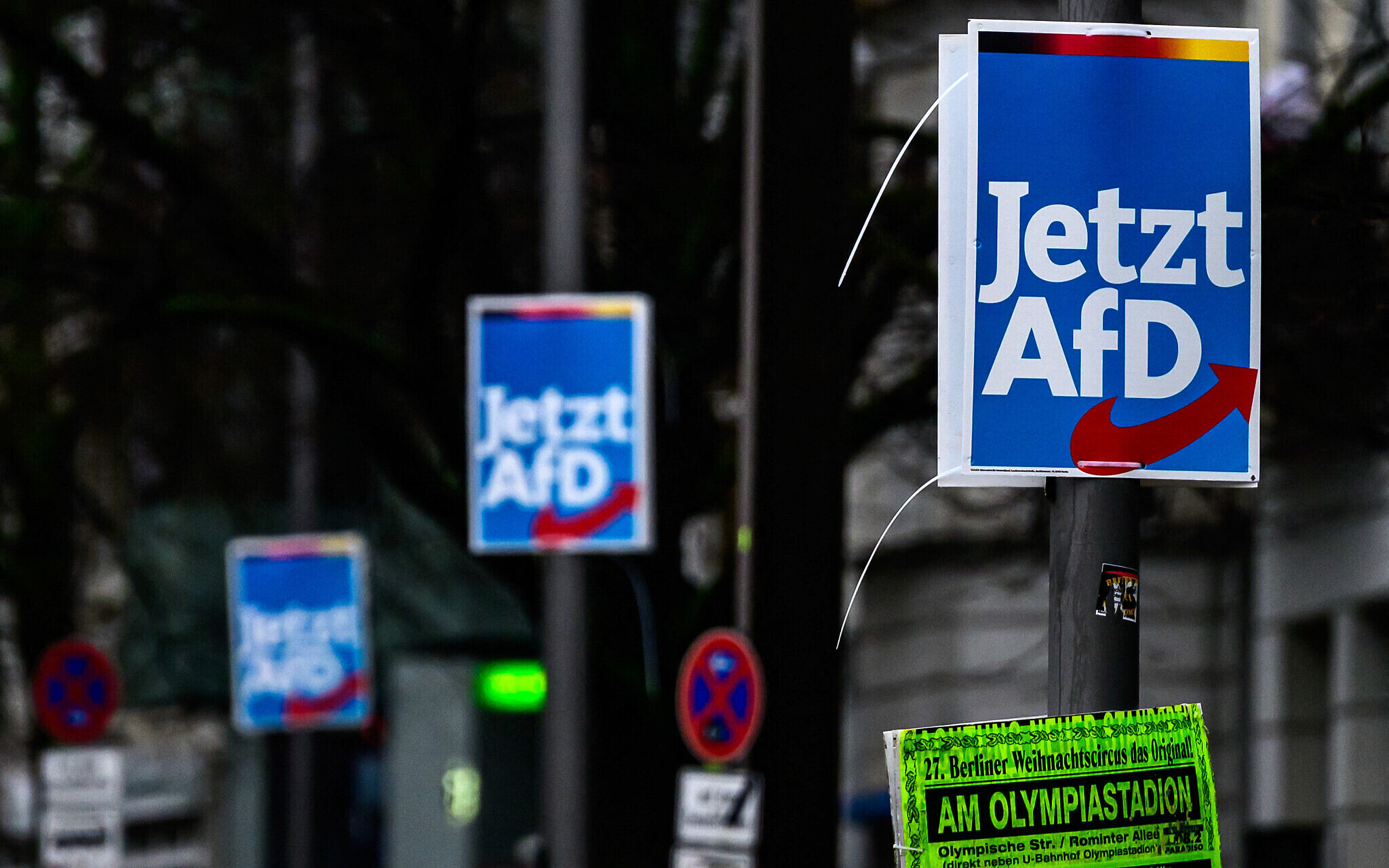

German media has reported an alleged secret meeting involving politicians from the far-right Alternative for Germany (AfD) party and neo-Nazis where plans to deport millions of people, including citizens, were discussed.
The clandestine gathering reportedly took place last November at a villa near a lake outside Berlin.
According to Correctiv investigative outlet, around 20 individuals, including high-ranking members of the AfD and neo-Nazis from Germany and Austria, convened near Potsdam.
Among the attendees was Roland Hartwig, a close associate of AfD leader Alice Weidel. Additionally, members of the white supremacist Generation Identity group and two individuals from the centre-right Christian Democrats (CDU) party were said to be present.
The focus of the meeting, as reported by Correctiv, centred around the concept of “remigration” – the expulsion of individuals with non-German ethnic backgrounds, even if they hold German citizenship.
While there were reportedly no objections to the idea in principle, doubts were raised regarding its feasibility.
Gerrit Huy, an AfD member of the German Parliament, acknowledged her belief in the concept of remigration for years, contradicting the party’s official stance.
Huy suggested that the party’s apparent acceptance of dual citizenship was aimed at facilitating the stripping of German citizenship from migrants more efficiently, as they would have alternative citizenship to fall back on.
The AfD, in response to the report, confirmed Hartwig’s attendance but denied any change in its migration policy. Huy, however, declared that the AfD “is committed to remigration,” further highlighting internal divisions within the party.
German Chancellor Olaf Scholz swiftly condemned the alleged meeting, asserting that no one should face discrimination based on their ethnic background in Germany.
In a statement on X (formerly Twitter), Chancellor Scholz said, “We will not allow anyone to differentiate the ‘we’ in our country based on whether or not someone has an immigrant background.”
Scholz went on to express his concern that the Office could investigate participants in the meeting for the Protection of the Constitution, Germany’s domestic intelligence agency.
He emphasized the importance of learning from history: “Learning from history is not just lip service.”
This revelation comes in the wake of a recent incident where police detained a newly-elected AfD member of the Bavarian Parliament over alleged Nazi salutes.
The far-right party currently holds the second position in German polls, trailing behind the CDU.
As Germany grapples with the implications of this alleged far-right meeting, questions arise about the ideological direction of the AfD and its potential impact on the country’s social fabric.
The controversy is likely to fuel debates on immigration policies and the need for stringent measures against extremist ideologies within political circles.