



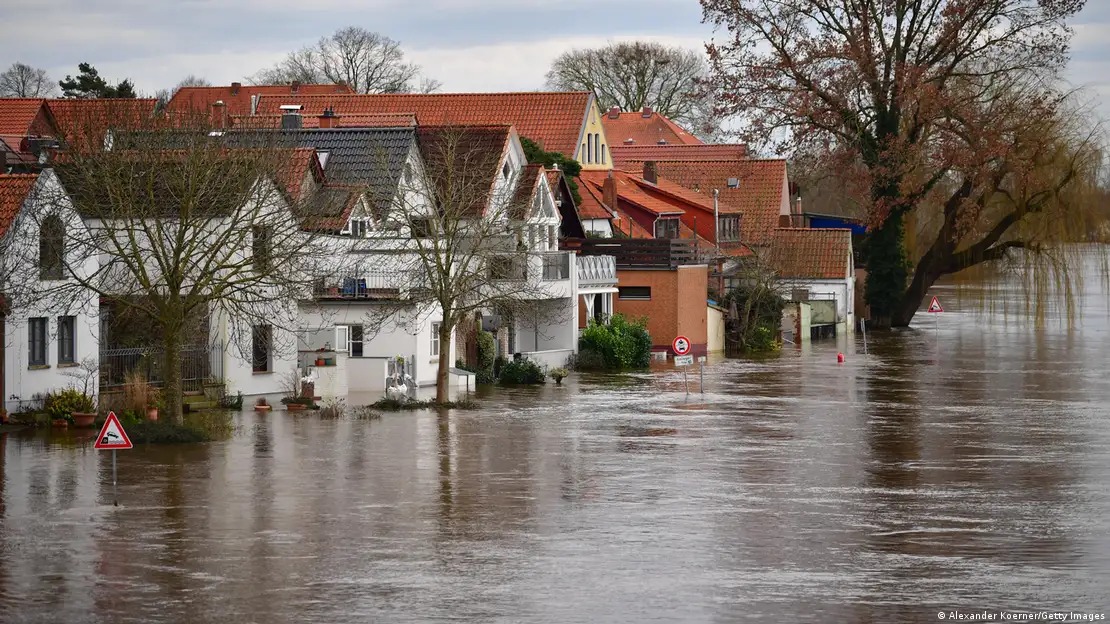

As Europe grapples with the aftermath of severe flooding, the situation remains tense, with the German weather service issuing warnings of continuous rain and a heightened risk of rising water levels.
In addition, ten departments in France are still on high alert, painting a bleak picture of ongoing challenges in flood-affected regions.
In Germany, the regions of Saxony-Anhalt, Thuringia, and Lower Saxony are bearing the brunt of the crisis, facing the relentless onslaught of rain and the looming threat of overflowing rivers.
The critical situation is further exacerbated by the dangerously saturated dykes, essential barriers designed to prevent water from inundating low-lying areas.
Particularly at risk is the city of Oldenburg, where the flooding of the River Hunte poses an imminent threat to parts of the city.
The excessive rainfall has pushed the dykes to their limits, heightening concerns of potential softening and instability.
The residents of Oldenburg and surrounding areas are anxiously monitoring water levels as authorities work tirelessly to reinforce defences and mitigate the impact.
The severity of the flooding in Germany has prompted widespread concern, with communities along rivers facing the possibility of displacement and infrastructure damage.
The resilience of dykes is being put to the test as they struggle to contend with the sheer volume of water pouring into riverbanks and surrounding areas.
Meanwhile, across the border in France, the flood crisis persists, with ten departments in the west and north of the country still under high alert.
The risk of flooding remains a constant worry for residents and local authorities as they navigate the challenges posed by swollen rivers and saturated grounds.
The prolonged nature of the crisis underscores the need for coordinated and sustained efforts to address the immediate threats and plan for long-term resilience.
Emergency response teams are working around the clock to evacuate vulnerable areas, provide relief to affected communities, and fortify critical infrastructure.
The impact of the floods extends beyond the immediate physical damage, with disruptions to transportation, communication, and essential services compounding the challenges faced by residents.
The need for international solidarity and support is evident as European nations come together to confront the shared crisis and minimize the human and economic toll.
As the German weather service continues to issue warnings of persistent rain, the coming days will be crucial in determining the trajectory of the flood crisis in Europe.
Governments, aid organizations, and citizens alike must remain vigilant and proactive in their response to ensure the safety and well-being of those affected by this natural disaster.
The resilience of communities and the effectiveness of coordinated response efforts will play a pivotal role in overcoming the challenges posed by the relentless force of nature.
This article was created using automation technology and was thoroughly edited and fact-checked by one of our editorial staff members