



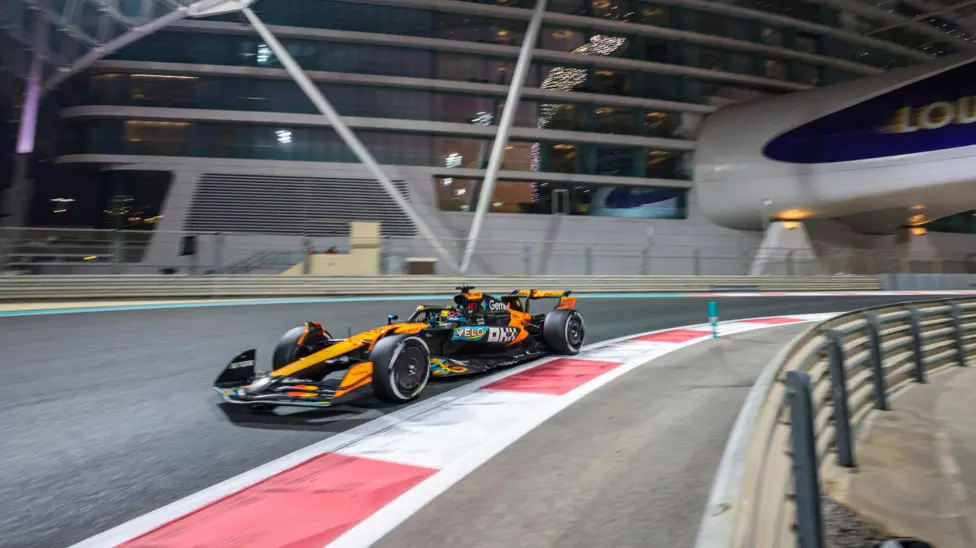

Italy, Emilia-Romagna: Imola emerges as leading replacement if Qatar and Abu Dhabi cannot host Formula 1 season finale
Formula 1 is preparing contingency plans that could see the 2026 World Championship conclude in Europe instead of the Middle East if ongoing regional instability prevents the season-ending races in Qatar and Abu Dhabi from taking place.
Formula 1 President and Chief Executive Stefano Domenicali confirmed that both Middle Eastern events remain on the official calendar for now. However, he acknowledged the sport cannot ignore the evolving security situation and expects a final decision to be made by the middle of September.
Speaking during a media conference call, Domenicali stressed that organisers continue to work under the assumption that the Qatar Grand Prix and Abu Dhabi Grand Prix will proceed as scheduled.
He noted that ticket demand for both races has remained exceptionally strong despite uncertainty surrounding the geopolitical situation. According to Domenicali, both events are already sold out, demonstrating the continued global appeal of Formula 1 even during challenging times.
The Formula 1 chief said the championship remains committed to completing its planned calendar but emphasised that safety and operational feasibility will determine whether the final races can be staged in the Gulf region.
“If the situation will not be cleared the way that we believe it should be before the middle of September, we will take the decision,” Domenicali said.
He added that if travelling to the Middle East becomes impossible, the championship would instead conclude in Europe rather than seeking another overseas replacement venue.
Although Domenicali did not identify a specific circuit that could host the revised season finale, Italy’s historic Imola circuit has quickly emerged as the strongest candidate should Formula 1 require a European alternative.
Imola, officially known as the Autodromo Internazionale Enzo e Dino Ferrari, has successfully hosted several Formula 1 races in recent years and possesses the infrastructure required to organise a championship-deciding event at relatively short notice.
The contingency planning follows significant disruptions already experienced during the 2026 campaign. Formula 1 previously cancelled both the Bahrain Grand Prix and Saudi Arabian Grand Prix after escalating conflict involving the United States, Israel and Iran made staging the events impossible.
To maintain the overall calendar, Formula 1 announced that Malaysia would return to the championship schedule by hosting a September race in place of Bahrain. The replacement ensured the championship retained the minimum number of races required under several commercial agreements.
Despite Malaysia’s addition, Domenicali indicated Formula 1 remains determined to preserve another race after the Las Vegas Grand Prix, which is currently scheduled for 21 November.
The championship had explored the possibility of organising two races in Las Vegas to compensate for the cancelled Middle Eastern rounds. However, Domenicali explained that Formula 1 ultimately rejected the proposal.
He said the organisation wanted to protect the long-term value of the Las Vegas event rather than dilute its growing prestige by staging multiple races at the same venue within a single season.
Domenicali also highlighted the commercial challenge posed by the American sporting calendar. The latter stages of the Formula 1 season coincide with the National Football League schedule, creating fierce competition for television audiences and fan attention across the United States.
According to Domenicali, Formula 1 must carefully position its events to avoid competing directly with one of America’s most established and widely followed sporting competitions.
Maintaining a balanced global calendar remains a priority for Formula 1 as it continues expanding its international footprint while protecting the commercial value of each individual Grand Prix.
Attention is also beginning to shift towards the 2027 championship calendar, which is expected to be unveiled later this year.
Domenicali confirmed that next season’s opening race is scheduled to return to Bahrain after two consecutive years of Australia hosting the season opener because of Ramadan scheduling considerations.
However, he acknowledged that Formula 1 is already preparing alternative scenarios should conflict in the Middle East continue into next year.
He explained that while the calendar presented later this year would reflect the normal race schedule, backup plans are already being developed to ensure the championship can respond quickly if circumstances require significant changes.
Those contingency measures would allow Formula 1 to maintain operational flexibility while protecting teams, drivers, officials and supporters from unnecessary risks associated with international travel during periods of instability.
Domenicali reiterated that Formula 1’s objective remains unchanged despite the uncertainty. The championship still intends to stage races in 24 different countries during the 2027 season, matching its ambitious global expansion strategy.
The coming weeks are therefore expected to prove crucial as Formula 1 monitors developments across the Middle East before determining whether Qatar and Abu Dhabi can safely host the closing rounds of the 2026 championship.
Should conditions improve, the existing calendar will remain intact and the season will conclude in the Gulf as originally planned. If not, Europe appears ready to step in, with Imola positioned as the leading venue to host what could become one of the most significant Formula 1 finales in recent history.
This article was created using automation technology and was thoroughly edited and fact-checked by one of our editorial staff members