



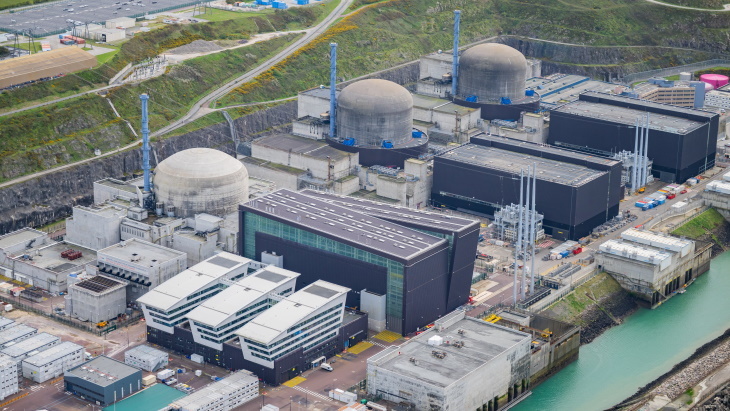
 pressurised water reactor achieved grid connection at 11:48 am local time on Saturday, as confirmed by EDF)
The long-awaited Flamanville 3 European Pressurised Reactor (EPR) has been connected to the French national electricity grid, marking a historic milestone in the advancement of nuclear energy.
The 1630 MWe (net) pressurised water reactor achieved grid connection at 11:48 am local time on Saturday, as confirmed by EDF, the French multinational electric utility company.
EDF, in its statement, celebrated the achievement: “Teams have achieved the first connection of the Flamanville EPR to the national grid … the reactor is now generating electricity.”
This comes after the reactor achieved its first nuclear reaction on September 3, 2024. Since then, a rigorous series of tests and inspections have been conducted to gradually ramp up its power output.
Luc Rémont, Chairman and CEO of EDF, hailed the event as a significant achievement for the nuclear sector.
“The coupling of the Flamanville EPR is a historic moment for the entire nuclear sector. I would like to salute all the teams who have met the challenges encountered during this project with the greatest tenacity and never compromising on safety. Flamanville 3 joins the three EPRs already in operation in the world, in China and Finland,” he stated.
A Long Journey to Operation
Construction on Flamanville 3 began in December 2007, adjacent to the two existing reactors that have been operational since the late 1980s.
Originally slated for completion in 2013, the project has faced significant delays due to technical challenges, regulatory reviews, and cost overruns. Despite these setbacks, the project reached a critical turning point earlier this year.
In May, the French nuclear safety authority, Autorité de Sûreté Nucléaire (ASN), authorized the reactor’s commissioning. This allowed EDF to load the reactor with 241 fuel assemblies in late May and proceed with start-up tests.
On September 3, Flamanville 3 achieved its first criticality—a sustained nuclear chain reaction—marking its readiness for further operational testing.
Connection and Future Outlook
The Flamanville EPR is currently operating at 25% capacity, producing an initial 100 MW of electricity. EDF noted that the reactor will undergo phased testing and operations at varying power levels until the summer of 2025.
By this time, the unit is expected to reach full capacity and produce approximately 14 TWh of electricity before its first planned maintenance outage in 2026.
Safety and reliability remain at the forefront of the project. EDF emphasized that every phase of testing and operation is conducted under stringent oversight by the ASN to ensure the highest standards of industrial and operational safety.
Global EPR Context
The Flamanville EPR joins a small but growing group of advanced reactors in operation worldwide. The first EPR units, Taishan 1 and 2, came online in China in 2018 and 2019, respectively.
Europe’s first operational EPR, Olkiluoto 3 in Finland, began commercial operation in 2023. Meanwhile, construction of two additional EPRs at Hinkley Point C in the United Kingdom is ongoing.
Significance for France’s Energy Transition
The successful connection of Flamanville 3 to the grid underscores EDF’s commitment to bolstering France’s energy security and achieving its climate goals.
With its capacity to generate low-carbon electricity, the reactor is poised to play a pivotal role in supporting the nation’s transition to a sustainable energy future.
As Flamanville 3 continues its testing phase, it stands as a testament to the resilience and innovation of the nuclear industry, paving the way for the next generation of safe and efficient nuclear power.