



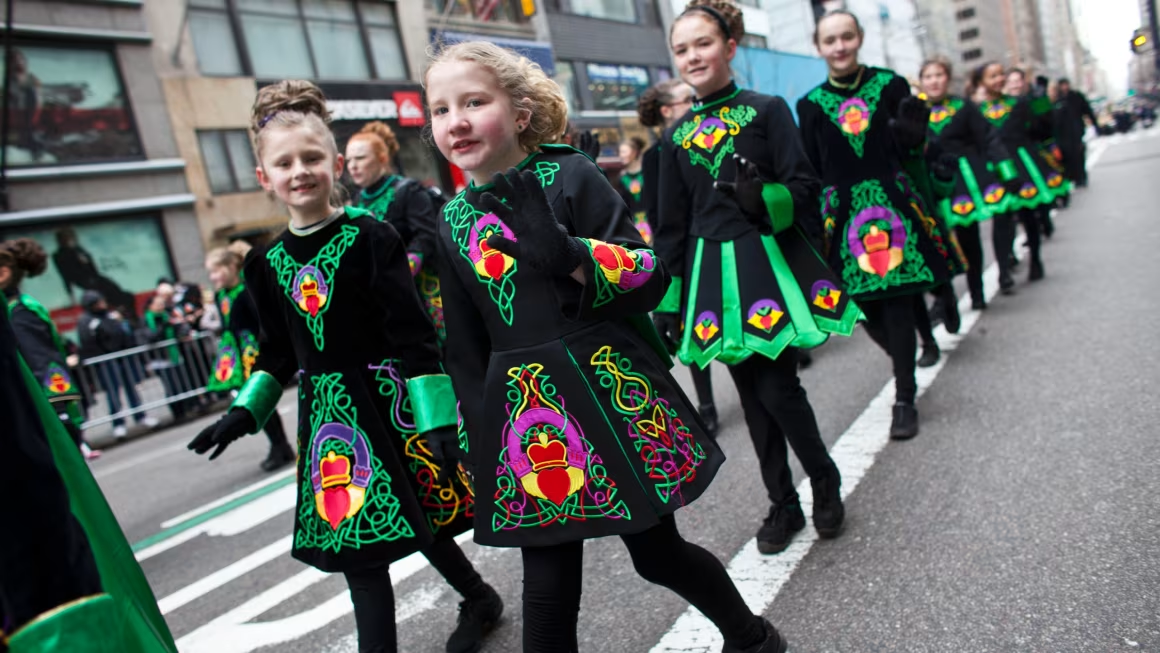

Every year on March 17, millions around the world celebrate St. Patrick’s Day, a cultural and religious holiday honoring Ireland’s patron saint.
While parades, music, and festive gatherings dominate the day, Irish folklore adds another layer of intrigue through a variety of long-held superstitions believed to bring good luck.
One of the most recognizable traditions is wearing green. Though widely seen as a symbol of Irish pride, folklore suggests a more whimsical origin.
According to legend, wearing green makes a person invisible to leprechauns—mischievous fairy creatures known for pinching anyone they can see. Failing to wear green, therefore, is thought to invite both bad luck and playful pinches from others celebrating the holiday.
Another common superstition involves carrying a good luck charm. Items such as horseshoes and four-leaf clovers are believed to attract fortune and ward off negative energy.
The rarity of a four-leaf clover makes it especially significant, with each leaf traditionally representing faith, hope, love, and luck. These charms are often kept close during the celebrations as symbols of positivity.
Among the more unusual traditions is the practice known as “drowning the shamrock.” This ritual involves placing a shamrock in a glass of whiskey, drinking it, and then tossing the shamrock over one’s left shoulder.
Though often associated with Irish heritage, historians suggest the custom is more symbolic than historical, with little evidence linking it directly to St. Patrick himself.
Food traditions also play a role in Irish superstition. When preparing traditional Irish soda bread, it is customary to cut a cross into the top of the dough before baking.
Folklore claims this act “lets the devil out,” ensuring the bread is blessed and bringing good fortune to those who eat it. While many today view this as a decorative step, its roots lie in spiritual belief.
Finally, those celebrating in pubs are encouraged to finish their drinks. Irish superstition warns that leaving a drink unfinished may bring bad luck or invite mischief from unseen spirits. This belief adds a playful yet cautionary note to festive gatherings, reminding participants to fully enjoy—and complete—their celebrations.
Although many of these customs are rooted in myth rather than fact, they remain an enduring part of the holiday’s charm. For many, following these traditions is less about belief and more about connecting with Irish culture and adding a sense of fun to the festivities.
As St. Patrick’s Day continues to be celebrated globally, these superstitions serve as a reminder of Ireland’s rich folklore and the timeless appeal of traditions that blend history, myth, and celebration.