



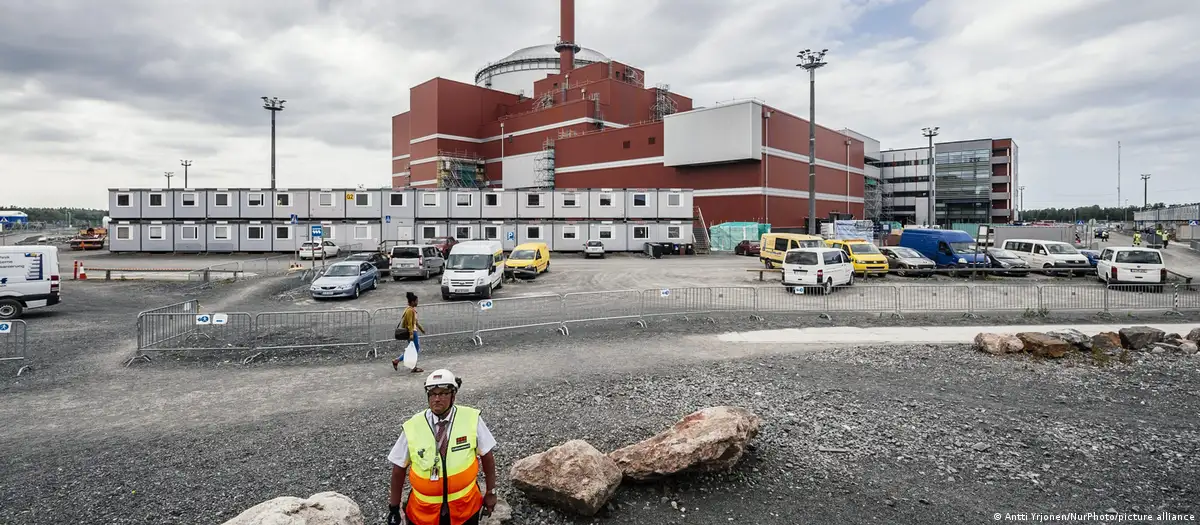

Olkiluoto Island on Finland’s western coast has emerged as a cornerstone of the country’s energy independence. Once a hub reliant on Russian supplies, it now represents Finland’s shift toward self-sufficiency following Moscow’s full-scale invasion of Ukraine in 2022.
Before the conflict, Finland imported nearly half of its energy from Russia — including electricity, oil, and natural gas. However, as tensions escalated, Helsinki severed those ties, seeking alternative energy sources and reinforcing national security.
“Before 2022, we believed peace and trade would prevail,” said Sari Multala, Finland’s Minister of Climate and the Environment. “But the war reminded us we cannot depend on a hostile partner.”
Moscow responded to Finland’s NATO application by halting electricity exports, allegedly over payment disputes. Since then, Russian energy’s share in Finland’s imports has fallen to nearly zero, forcing a dramatic restructuring of the nation’s energy system.
At the heart of this transformation lies Olkiluoto 3, one of the world’s largest nuclear reactors, producing 1,600 megawatts of electricity. The reactor’s activation in 2023 raised Finland’s nuclear share in power generation from 28% to 39%.
Despite an €11 billion price tag and an 18-year construction period, the plant’s operator, TVO, sees the investment as vital for stability and growth. “Consumers benefit from lower electricity prices, and we’ve created 5,000 jobs,” said TVO spokesman Juha Poikola.
Beyond nuclear power, renewables are reshaping Finland’s energy landscape. Onshore wind farms now supply 24% of national electricity, up from 14% in 2022. The state has also expanded LNG infrastructure, commissioning a floating terminal in the southern port of Inga to import liquefied natural gas from Norway, the UK, and the US.
Experts say diversification is key to maintaining resilience. “Finland’s mix of nuclear, hydropower, biomass, and wind creates a robust model,” said Professor Veli-Pekka Tynkkynen of the University of Helsinki. However, he noted challenges remain — notably, Finland’s continued reliance on Russian uranium.
The shift enjoys broad public support. A 2025 Verian poll found 68% of Finns view nuclear energy positively, paving the way for possible new reactors.
Equally crucial is nuclear waste management. Posiva, a company owned by TVO and Fortum, is finalizing the Onkalo repository, the world’s first deep geological storage site for spent fuel. Located 450 meters underground, it will safely house waste from Finland’s five reactors in reinforced copper capsules.
Communications manager Pasi Tuohimaa said the project, costing up to €1 billion, “ensures Finland can take care of its nuclear legacy safely and independently.”
While Finland continues exploring additional nuclear capacity, renewable advocates push for faster wind power expansion. “Wind projects can be built much quicker,” said Renewables Finland CEO Anni Mikkonen. “We could double onshore capacity within a decade.”
With Olkiluoto at its core, Finland’s energy transition underscores a powerful message — sovereignty and sustainability now go hand in hand.