




In the sun-drenched locales of Europe, where the beach often represents a cherished escape, the reality for many people with disabilities is starkly different. Despite strides in improving accessibility, significant barriers remain.
This article explores the persistent challenges faced by those with disabilities in accessing beaches across Europe and highlights the efforts of dedicated individuals and organizations working to make these seaside retreats inclusive for everyone.
From Personal Struggles to Advocacy
Brigitte Berckmans, 54, recalls her childhood with fondness, particularly the days spent at the beach in Les Landes, a picturesque department in southwestern France.
For Berckmans, who has a disability, the beach was a beloved destination where she would be carried by her parents. As she grew older, however, enjoying the ocean became increasingly difficult.
Berckmans’ story is not unique. Her husband, Ramón Espi, 62, also has a personal connection to beach accessibility.
Espi, who sustained a disability from a motorbike accident at 27, spent his summers at the beach. It was on the Basque coast where he met Berckmans. Their shared experiences and challenges became the catalyst for their mission.
In 1997, Espi and Berckmans founded Handiplage, an association dedicated to promoting beach accessibility for people with disabilities.
Handiplage’s mission is clear: to integrate individuals with disabilities into beach settings and recreational activities, thus fostering social inclusion.
The Handiplage Initiative
Handiplage, based in Bayonne, France, has been at the forefront of this movement since 2002. The association operates a labeling system that evaluates and certifies beaches based on their accessibility features.
The goal is to ensure that people with disabilities can enjoy beach outings with as much ease and safety as possible.
The Handiplage labeling system consists of four levels. Level 1 requires basic amenities such as an aid station, an access ramp, adapted sanitary facilities, parking spots, and an amphibian vehicle to facilitate water access.
Levels 2 and 3 introduce additional features, including adapted showers and trained bathing guides, or “handiplagistes,” who assist with entering and exiting the water. The highest level, Level 4, also includes devices for visually impaired individuals.
As of July 2024, Handiplage has awarded 140 beaches in France with its label, reflecting a growing commitment to inclusivity. However, achieving these standards is not without challenges.
Overcoming Obstacles
The geographical diversity of European coastlines presents significant hurdles. For instance, the dunes in Landes, France, create natural barriers that complicate beach accessibility.
Similarly, the rocky terrain in some areas of Brittany was initially thought to be insurmountable. Despite these challenges, Espi and Berckmans remain optimistic. They believe that where there is a will, there is a way.
In contrast, making beaches accessible on the French Riviera has been somewhat easier due to the region’s favorable conditions, including minimal tidal variation and calm waters.
Yet, even here, administrative hurdles persist. Frequent changes in municipal leadership and accessibility advisors necessitate ongoing vigilance to ensure that accessibility standards are maintained.
Technological Innovations: The Seatrac System
In addition to grassroots advocacy, technological innovations are playing a pivotal role in improving beach accessibility.
One notable development is the Seatrac system, designed by the University of Patras in collaboration with Greek company Tobea. This technology has revolutionized beach access for people with disabilities.
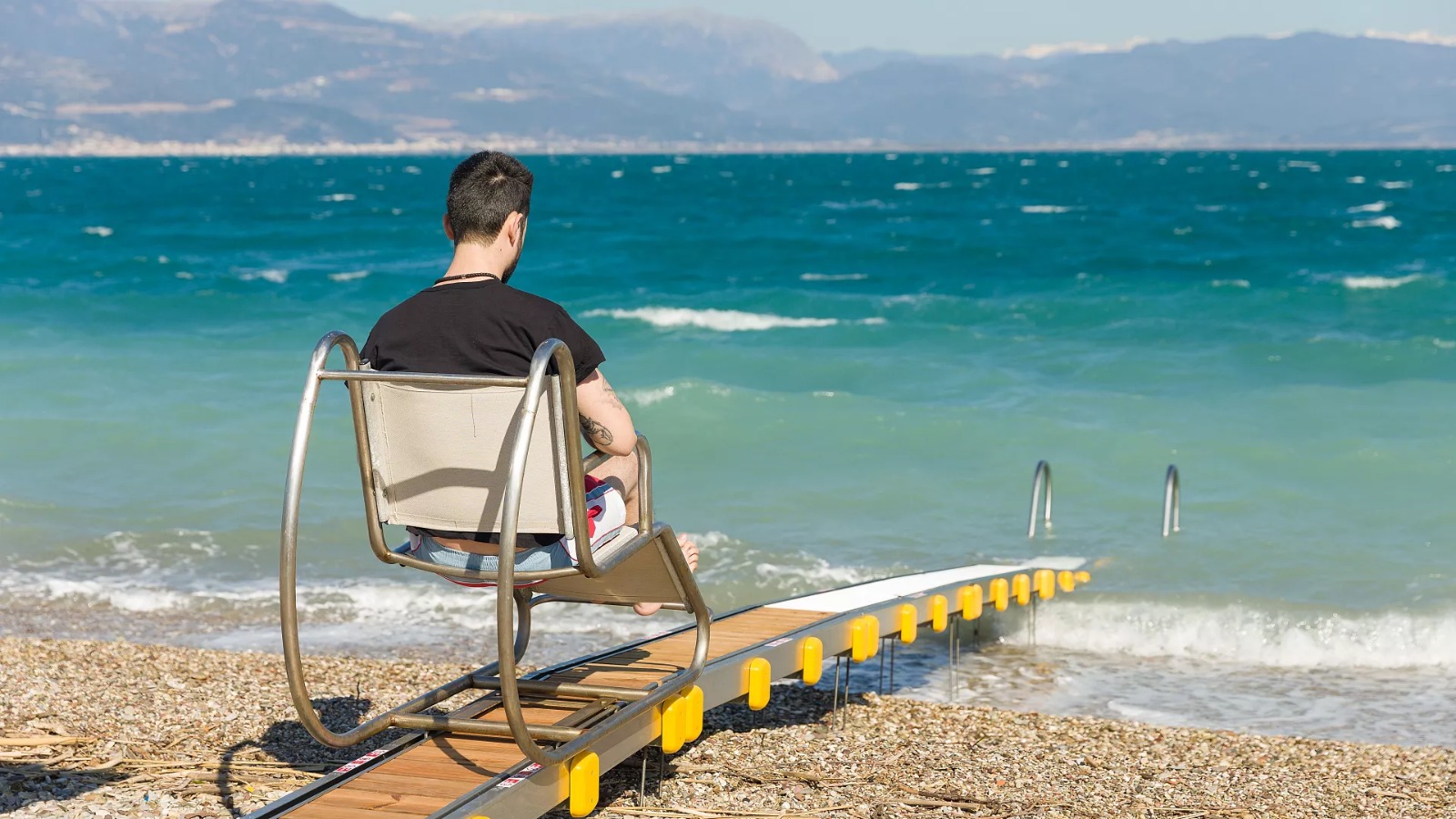
The Seatrac is a free-of-charge bathing chair system that allows individuals with disabilities to independently access the sea.
It consists of a walkway on the beach leading to the Seatrac chair, which is mounted on a set of tracks extending into the water. Users can control the chair via a remote control to enter and exit the sea with ease.
Since its introduction in 2012, Seatrac has been installed on 250 beaches across Greece, Italy, Cyprus, Croatia, Lithuania, and Latvia. By 2023, the system had been used more than 400,000 times.
The feedback from users has been instrumental in refining the system. For instance, additional features like showers to protect wheelchairs from seawater and a camera to monitor beach conditions were added based on user suggestions.
Navigating Bureaucratic Challenges
Despite the success of Seatrac, the initiative faces bureaucratic obstacles due to varying laws and regulations across different countries.
In Greece, where all beaches are public, municipalities are the primary clients for Seatrac. In contrast, in Italy, both municipalities and private beach operators are involved.
Persefoni Bertzou, Tobea’s marketing manager, emphasizes the importance of incorporating user feedback into the design and implementation of accessibility solutions. She notes that understanding the diverse needs of users is crucial for creating effective solutions.
The Road Ahead
While significant progress has been made in making European beaches more accessible, there is still much work to be done.
The efforts of individuals like Berckmans and Espi, as well as innovations like Seatrac, are paving the way for a more inclusive beach experience.
However, continued advocacy, technological advancement, and collaboration between stakeholders are essential to overcome remaining barriers and ensure that all individuals, regardless of their abilities, can enjoy the beauty of Europe’s coastlines.
In conclusion, the journey towards fully accessible beaches is ongoing.
By addressing both the physical and bureaucratic challenges, and by leveraging technology and community support, Europe can move closer to a future where everyone can experience the joy of the beach, regardless of their abilities.
This article was created using automation technology and was thoroughly edited and fact-checked by one of our editorial staff members