



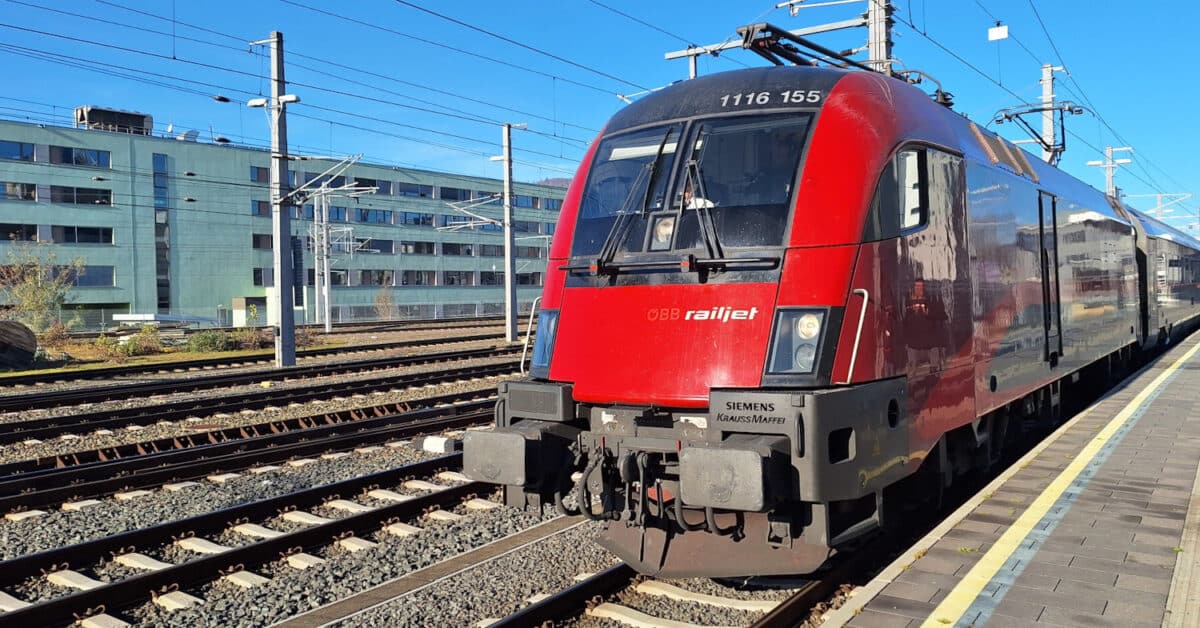

After nearly three decades of planning and construction, Austria has officially opened the Koralmbahn, a landmark rail line set to transform mobility across the country’s southern regions. The first passenger services ran yesterday, marking the culmination of one of Europe’s most ambitious infrastructure projects.
The 130-kilometre route connects the Styrian capital Graz with Klagenfurt, the capital of Carinthia, passing beneath the Koralm mountain range. At its heart lies the 33-kilometre Koralm Tunnel, now the sixth-longest railway tunnel in the world.
The new line was inaugurated on Friday during a high-profile ceremony attended by Austrian President Alexander Van der Bellen, Chancellor Christian Stocker, and senior federal and regional officials. The event was widely framed as a historic moment for Austrian rail.
With the Koralmbahn in service, journey times between Graz and Klagenfurt have been slashed to just 41 minutes. This represents a reduction of more than an hour compared with previous rail connections and makes the train significantly faster than travelling by car.
Designed for maximum speeds of up to 250 kilometres per hour, the line brings true high-speed standards to southern Austria for the first time. ÖBB’s Railjet trains, currently operating on the route, reach speeds of up to 230 kilometres per hour.
Austria’s national rail operator reported strong demand within hours of the opening. According to ÖBB, 30 trains and approximately 10,000 passengers travelled on the new line during its first day of operation, exceeding initial expectations.
The early surge in passenger numbers has prompted the operator to prepare additional services. ÖBB confirmed that extra trains will be added during the busy Christmas holiday period to accommodate rising demand and ensure smooth operations.
Officials have described the Koralmbahn as Austria’s largest rail project in a century. The total investment stands at €5.9 billion, translating to an average cost of €45.38 million per kilometre, reflecting the project’s technical complexity.
Construction involved challenging geological conditions beneath the Koralm mountain range, requiring advanced tunnelling techniques and years of meticulous engineering. The Koralm Tunnel itself took more than a decade to complete and represents a major feat of European rail construction.
Beyond speed and engineering, the project is expected to deliver significant economic benefits. By dramatically improving accessibility between Styria and Carinthia, the line is forecast to strengthen labour markets, encourage investment, and support tourism across southern Austria.
The Koralmbahn also plays a strategic role within Europe’s transport network. It forms a key segment of the Baltic–Adriatic Corridor, linking northern Europe with Adriatic ports and enhancing cross-border freight and passenger flows.
European Union officials have repeatedly highlighted the corridor’s importance for sustainable transport. By shifting passengers and freight from roads to rail, the Koralmbahn is expected to reduce emissions and contribute to climate goals at both national and EU levels.
Regional leaders believe the new connection will help counter long-standing disparities between Austria’s northern and southern regions. Faster travel times are seen as a catalyst for greater territorial cohesion and balanced development.
For passengers, the benefits are immediate and tangible. Commuters, business travellers, and tourists can now move swiftly between two major cities that were once separated by geography and time-consuming routes.
As the first trains continue to run and timetables expand, the Koralmbahn stands as a symbol of long-term planning and persistence. After nearly 30 years, southern Austria is now connected by a rail link designed for the future.