




NATO has pledged to bolster its military presence in the Baltic Sea, following accusations that Russia was behind the sabotage of Estonia’s Estlink 2 undersea power cable, a vital connection between Estonia and Finland.
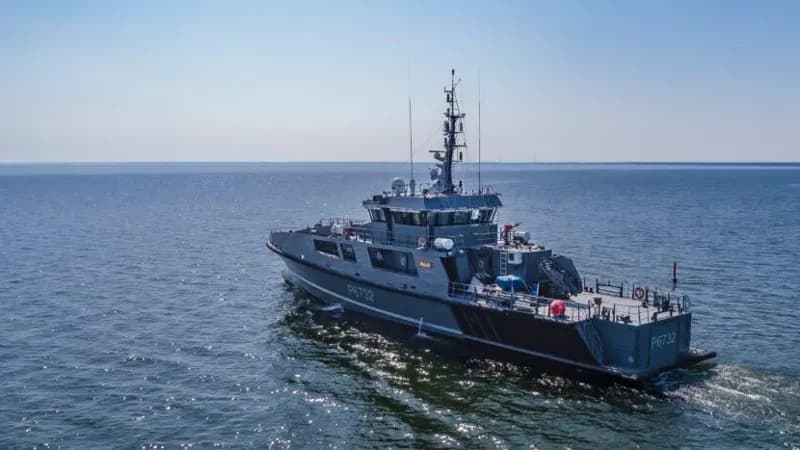
In response, Estonia has dispatched a patrol ship to protect its critical Estlink 1 power link, as tensions continue to escalate over the damage to its electricity supply infrastructure.
The ship suspected of damaging the Estlink 2 cable, named Eagle S, is reportedly part of Russia’s “shadow fleet.”
The Eagle S was boarded by Finnish coast guard officials, who steered it into Finnish waters after determining the cable had been cut.
Finland and Estonia have both raised concerns, with the European Union calling the incident the latest in a series of suspected attacks on crucial infrastructure in the region.
Estonian Defence Minister Hanno Pevkur confirmed that the Raju, a patrol vessel, set sail early on Friday to ensure the security of the remaining power connection.
Pevkur indicated that Finland would likely join the operation, as the two countries share an interconnected energy grid.
He emphasized the importance of maintaining the operational status of Estonia’s critical infrastructure, saying, “The task is to ensure that nothing happens and that our critical connection with Finland remains operational.”
The Kremlin, however, has downplayed the issue, refusing to comment on the cable damage and referring to the incident as a “narrow issue” not warranting presidential involvement.
This lack of transparency has only heightened concerns, especially as the sabotage follows a string of similar incidents in the Baltic Sea.
NATO Secretary General Mark Rutte communicated with Finnish President Alexander Stubb about the situation, assuring that NATO would increase its presence in the region.
A NATO statement further confirmed that the alliance is closely monitoring the situation and is committed to providing support if needed.
Estonian Prime Minister Kristen Michal added that the country may invoke Article 4 of the NATO treaty, which allows for consultations among member states if one feels threatened.
Michal also requested additional NATO reinforcements, including a fleet to deter further attacks on the Baltic region’s vital infrastructure.
The damage to the Estlink 2 cable has significantly impacted Estonia’s power supply, with initial reports indicating that repairs could take up to a year. Finnish energy company Fingrid has stated that it could take until July 2025 to fully restore the cable.
This marks the third such incident in the Baltic Sea in just over a month. Previous attacks included the severing of two data cables in November 2023 and another undersea gas pipeline rupture in October 2023.
The EU has expressed concerns over the growing threat posed by Russia’s shadow fleet and is reportedly working on measures, including sanctions, to target the fleet and its activities.
The Yi Peng 3, a Chinese ship suspected of involvement in previous sabotage operations, was last week boarded by authorities from Sweden, Denmark, Germany, and Finland, before setting sail once again.
As Estonia’s government reassures citizens of the ongoing security of their power supplies, concerns persist over the vulnerability of undersea cables.
While power companies Elering and Eesti Energia have access to backup power plants, Estonian officials have acknowledged the difficulty in protecting every section of the seabed from such attacks.
The ongoing incidents highlight the growing geopolitical risks in the Baltic, with NATO’s role increasingly pivotal in ensuring regional stability.