



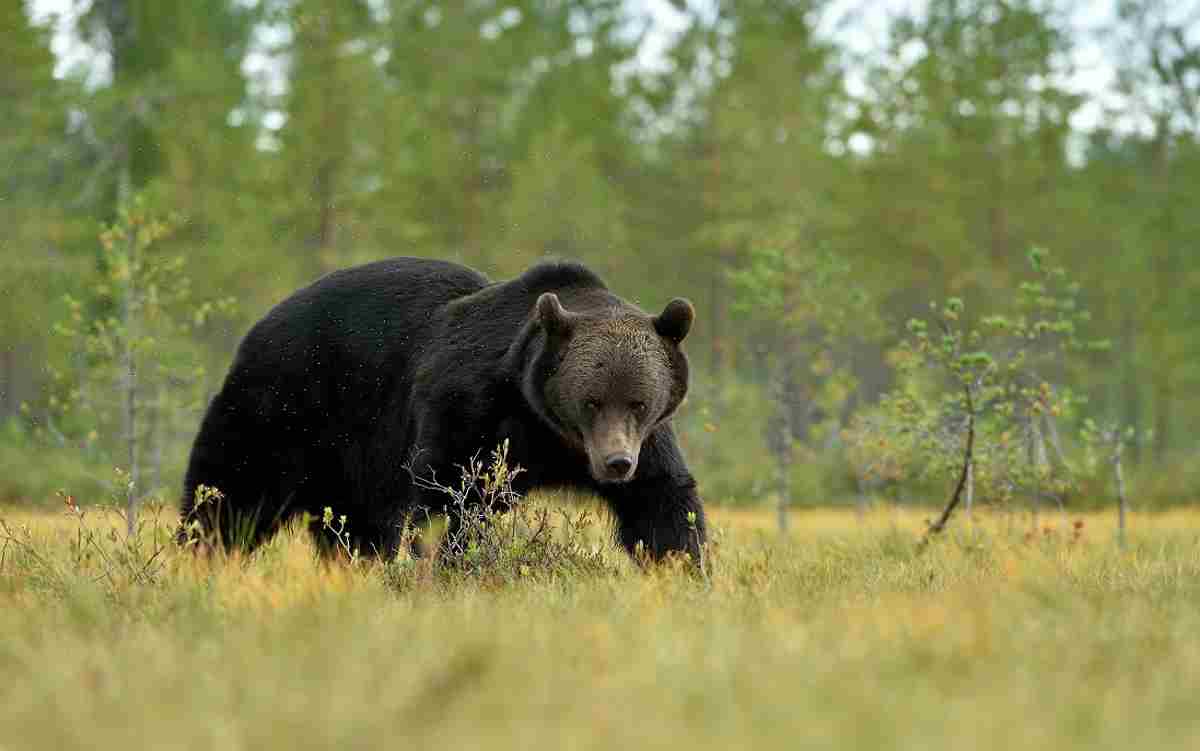
, faces a grim future, according to conservation groups)
Sweden has come under scrutiny for its decision to allow the killing of 486 brown bears as part of its licensed trophy hunting season, which began on August 21.
Conservationists warn that this move could decimate nearly 20 per cent of the nation’s brown bear population, sparking concerns over the future of a species listed as “Strictly protected” under European Union law.
The brown bear, classified as “Near Threatened” on the Swedish Red List (2020), faces a grim future, according to conservation groups.
The Swedish government has been accused of violating EU conservation laws, particularly the Habitats Directive, which prohibits population-regulating hunting of strictly protected species.
The directive is intended to protect vulnerable species from decline, yet Sweden’s aggressive hunting policy has placed it in direct conflict with these regulations.
The Swedish government justifies the licensed hunt as a means of actively reducing the bear population, citing the need to manage the species and minimize human-wildlife conflicts.
However, critics argue that the government’s actions are pushing the bear population dangerously close to a defined “Favourable reference population,” a minimum threshold of approximately 1,400 bears.
In 2023, the country’s bear population was estimated at 2,450 individuals, according to official surveys.
Conservationists now fear that the ongoing hunting strategy will result in a significant reduction of the bear population, with nearly 60 per cent fewer bears than in 2008, when the population peaked at 3,300.
The Swedish government’s stance has drawn backlash from environmental organizations and experts.
Sweden’s ‘Big Five’ carnivore protection project, which monitors and provides information on the country’s carnivores, condemned the hunting season as a clear threat to the species’ survival.
In a statement, the organization highlighted that excessive trophy hunting, combined with generous permissions for protective hunting, is now a bigger threat to the brown bear population than poaching.
Protective hunting, a separate initiative, has also been introduced by the government. This form of hunting, which allows for the killing of bears deemed a threat to livestock or human safety, is expected to result in the deaths of an additional 50 to 100 bears.
This policy, while aimed at addressing specific threats, has further inflamed conservationists who believe the government is failing to protect the species in line with its legal obligations.
In 2023 alone, 648 bears were killed under the licensed hunting quota, with another 74 bears falling victim to protective hunting measures.
Conservationists argue that this approach undermines over a century of efforts to protect Sweden’s brown bear population, which had been a success story of European wildlife conservation until recent years.
The Swedish University of Agricultural Sciences’ Swedish Species Information Centre (SLU Artdatabanken), which publishes the Swedish Red List, has echoed concerns that the country’s current policies could reverse decades of conservation progress.
As Sweden’s brown bear population teeters on the brink, the debate over balancing wildlife management with conservation efforts is likely to intensify in the coming months.