



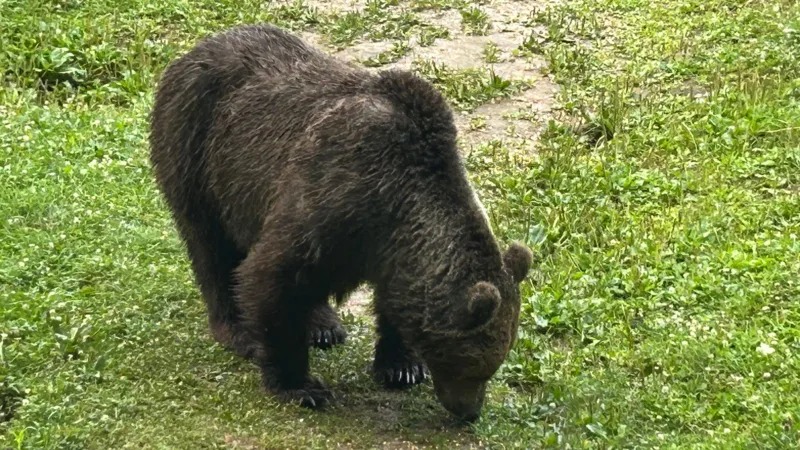

On 9 July 2024, the tranquil Bucegi Mountains north of Bucharest were shattered by a tragic encounter between a young hiker and a bear, leading to a renewed debate about Romania’s wildlife management policies.
Diana Cazacu, a 19-year-old hiker, was mauled to death by a young female bear, igniting a fierce national discussion and prompting the Romanian government to overturn a 2016 moratorium on bear hunting.
A Fatal Encounter in the Bucegi Mountains
Diana Cazacu and her boyfriend were enjoying a hike in the picturesque Bucegi Mountains when their journey took a devastating turn.
At around 15:00, the couple encountered the bear, which attacked Diana and subsequently threw her down a ravine.
In a frantic attempt to save her, Diana’s boyfriend called the emergency number 112. The call was swiftly transferred to Salvamont, Romania’s mountain rescue service.
Sergiu Frusinoiu, the Salvamont team leader that day, described the initial assumption that the rescue mission would be straightforward.
“Bears rarely attack humans unless provoked or in self-defense,” Frusinoiu explained. However, upon reaching the scene, the team found Diana’s distraught boyfriend and the bear standing over the victim.
The bear’s aggression forced the rescue team to use pepper spray, firecrackers, and rocks to protect themselves until a hunter arrived and fatally shot the animal.
Despite their efforts, Diana was found lying in a stream, her injuries compounded by the fall and the water. “Even if the fall or her injuries didn’t kill her, the water could have,” Frusinoiu noted.
The Aftermath and Government Response
The attack and its aftermath have intensified the ongoing debate about Romania’s bear population, which is the largest in Europe outside Russia.
In response to the tragedy, the Romanian government reinstated a bear hunting policy that had been suspended since 2016.
The new law, passed by the Chamber of Deputies and approved by President Klaus Iohannis in July, permits the culling of up to 500 bears over the next 18 months.
Former Environment Minister Barna Tanczos, the architect of the new legislation, justified the decision by emphasizing the need to control the burgeoning bear population.
“The bear population is increasing daily, monthly, yearly in Romania,” Tanczos stated. “If we don’t take action, we will face a significant overpopulation, which poses risks both to humans and to bears. We need to establish control and balance in our interactions with these animals.”
Rising Tensions and Local Reactions
The decision to reinstate bear hunting has sparked heated debates across Romania. At the base of the trail where Diana was attacked, the sight of open municipal waste bins provides insight into the bear’s presence in human-dominated areas.
The bins, some of which are tipped over and surrounded by rotting food, reflect the broader issue of human-wildlife conflict exacerbated by inadequate waste management.
In the nearby town of Busteni, local residents voiced their fears about bear encounters. “We are afraid to walk home at night because of the bears,” one resident said.
The police, who arrived in response to a bear sighting, were met with frustration from locals demanding more protection. “Keep us safe!” shouted one man, highlighting the growing tension between the public and authorities over wildlife management.
Expert Perspectives and Future Outlook
The tragic death of Diana Cazacu has cast a spotlight on the complexities of managing Romania’s bear population. Experts argue that while controlling bear numbers may be necessary, it is equally important to address the root causes of human-bear conflicts.
Conservationists and wildlife advocates stress the need for better waste management practices, public education on bear behavior, and increased efforts to protect bear habitats from further encroachment.
The Salvamont team, familiar with the challenges of working in bear country, underscores the importance of understanding and respecting wildlife.
“Diana’s mistake was running away from the bear,” Frusinoiu said. “In bear encounters, the worst thing you can do is flee, as it can provoke the animal.”
As Romania grapples with the implications of its new bear hunting policy, the debate continues over the best approach to balancing human safety with wildlife conservation.
The tragic loss of Diana Cazacu has highlighted the urgent need for comprehensive strategies that address both the immediate risks and the long-term solutions for managing the country’s bear population.
Conclusion
The reinstatement of bear hunting in Romania marks a significant shift in the country’s approach to wildlife management.
While the government seeks to address the growing bear population, the tragedy that led to this decision serves as a stark reminder of the complex and often dangerous interplay between humans and wildlife.
As Romania moves forward, finding a balanced and effective strategy will be crucial in preventing future conflicts and ensuring the safety of both people and bears.