



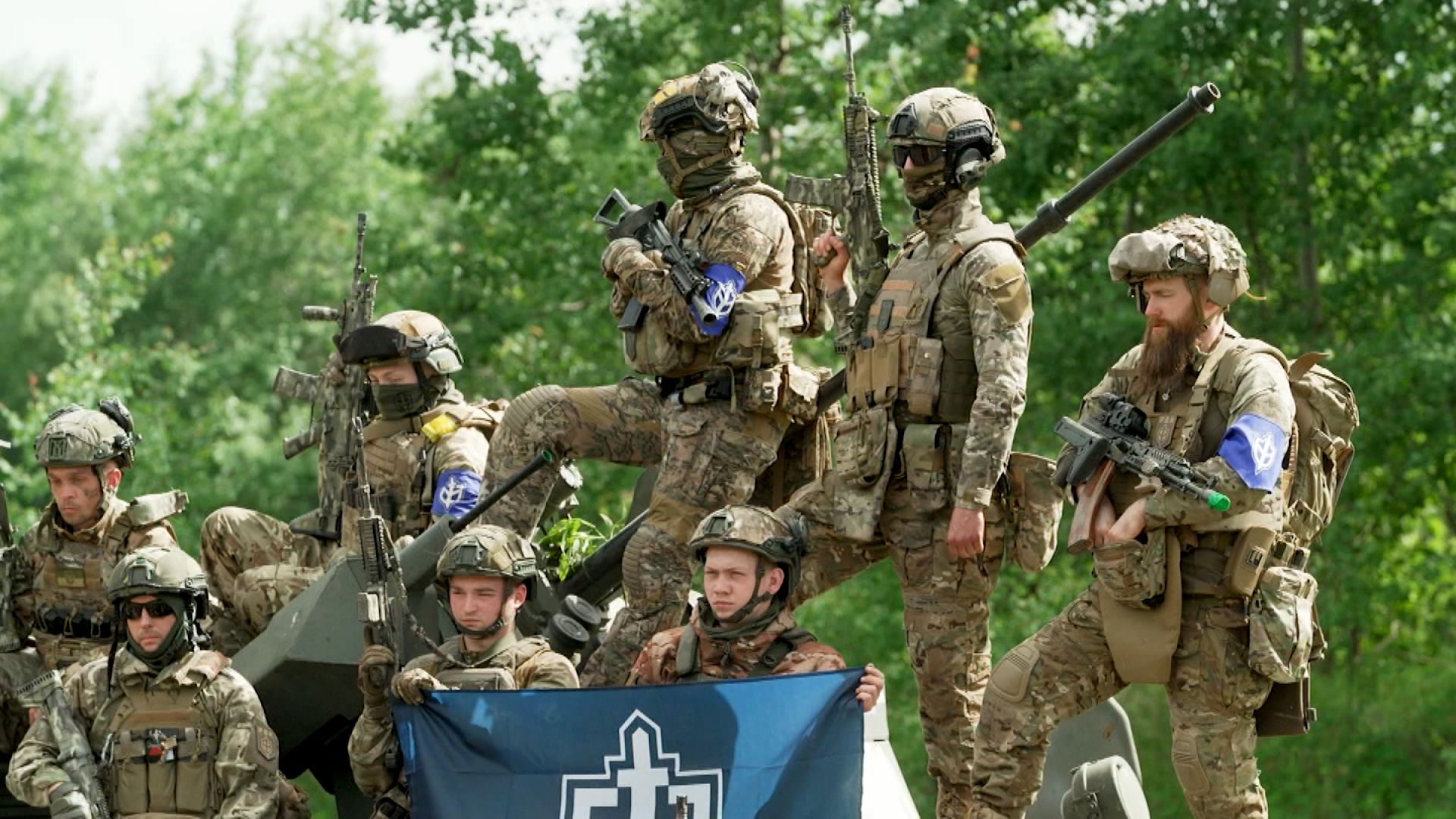

Pro-Ukrainian militias launched a series of daring cross-border raids into Russian territory, claiming control over a village and triggering a swift military response from Moscow.
The incursions, which targeted the Kursk and Belgorod regions bordering Ukraine, were purportedly carried out by groups of pro-Kyiv volunteer fighters comprised of Russians who oppose the Kremlin.
The Freedom of Russia legion, one of the militias involved, boasted on Telegram that they had seized control of the village of Tyotkino in the Kursk region.
However, Moscow swiftly denied these claims, asserting that it had repelled all incursions with rockets and flame-throwing weaponry.
Footage circulating on social media purportedly showed Russian troops fleeing across snowy fields, indicating the intensity of the clashes along the border.
Despite the denials from Moscow, regional officials confirmed casualties, including a member of the territorial defence killed in the Belgorod region and numerous civilians wounded in the attacks.
Ukraine’s military intelligence spokesman, Andriy Yusov, distanced Kyiv from the actions of the militias, stating that they were not operating under orders from the Ukrainian government.
However, he noted that the attacks underscored the Kremlin’s lack of control over its own territory, further destabilizing the already volatile situation in the region.
These incursions come amid heightened tensions between Russia and Ukraine, with the conflict now entering its third year.
The militias responsible for the raids have previously claimed similar actions, citing opposition to Moscow’s invasion of Ukraine as their motivation.
The timing of the attacks appears to be strategic, adding a layer of complexity to the situation. A spokesperson for the political wing of the Freedom of Russia Legion, Alexei Baranovsky, asserted that the raids were timed to coincide with Russia’s upcoming presidential elections, scheduled for March 15-17.
Baranovsky characterized the elections as a facade for the consolidation of power under President Vladimir Putin’s regime.
In a retaliatory move, Kyiv launched a significant drone strike on Russian territory, targeting two energy sites, including one of the largest oil refineries located approximately 800 kilometres from the border.
The strike represents one of the most significant actions taken by Ukraine in the ongoing conflict, signalling a willingness to escalate hostilities with its neighbour.
The latest developments underscore the precarious nature of the situation in Eastern Europe, with both sides engaging in increasingly aggressive actions.
As diplomatic efforts to resolve the conflict falter, the risk of further escalation looms large, raising concerns about the potential for a wider regional conflict.
The international community continues to monitor the situation closely, with calls for restraint and renewed efforts to find a peaceful resolution to the crisis.
However, with tensions running high and both sides entrenched in their positions, the path to de-escalation remains uncertain.
This article was created using automation technology and was thoroughly edited and fact-checked by one of our editorial staff members