



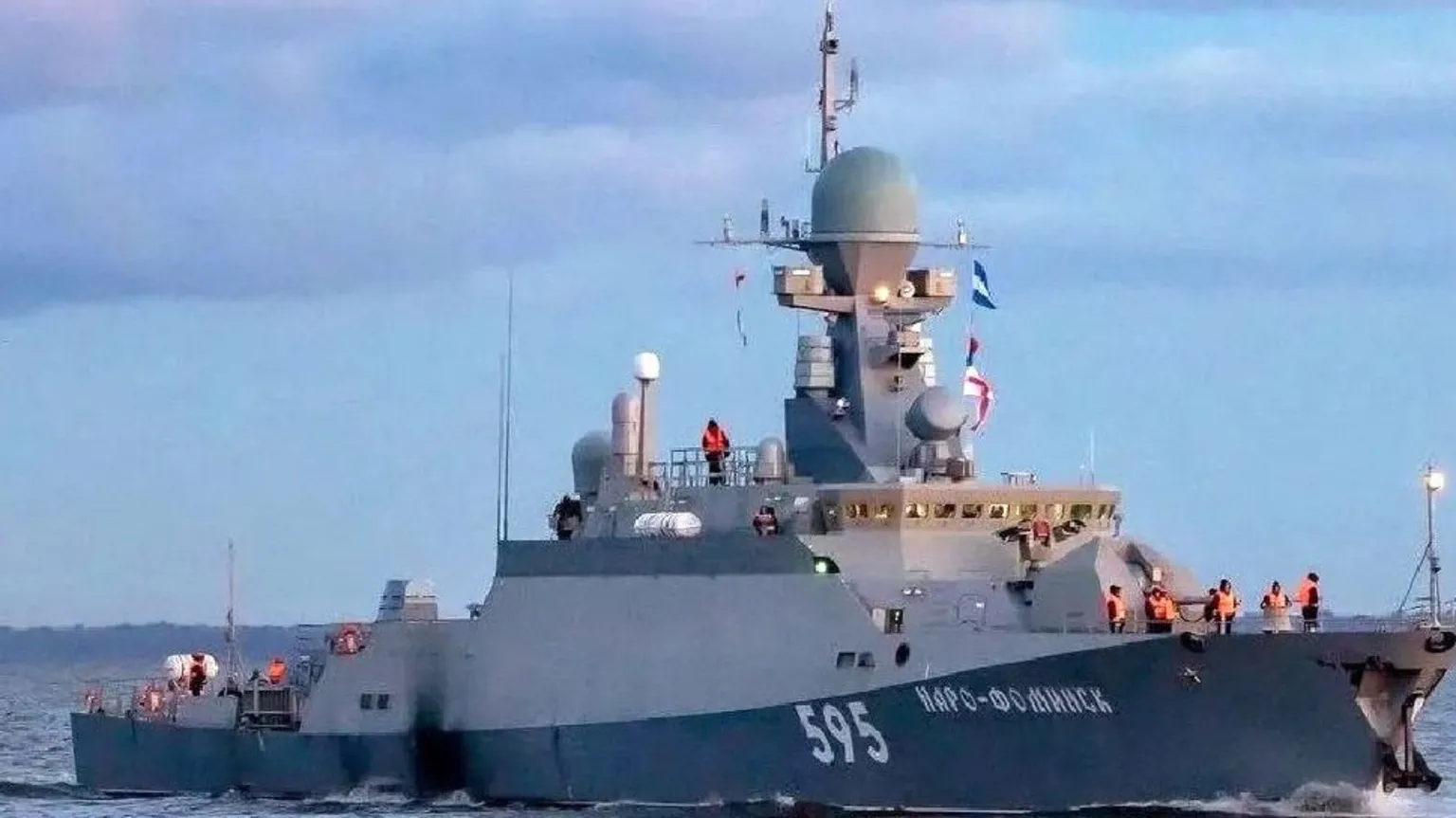

Finland, Northern Europe: Officials confirm Ukrainian attack on Russian naval vessel as Baltic Sea tensions rise following unprecedented drone strike
Finnish officials have confirmed that a Russian warship was attacked in the Gulf of Finland on Wednesday, following a Ukrainian drone operation targeting Russian military and energy infrastructure. The incident represents an unusual development in the Baltic Sea region.
Ukraine’s Security Service, known as the SBU, claimed responsibility for the operation, identifying the targeted vessel as the Naro-Fominsk. The attack reportedly formed part of a wider operation against Russia’s Ust-Luga oil export terminal.
The strike has attracted considerable attention because Ukrainian drones have not previously been known to attack a Russian naval vessel in this particular area of the Baltic Sea, where civilian maritime traffic regularly operates.
Although the precise circumstances surrounding the incident remain unclear, the attack has raised questions about whether Ukraine is expanding its military operations beyond established conflict zones. It has also renewed attention towards maritime security.
Finland, one of Ukraine’s strongest supporters in Europe, has acknowledged the incident while emphasising that the situation remains under control. Finnish officials have described the attack as a consequence of Russia’s continuing full-scale invasion of Ukraine.
However, authorities have provided limited information about the circumstances of the strike, including the precise location, weapons involved and extent of the damage. Initial assessments suggest the incident occurred in a relatively narrow section of the Gulf.
Finnish Foreign Minister Elina Valtonen sought to reassure the public, insisting that maritime conditions across the Baltic Sea remained stable. She stressed that there was no threat of any kind to civilian shipping or other marine traffic.
Her comments came amid growing attention towards the potential consequences of military operations in waters connecting Finland, Estonia and Russia. The Gulf of Finland is an important shipping corridor, supporting commercial transportation and energy-related maritime activity.
Defence officials are also understood to have communicated concerns to Kyiv about the sensitivity of conducting military operations in such a geographically restricted waterway. The Gulf contains important shipping routes, oil tanker traffic and subsea communications infrastructure.
The presence of underwater data cables adds another dimension to the security concerns surrounding the incident. Any disruption to these installations could affect communications infrastructure connecting countries across the Baltic region, making the protection of maritime routes particularly important.
According to Ukraine’s SBU, the Naro-Fominsk belongs to Russia’s Buyan-M class of small corvettes. These vessels are designed to operate in relatively shallow waters and are equipped with weapons capable of striking targets over considerable distances.
The Ukrainian security service claimed that the vessel carried Kalibr and Oniks cruise missiles, making it a potentially valuable component of Russia’s naval capabilities. However, independent confirmation of the ship’s weapons and operational condition was not immediately available.
There have also been unconfirmed reports suggesting that Russian combat helicopters were destroyed during the wider operation. Authorities have not provided sufficient evidence to establish these claims, and the full extent of the damage remains uncertain.
Martin Herem, Estonia’s defence minister, provided additional information about the incident during an interview with the country’s public broadcaster ERR. He said the Russian vessel was struck at approximately 05:30 local time on Wednesday.
Herem did not disclose the precise method used to attack the ship but confirmed that smoke was observed coming from the vessel afterwards. According to his account, the damaged warship subsequently moved back towards St Petersburg.
The Estonian minister’s comments offered one of the clearest indications that the attack had affected the Russian vessel. Nevertheless, it remains unclear whether the ship suffered serious structural damage or whether any Russian personnel were injured.
Moscow has traditionally provided limited information about military casualties and damage sustained during Ukrainian operations. Consequently, independent assessments of the incident could take time, particularly if Russian authorities decline to release further operational details.
Military analyst Emil Kastehelmi, co-founder of the Black Bird monitoring group, said the operation appeared to have exploited an opportunity available to Ukrainian forces. He noted that Russia’s Baltic Sea Fleet had remained largely untouched until this incident.
Kastehelmi suggested that Ukraine had identified a possible vulnerability and attempted to take advantage of it. However, he told the BBC that the strike should not necessarily be interpreted as a major escalation in the conflict.
The situation differs from the Black Sea, where Ukrainian and Russian naval vessels have repeatedly come under attack since Moscow launched its full-scale invasion in February 2022. Ukrainian forces have increasingly relied on drones and maritime operations against Russian military targets.
The Black Sea campaign has demonstrated how relatively inexpensive unmanned systems can challenge larger naval platforms and disrupt important maritime operations. Ukraine has previously used drones to target Russian military installations, naval vessels and infrastructure supporting Moscow’s war effort.
The latest incident suggests that similar tactics could potentially be employed in other maritime environments. However, the geographical conditions and presence of civilian shipping in the Baltic Sea create additional operational and diplomatic complications for Ukraine.
The attack on the Russian warship reportedly coincided with a separate Ukrainian drone operation targeting the Ust-Luga region. The important oil export terminal is situated on Russia’s Baltic coastline and plays a significant role in the country’s energy exports.
Several storage tanks at the facility are believed to have been struck overnight on Wednesday, triggering fires that were reportedly visible from across the border in Estonia. The incident highlighted the vulnerability of Russia’s energy infrastructure to long-range Ukrainian drone attacks.
Herem said the drone operation targeting the Ust-Luga region continued from midnight until approximately 06:00. According to the Estonian defence minister, most of the unmanned aircraft flew close to Estonia’s border while remaining within Russian airspace.
He also reported that one drone briefly entered Estonian airspace after approaching from Latvia before continuing towards Russia. The reported movement raised questions about the difficulties of monitoring unmanned aircraft operating close to NATO member states.
NATO aircraft stationed in the Baltic countries were reportedly airborne during the operation. However, Herem explained that destroying the drones had not been considered a sufficiently safe option under the circumstances.
The decision reflected the complicated security calculations facing NATO countries when unidentified or potentially hostile drones operate close to their airspace. Any interception attempt carries risks, particularly when aircraft are operating near international borders and civilian infrastructure.
Ukraine rejected allegations that its forces had deliberately used Baltic states’ airspace to launch attacks against Russian territory. Foreign Ministry spokesman Heorhiy Tykhyy described Moscow’s accusations as baseless during comments made late on Wednesday.
However, Tykhyy acknowledged that incidents involving drones could occur when Russia uses electronic warfare systems to redirect unmanned aircraft away from its own airspace. Such interference can complicate efforts to establish where drones are travelling and why.
The competing accounts have added another layer of uncertainty to an already sensitive incident. While Finnish and Estonian officials have confirmed aspects of the operation, several important questions concerning the drone trajectories and responsibility for individual airspace violations remain unresolved.
The Gulf of Finland occupies a strategically important position between Finland to the north, Estonia to the south and Russia to the east. Its narrow geography makes it particularly significant for commercial shipping and regional military movements.
For Finland and Estonia, maintaining security in these waters is especially important because of their proximity to Russian military installations and major maritime infrastructure. Both countries are NATO members and have closely monitored developments since Russia’s invasion of Ukraine.
Although the attack has not immediately threatened civilian shipping, it demonstrates how the conflict could increasingly affect strategically sensitive areas beyond Ukraine’s immediate neighbourhood. The presence of commercial vessels and critical infrastructure makes any further military activity particularly concerning.
For now, the extent of the damage to the Naro-Fominsk remains unknown, while Russia has not provided a detailed account of the incident. Finnish officials continue to maintain that maritime traffic in the Baltic Sea remains safe despite the attack.
The incident nevertheless marks a significant moment in the wider conflict, demonstrating Ukraine’s willingness to target Russian military assets in new operational environments. Whether similar attacks follow will depend on military opportunities and the potential risks to regional security.
This article was created using automation technology and was thoroughly edited and fact-checked by one of our editorial staff members