



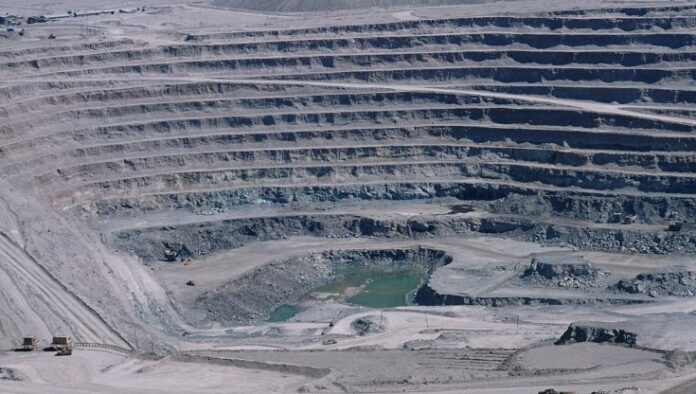

The Czech government has announced that coal mining at the Bilina lignite mine in northern Bohemia will be halted by 2033, two years earlier than originally planned.
The decision was made following negotiations between the Ministry of the Environment and the energy company ČEZ, which operates the mine through its subsidiary, Severoceske doly.
Environment Minister Petr Hladík revealed the new timeline at a press conference, stressing that the decision was driven by the government’s commitment to phase out coal in a legally sound and responsible manner.
“Our goal was to find a solution that would be legally flawless but at the same time take into account the promise made regarding the coal phase-out, which we have committed to as a government,” Hladík stated.
The Bilina mine, located in the northern Czech region of Bohemia, is one of the country’s largest and most significant coal mining operations, supplying lignite for the Czech power generation sector.
The new closure date of 2033 aligns with the Czech Republic’s broader environmental strategy to reduce coal dependence and transition towards more sustainable energy sources.
The move comes after months of discussions between the government and ČEZ, which owns Severoceske doly, the mining company responsible for Bilina.
ČEZ CEO Daniel Beneš emphasized the importance of the agreement, stating that the cessation of coal mining would coincide with the cessation of coal-fired power generation in the country.
“This decision is part of our broader strategy to move away from coal as an energy source and ensure a sustainable future for energy production in the Czech Republic,” Beneš explained.
The revised closure timeline is part of the Czech government’s efforts to meet its climate commitments under European Union regulations, as well as to improve air quality and reduce the country’s carbon emissions.
The Czech Republic has been under increasing pressure to accelerate its shift to greener energy alternatives, with coal being a significant contributor to the nation’s emissions.
Severoceske doly’s CEO, Ivo Pegrimek, also voiced his support for the decision, noting that the company’s commitment to legal certainty and clarity around the coal phase-out was crucial for future operations.
Pegrimek emphasized that the company welcomed the solution as it provided “legal certainty and coherence regarding the cessation of coal mining by 2033.”
The closure of Bilina by 2033 will mark a key step in the country’s transition to renewable energy. It is set to affect the energy sector, particularly as ČEZ works to transition its energy mix to more sustainable sources.
Meanwhile, Severoceske doly will continue its work at the Tusimice mine, another key asset in its portfolio, which is slated to close in 2029.
The Czech government’s accelerated coal phase-out plan aligns with broader European and global efforts to curb climate change and reduce reliance on fossil fuels.
As coal production comes to an end in the Bilina mine, the Czech Republic is expected to further invest in renewable energy infrastructure, creating new opportunities for cleaner power generation while managing the social and economic impacts of the transition.
This decision marks a significant shift in the country’s energy landscape, positioning the Czech Republic to meet its climate goals and contribute to a more sustainable future.