



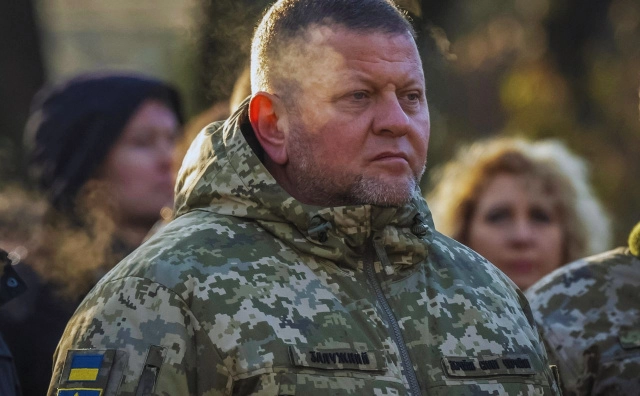

KYIV – Ukraine’s Ambassador to the UK and former Commander-in-Chief of the Armed Forces, Valerii Zaluzhnyi, has issued a stark warning against misplaced optimism in the war against Russia, stressing that peace will not come through diplomatic miracles or international breakthroughs.
Speaking at the “Export of Security: Ukrainian Weapons in the World” forum in Kyiv, Zaluzhnyi emphasized that Ukraine’s path to victory lies not in external hopes but in its ability to dismantle Russia’s military and economic capabilities.
He dismissed the idea of a quick return to Ukraine’s 1991 or even 2022 borders through negotiations, branding such notions as fantasy.
“I hope that in this hall there are no longer people who still believe in a miracle, or a ‘white swan’ that will bring peace to Ukraine, restore the 1991 or 2022 borders, and usher in great happiness,” Zaluzhnyi told a packed audience of defense experts, government officials, and foreign dignitaries.
Zaluzhnyi, who led Ukraine’s armed forces during critical phases of the war, said Russia has transitioned to a war of attrition since late 2023, relying on its reserves rather than rapid offensives.
“Victory will only be possible if Russia’s capacity to fight is fully dismantled,” he declared, highlighting the need to destroy Moscow’s military-economic infrastructure.
Ukraine, facing demographic strain and economic hardship, must adapt to a new form of warfare, Zaluzhnyi argued.
“Ukraine is simply incapable of fighting another kind of war given our demographic and economic situation, and we shouldn’t even entertain that thought,” he said, advocating for a strategy centered on technological superiority and cost-effective warfare.
The general reflected on the pivotal summer of 2023, when drones began reshaping the battlefield. Speaking at the Ukraine-UK Defense Technology Forum in April, Zaluzhnyi said that the advent of low-cost unmanned aerial systems had rendered traditional military hardware increasingly obsolete.
“Drones appeared in the sky on a scale that led to the transformation of the entire architecture of the battle,” he recalled.
With the battlefield now “absolutely transparent” due to constant aerial surveillance, the effectiveness of tanks and expensive air defense systems has diminished.
“Armored vehicles have become defenseless against cheap drones,” he noted, emphasizing that the economics of warfare now favor low-cost, high-impact systems.
This shift, Zaluzhnyi warned, has brought the war into a state of strategic stagnation reminiscent of World War I trench warfare. “Large-scale assaults are nearly suicidal,” he said. “Conventional tactics no longer yield results.”
In earlier remarks at Chatham House in March, Zaluzhnyi voiced concern about the geopolitical risks of U.S.-Russia negotiations, arguing that such talks could embolden Moscow and undermine European security.
He stressed that Ukraine is not only defending its sovereignty but also serving as NATO’s eastern shield.
Far from signaling defeat, Zaluzhnyi’s message was a call for strategic clarity and innovation. “As long as Russia retains the resources to attack, peace will not come from wishful thinking,” he said.
“It will have to be earned through technological innovation, strategic endurance, and the erosion of the enemy’s war-making ability.”