



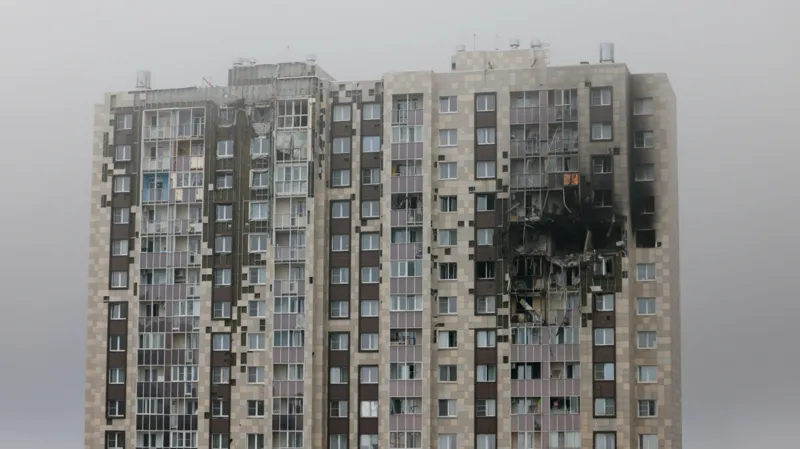

Russia’s Moscow region faced Ukraine’s largest reported drone assault as strikes hit an oil refinery, residential buildings and infrastructure during parliamentary elections
Ukraine has launched what Russian officials described as the largest drone attack on Moscow, sending hundreds of unmanned aircraft towards the capital and surrounding region while striking an oil refinery and residential buildings during Russia’s parliamentary elections.
Moscow Mayor Sergei Sobyanin said Russian air defences had destroyed 450 drones heading towards the capital, describing the assault as the most massive attack of its kind against Moscow. Russian authorities reported deaths and dozens of injuries.
The overnight barrage was part of a wider wave of Ukrainian attacks across Russia. Russian officials said more than 1,600 drones had been intercepted since Saturday, including the hundreds directed towards Moscow, although several targets were reportedly struck despite the extensive air-defence operation.
One of the most significant targets was the Moscow oil refinery, where authorities reported damage following a drone strike. Ukrainian officials said several important units at the facility were damaged, potentially affecting a major source of fuel supplies for the surrounding region.
Ukrainian President Volodymyr Zelensky said Kyiv had struck a key Russian oil-industry facility and a logistics site in the Moscow region. He described the targets as strategically important assets contributing billions of dollars to Russia’s continued war effort.
The refinery is an important part of Moscow’s fuel infrastructure. Ukrainian defence officials have said it supplies more than one-third of the Moscow region’s fuel, including petrol, diesel and aviation fuel, with some supplies also supporting Russia’s military operations.
Ukraine’s defence minister said attacks against such facilities were intended to reduce Russia’s ability to maintain its military campaign. Kyiv has increasingly targeted Russian energy infrastructure, arguing that refineries, fuel depots and logistics facilities contribute directly to Moscow’s capacity to sustain the war.
Russian authorities also reported damage to residential properties. In Sofyino, a 44-year-old woman was killed after a drone struck a three-storey residential building, while five other people, including two children, were injured, according to Moscow region Governor Andrei Vorobyov.
Vorobyov separately reported that an elderly man died after a private house was hit in the Orekhovo-Zuevo district. Russian authorities also said hundreds of residents were evacuated from damaged areas as emergency services responded to the consequences of the attacks.
Videos verified by the BBC showed explosions lighting the night sky over Moscow, while other footage showed a warehouse burning after the overnight attacks. The images provided a rare visual indication of the scale of the assault around the Russian capital.
The strikes also caused disruption to Moscow’s aviation network. Sheremetyevo airport warned passengers that temporary restrictions had been introduced overnight, while Vnukovo airport temporarily suspended arrivals and departures before restrictions were lifted on Sunday morning.
Although normal operations resumed, both airports warned passengers that delays could continue. The disruption demonstrated how Ukraine’s long-range campaign has increasingly affected areas far from the frontline, including major Russian transport and economic centres.
The attack coincided with the final day of Russia’s parliamentary elections, prompting Sobyanin to accuse Ukraine of attempting to disrupt the voting process. He said the attack was intended to interfere with the election but claimed the attempt had failed.
Russia’s parliamentary election has been held under tight Kremlin control, while critics have questioned its competitiveness and transparency. The timing of the drone offensive therefore added another layer of political significance to an already closely watched voting process.
Russian state media also reported that an election official was among people killed when a drone struck a bus in a Russian-controlled part of Ukraine’s Kherson region. The claim was attributed to the head of Russia’s election commission.
Ukraine has not limited its recent strikes to Moscow. Kyiv has increasingly attacked Russian energy, transport and logistics infrastructure, seeking to place pressure on facilities that support military operations and the wider Russian economy.
At the same time, Russian forces have continued launching large-scale attacks against Ukrainian cities and infrastructure. Ukrainian officials said Russian strikes on Saturday killed nine people across the Kyiv and Sumy regions, including three children.
In the Kyiv region, regional officials said a mother and her two young children were killed during a Russian attack in Fastiv. Another child injured in a separate strike in Vyshhorod, north of Kyiv, later died in hospital.
The north-eastern Sumy region also suffered casualties after a Russian drone struck a vehicle carrying several people. Local officials said four people were killed, adding to the civilian toll from continuing Russian aerial attacks across Ukraine.
In the Kherson region, Zelensky said a Russian drone struck a monastery, killing one member of the clergy and injuring four others. The incidents highlighted the continuing intensity of attacks against both military-linked and civilian locations.
The latest exchanges came despite US President Donald Trump saying the two sides had agreed not to target energy infrastructure. However, both Russia and Ukraine have continued conducting attacks against energy facilities during the past week.
Washington has also increased economic pressure on Moscow. Trump signed legislation on Friday providing powers to impose tariffs of up to 100% on major purchasers of Russian oil and gas, including countries such as China and India.
The sanctions legislation represents another attempt by the United States to restrict the economic resources available to Russia during the war. Energy remains central to the confrontation because oil and gas revenues provide an important source of income for Moscow.
The latest drone offensive therefore reflects a broader evolution of the conflict, with both sides increasingly relying on long-range weapons to strike infrastructure beyond immediate frontline areas. Energy facilities, transport networks and logistics centres have become increasingly prominent targets.
Russia’s full-scale invasion of Ukraine began in February 2022, and more than four years later the conflict continues to produce repeated attacks far beyond the frontlines. The latest strikes around Moscow demonstrate the expanding geographical reach of the confrontation.
For Moscow, the attack exposed vulnerabilities around critical infrastructure and disrupted transport during an important political weekend. For Kyiv, the strikes demonstrated its continuing ability to reach strategic facilities deep inside Russian territory.
The immediate consequences will depend partly on the extent of damage to the refinery and other infrastructure. Ukrainian officials have portrayed the strikes as an effort to weaken Russia’s war-supporting economy, while Moscow has characterised them as an attempt to disrupt the country.
The latest escalation also comes as diplomatic efforts remain uncertain and both governments continue to seek advantages through military and economic pressure. With attacks continuing on energy and logistics infrastructure, the conflict shows little indication of returning to a lower-intensity phase.
As Russia assessed the damage around Moscow and Ukraine counted casualties from Russian attacks, the latest exchange underscored the continuing human and strategic costs of the war, with critical infrastructure increasingly at the centre of both sides’ military campaigns.
This article was created using automation technology and was thoroughly edited and fact-checked by one of our editorial staff members