



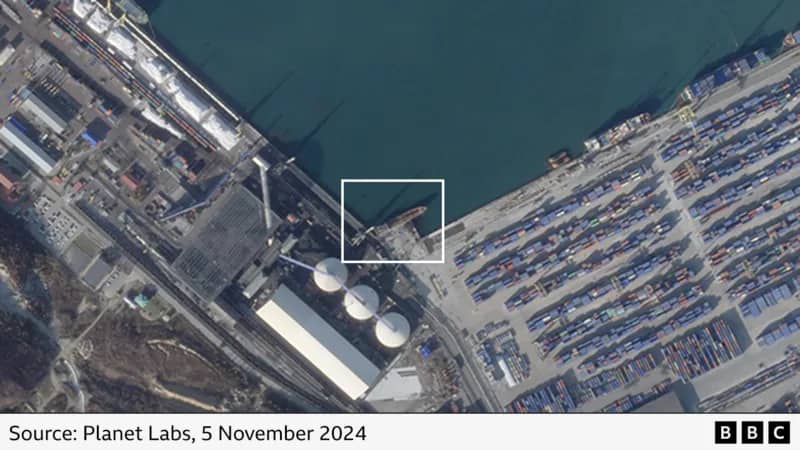

Russia has allegedly provided over a million barrels of oil to North Korea since March, violating United Nations sanctions, according to an analysis of satellite imagery by the UK-based Open Source Centre (OSC). The oil transfers are believed to be payment for weapons and troops North Korea has supplied to Moscow for its ongoing war in Ukraine.
The findings reveal repeated shipments between the two nations despite stringent UN measures aimed at restricting oil sales to Pyongyang. These sanctions, designed to curb North Korea’s nuclear weapons program, limit the country’s annual refined petroleum imports to just 500,000 barrels — a fraction of its estimated needs.
Satellite Evidence Unveiled
Satellite images captured by the OSC show at least 43 arrivals of North Korean oil tankers at a terminal in Russia’s Far East over the past eight months. The imagery depicts the tankers leaving North Korea empty and returning visibly laden with oil.
“These images strongly indicate a systematic and covert oil trade between Russia and North Korea,” a senior OSC analyst told the BBC. “Such transfers not only violate international sanctions but also undermine global non-proliferation efforts.”
Oil-for-Arms Exchange Suspected
Experts, including UK Foreign Secretary David Lammy, suggest that the oil shipments are part of a quid pro quo arrangement, with North Korea providing military aid to Russia in exchange for the vital fuel.
“North Korea’s military support for Russia’s war in Ukraine has deepened its international isolation,” Lammy said. “These oil shipments represent a flagrant breach of UN sanctions and further destabilize efforts to address North Korea’s nuclear ambitions.”
North Korea has been one of the few countries to openly support Russia’s invasion of Ukraine, supplying weapons and reportedly sending troops to assist Moscow. The partnership has raised alarm among Western governments, who view the collaboration as a mutual effort to evade sanctions and maintain political leverage.
Global Implications
The alleged transfers come at a critical juncture as international scrutiny of Russia’s actions continues to grow. The violation of UN sanctions could lead to heightened diplomatic tensions and calls for stronger enforcement measures.
“Russia’s defiance of UN sanctions undermines the credibility of the global sanctions regime,” said an unnamed diplomat familiar with the matter. “If these reports are confirmed, the international community must act decisively to address this blatant disregard for international norms.”
Russian Silence and North Korean Desperation
Russia’s foreign ministry has not responded to requests for comment on the allegations. Meanwhile, North Korea, which is barred from purchasing oil on the open market, relies heavily on illicit means to sustain its economy and military operations.
The revelations underscore the challenges faced by the UN and its member states in enforcing sanctions against North Korea, particularly when major powers are implicated in facilitating violations.
What Lies Ahead
As the international community examines the evidence, calls for increased monitoring and penalties against Russia and North Korea are expected to intensify. However, with both nations deeply entrenched in mutual reliance, resolving the issue may require more than diplomatic condemnation.
The alleged oil shipments underscore the fragile state of global sanctions regimes and the lengths to which countries will go to pursue their strategic interests, even at the expense of international law.