



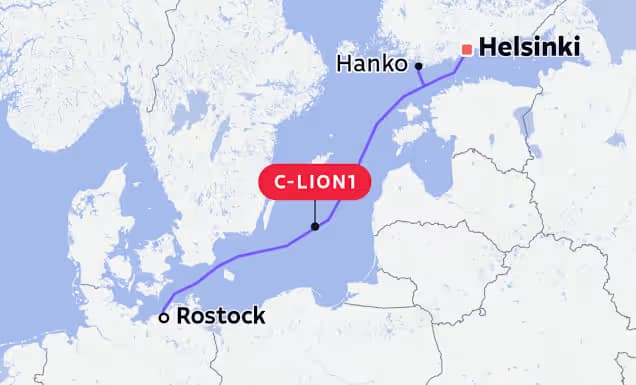

Repairs have been completed on the telecommunications cable that links Finland and Germany in the Baltic Sea, restoring full functionality after a disruption caused by a significant fault earlier this month.
The damage to the C-Lion1 cable, which was noticed early on the morning of November 18, was swiftly addressed, with the repair ship Cable Vigilance starting work immediately and completing repairs faster than expected, according to Cinia, the Finnish state-majority-owned company that operates the cable.
Ari-Jussi Knaapila, CEO of Cinia, commented on the rapid progress, stating in a press release on Friday, “Repairs were started quickly and the fault was fixed a bit faster than anticipated.”
The restoration of the cable’s service is crucial, as it plays a vital role in the communication infrastructure between Finland and Germany.
This cable was one of two damaged under suspicious circumstances in the Baltic Sea in recent days. On November 17, a separate cable connecting Sweden and Lithuania was also severed. This cable, managed by the Swedish firm Arelion, was repaired by Thursday evening and is now functioning at full capacity.
The timing and nature of the cable damage have sparked suspicions of sabotage, particularly after comments made by German Defense Minister Boris Pistorius, who suggested the possibility of deliberate actions behind the incidents.
According to reports from the Wall Street Journal, a Chinese-flagged freighter, the Yi Peng 3, allegedly dragged its anchor for over 160 kilometers along the seabed, causing significant damage to the cables.
The suggestion of foreign involvement has raised tensions, with various parties calling for investigations. Authorities from Finland, Sweden, and Lithuania have come together to form a joint investigative team to probe the incidents, according to Finland’s National Bureau of Investigation.
Russia has been widely speculated to be behind the damage, particularly given the region’s geopolitical tensions, but the Kremlin has firmly denied any involvement. Meanwhile, China has also found itself drawn into the inquiry.
Following reports of the freighter’s involvement, China’s Foreign Ministry stated on Friday that Chinese authorities are prepared to cooperate with the countries conducting the investigations.
This announcement came after Sweden officially requested China’s cooperation, as confirmed by Swedish Prime Minister Ulf Kristersson.
While the details of the investigation remain under scrutiny, the swift repair and restoration of services have been welcomed by the involved nations, ensuring the continued operation of vital international communication lines. The situation highlights the vulnerability of critical infrastructure and the growing concerns about security in the Baltic Sea.
The joint investigation is expected to continue as authorities work to uncover the full extent of the damage and determine the responsible parties.