



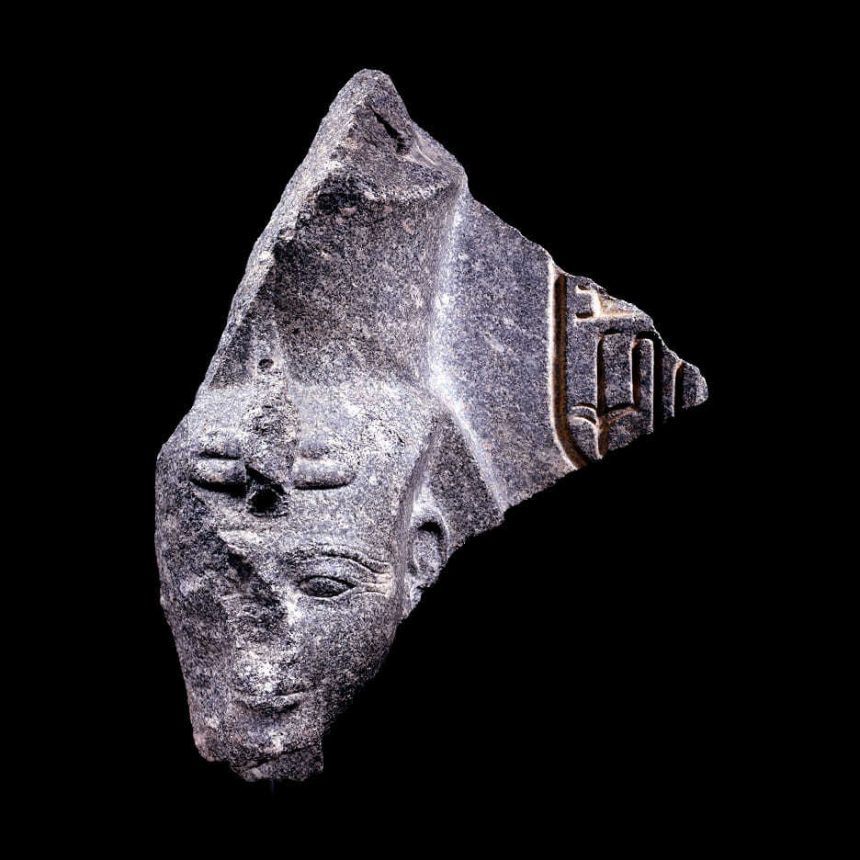

In a monumental victory for Egypt’s cultural heritage, the head of a statue belonging to the legendary King Ramses II has been successfully repatriated to its rightful home after a saga spanning over three decades.
In collaboration with various entities, the tireless endeavors of the Ministry of Tourism and Antiquities culminated in the triumphant return of this priceless artifact.
Officially handed over to Egyptian authorities in July, the statue head’s journey back to Egypt marks a significant milestone in the ongoing battle against the illicit trafficking of cultural treasures.
Mohamed Ismail Khaled, Secretary-General of the Supreme Council of Antiquities, hailed the recovery as a testament to Egypt’s relentless commitment to reclaiming its stolen heritage.
“This artifact’s retrieval underscores the unwavering dedication of the Ministry of Tourism and Antiquities, represented by the Supreme Council of Antiquities, in reclaiming Egyptian antiquities unlawfully smuggled out of the country,” remarked Khaled, expressing gratitude for the collaborative efforts that made the repatriation possible.
Shaaban Abdel Jawad, Director General of the Department of Antiquities Recovery and Supervisor of the Central Department of Antiquities Ports, shed light on the significance of the recovered piece.
Dating back over 3,400 years, the statue’s head originates from King Ramses II’s temple in Abydos, portraying the revered monarch seated among Egyptian deities.
Jawad revealed that the head had been stolen from its rightful place in the temple and illegally trafficked out of Egypt more than three decades ago. Its journey led it through various countries before resurfacing in Switzerland.
The painstaking efforts of Egyptian authorities, in collaboration with the Ministry of Foreign Affairs and Swiss counterparts, ultimately proved decisive in establishing Egypt’s ownership of the artifact and its unlawful removal from the country.
The successful repatriation of the statue head aligns with the joint cooperation agreement between Egypt and Switzerland to combat the illegal trade of cultural property.
The meticulous work of the Department of Antiquities Recovery, in tandem with diplomatic channels and international partnerships, exemplifies Egypt’s steadfast resolve to safeguard its rich heritage.
Notably, the initial identification of the statue head occurred in 2013 when it was spotted for sale in a London gallery. Subsequently, it made appearances in several countries before being traced to Switzerland, where the final steps in its repatriation were completed.
Upon its return, the statue head was entrusted to the storerooms of the Egyptian Museum in Tahrir Square, where it will undergo essential maintenance and restoration.
Its homecoming signifies not only the recovery of a tangible piece of Egypt’s past but also a symbolic triumph in the ongoing battle against the plundering of cultural heritage.
As Egypt celebrates the return of this cherished artifact, the repatriation of the statue head serves as a poignant reminder of the enduring value of preserving and protecting the world’s cultural legacy for future generations.
This article was created using automation and was thoroughly edited and fact-checked by one of our editorial staff members