



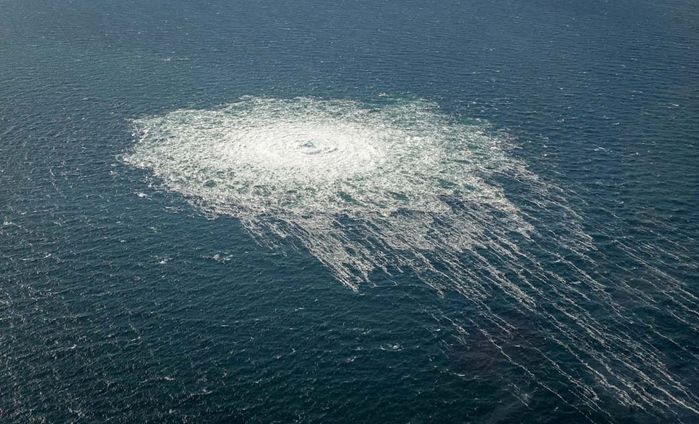

In the aftermath of the September 26, 2022, series of blasts that crippled Russia to Germany NS-1 and NS-2 natural gas pipelines, a shadow of uncertainty and suspicion looms over the investigation.
The consensus among Moscow’s adversaries now leans towards Ukrainian and Western involvement, diverging from initial speculations that pointed fingers at Russia.
However, the latest revelations, as reported by the Wall Street Journal (WSJ), suggest a new layer of complexity with Polish officials’ alleged obstruction of the probe.
The WSJ report unveils a troubling narrative of resistance from Polish authorities in cooperating with the international investigation into the Nord Stream pipeline sabotage.
European investigators, working diligently on the case, assert that crucial evidence has been withheld by Polish officials, raising eyebrows and casting a veil of suspicion over Warsaw’s role in the incident.
“Polish officials have resisted cooperating with an international probe into the sabotage of the Nord Stream natural-gas pipelines and failed to disclose potentially crucial evidence, according to European investigators working on the case,” states the WSJ report.
The investigators highlight that Polish authorities have been sluggish in providing information and have not fully disclosed vital evidence concerning the movements of the alleged saboteurs on Polish soil.
The reluctance of the former Polish government to collaborate has complicated efforts to determine whether the attack occurred with or without their knowledge.
European investigators have long believed that the attack originated from Ukraine via Poland. However, the lack of full cooperation from Warsaw has muddied the waters, leaving critical questions unanswered.
With a new government in office since December, hopes are now pinned on the willingness of the current administration in Warsaw to shed light on the unprecedented attack.
“Some senior European officials say they are considering approaching the office of Donald Tusk, Poland’s new prime minister, for help in investigating the biggest act of sabotage on the European continent since World War II,” reports the WSJ.
The investigators stress that they have not presented evidence linking the Polish government directly to the explosions. Even if some Polish officials were involved, it remains unclear whether it was with or without the knowledge of the political leadership.
Nevertheless, the apparent efforts by Polish officials to hinder the investigation have intensified suspicions regarding Warsaw’s role and motives in this geopolitical puzzle.
Poland, a prominent Eastern European NATO member, has long-standing ties with the United States on defense issues, particularly within NATO’s eastern flank.
The collaboration between the U.S. and Poland in matters of defence adds another layer of complexity to the ongoing investigation, fueling speculation about potential involvement by Polish intelligence or military.
As the international community eagerly awaits clarity on this significant act of sabotage, Moscow remains vigilant, closely monitoring these developments.
The revelations from the WSJ report hint at potential surprises and bombshells yet to come in the official European investigation, which is anticipated to be a protracted affair lasting for years.
The lingering question remains whether the world will ever unveil the complete truth behind this sophisticated and audacious sabotage operation.
The obstruction by Polish officials in the investigation not only raises doubts about their nation’s role but also underscores the challenges inherent in conducting a transparent and comprehensive inquiry into such a complex geopolitical incident.
The intrigue surrounding the Nord Stream mystery continues to deepen, leaving the global community on the edge of its seat, waiting for the next twist in this tale of international intrigue and subterfuge.
This article was created using automation technology and was thoroughly edited and fact-checked by one of our editorial staff members