



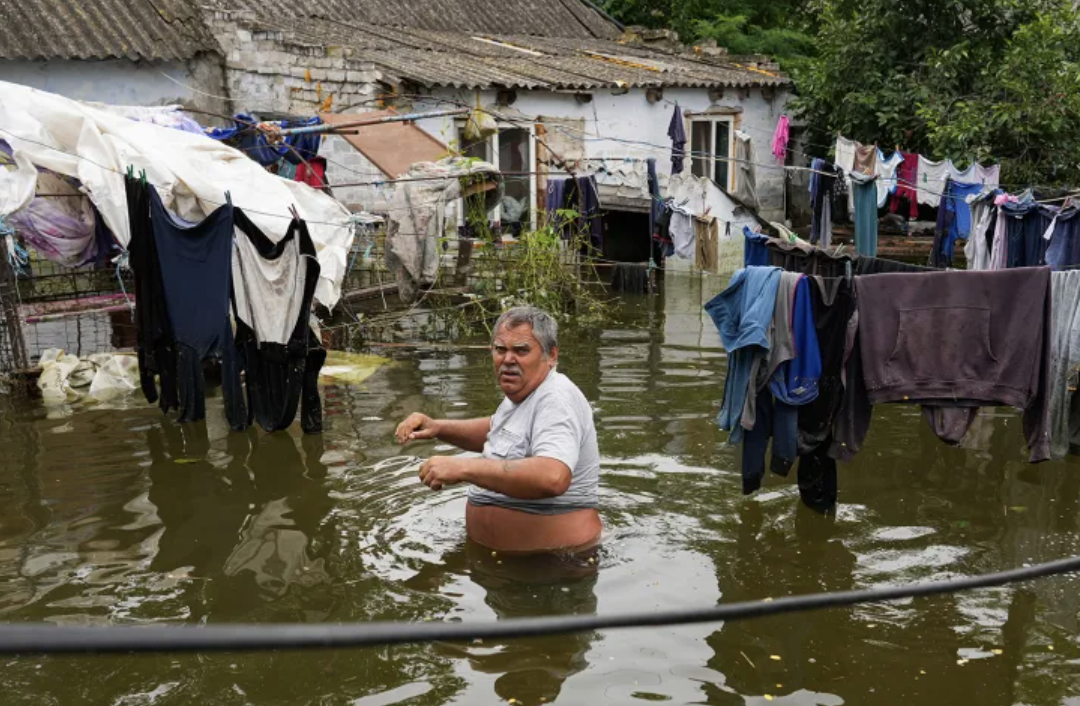
 to provide assistance to people in Russian-occupied areas.)
The Russian government has rejected offers from the United Nations (UN) to provide assistance to people in Russian-occupied areas affected by the catastrophic flooding caused by the collapsed Nova Kakhovka Dam. The dam breach, which occurred on June 6, unleashed a massive wave of water from the Dnipro River, engulfing communities across southern Ukraine, including the Russian-occupied parts of the Kherson region.
The devastating floods have resulted in the destruction of homes and farmland, necessitating the evacuation of thousands of residents. Furthermore, the flooding has contaminated drinking water supplies and raised concerns about a potential environmental disaster in the region.
In response to the crisis, the UN has called upon Russia to fulfill its obligations under international humanitarian law and accept assistance for the affected population. Denise Brown, the UN humanitarian coordinator for Ukraine, stated on Sunday that the organization would continue its efforts to provide life-saving aid to all those in need, regardless of their location. Brown emphasized, “Aid cannot be denied to people who need it.”
The death toll from the disaster has now climbed to 52. Russian officials reported that 35 people have died in the areas under their control, while Ukraine’s interior ministry confirmed 17 deaths and 31 individuals still missing. In total, more than 11,000 people have been evacuated from both sides of the affected region.
Ukraine has accused Russia of deliberately causing the dam’s collapse, pointing to the fact that the dam has been under Russian control since the early stages of its full-scale invasion in 2022. Supporting Ukraine’s claim, a team of international legal experts assisting the country’s prosecutors in their investigation declared it was “highly likely” that the dam’s collapse was a result of explosives planted by Russian forces.
The refusal by Moscow to accept UN assistance has raised concerns about the well-being of the affected population in Russian-occupied areas. The denial of aid only exacerbates the dire situation faced by the people in these regions, leaving them without access to critical support and relief efforts.
International observers and humanitarian organizations have criticized Russia’s decision, emphasizing the importance of providing assistance to those in need, regardless of political or territorial affiliations. The UN continues to call for Russia to reconsider its position and allow access for aid organizations to provide much-needed relief to the affected communities.
As the situation unfolds, it remains to be seen how Russia will respond to mounting pressure from the international community and the urgent needs of the people affected by the devastating flooding in the Russian-occupied areas of southern Ukraine.