



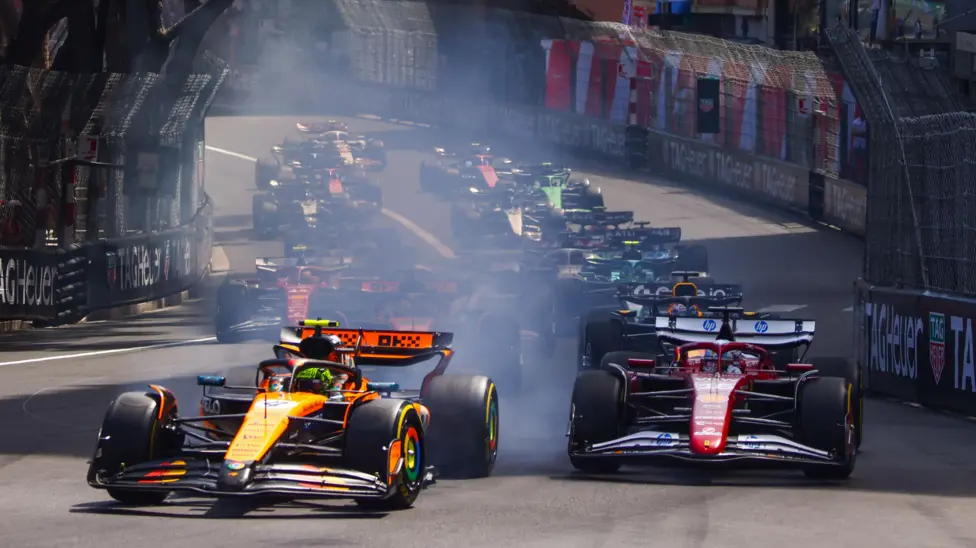

Monaco, Monaco, Principality of Monaco – New Formula One regulations could reshape qualifying and racing dynamics on the iconic street circuit
MONACO — Formula One drivers arrive at the Monaco Grand Prix this weekend with an unusual sense of anticipation, believing that the sport’s latest technical regulations could significantly alter the experience of racing around one of the most iconic and challenging circuits in motorsport.
For decades, Monaco has been known for spectacular qualifying laps but processional races, where overtaking opportunities are extremely limited on the narrow streets of the principality. This year, however, new power unit regulations and revised energy deployment systems have created optimism that the event could offer something different.
Among those looking forward to the challenge is Ferrari driver Lewis Hamilton, who believes Monaco’s unique characteristics may help reduce some of the disadvantages his team has experienced elsewhere this season.
“It’s the one track where power is not king,” Hamilton said ahead of the race weekend. “It’s definitely car performance. Our car could be really strong there.”
Hamilton’s confidence is shared by teammate Charles Leclerc, who has traditionally excelled on his home streets and remains one of the strongest performers in Monaco qualifying.
The street circuit’s layout places less emphasis on outright engine performance and more on mechanical grip, handling, and driver precision. That could help teams that have struggled to match rivals on high-speed circuits during the opening stages of the season.
The most intriguing aspect of this year’s Monaco race is the impact of Formula One’s new engine regulations. The latest power units feature an even split between internal combustion and electrical energy, while a revised overtake mode has transformed racing throughout the season.
The overtake system grants drivers running within one second of a rival an additional 0.5MJ of electrical energy per lap. The feature has already produced numerous wheel-to-wheel battles this season, often leading to repeated exchanges of position between competitors.
Drivers and teams have described these encounters as “yo-yo racing,” with the overtaking advantage frequently shifting between cars as the energy boost becomes available to whichever driver is trailing.
However, Monaco presents a unique challenge for the system. Unlike many circuits where energy recovery is difficult and electrical power must be carefully managed, Monaco’s numerous slow-speed corners and heavy braking zones allow cars to recover energy more efficiently.
As a result, drivers are expected to experience fewer situations where one car has a significant energy advantage over another. That could reduce some of the dramatic overtaking seen elsewhere this year but may still create opportunities under specific circumstances.
Teams believe tyre degradation could become a crucial factor. If a leading driver struggles with rear tyre wear and loses traction during acceleration, a pursuing rival armed with additional electrical energy may be able to mount a genuine challenge. Despite these possibilities, expectations remain measured.
One senior Formula One figure acknowledged that Monaco’s fundamental nature is unlikely to change completely, noting that the circuit’s narrow layout continues to limit overtaking opportunities regardless of technical innovations.
Last year’s Monaco Grand Prix featured only four overtakes across the entire race distance, a stark contrast to the season average of nearly 67 overtakes per event.
While few expect Monaco to suddenly become one of the most action-packed races on the calendar, even a modest increase in competitive battles would represent a significant shift. Qualifying, however, is where the new regulations are expected to have the greatest impact.
Throughout the season, drivers have frequently complained about energy limitations preventing them from extracting maximum performance during qualifying laps. Monaco’s layout may eliminate that problem.
The combination of numerous corners, shorter straights, and consistent braking zones means cars should be able to recover sufficient electrical energy throughout the lap.
That would allow drivers to deploy maximum power more consistently than at any other circuit visited so far this year. McLaren driver Oscar Piastri believes competitors will enjoy access to nearly full performance throughout their qualifying attempts.
The prospect has generated excitement among drivers who have spent much of the season adapting to energy management constraints. Leclerc suggested Monaco could become one of the strongest venues for the current generation of Formula One machinery.
The Ferrari driver highlighted the benefits of lighter cars and improved energy recovery, both of which are expected to enhance performance around the demanding street circuit. Additional modifications have also been introduced by the FIA for safety reasons.
Straight-line mode, which normally allows front and rear wings to open for increased speed on long straights, will be disabled during the Monaco weekend. Furthermore, full electrical deployment will only remain available up to 200 km/h before gradually reducing.
Despite these restrictions, teams remain optimistic about the quality of the competition. McLaren team principal Andrea Stella said Monaco should experience fewer of the energy-related challenges seen at other venues.
According to Stella, the circuit’s characteristics may actually create a different challenge altogether, requiring drivers to manage abundant power while navigating some of the tightest corners in world motorsport.
The result could be a fascinating test of skill, precision, and car control.
As Formula One celebrates another visit to one of its most historic venues, attention will focus on whether the sport’s newest technological era can breathe fresh life into a race long defined by its unpredictability on Saturday and its procession on Sunday.
For now, drivers, teams, and fans alike can only wait to discover whether Monaco’s famous streets are finally ready to deliver a different kind of Grand Prix.
This article was created using automation technology and was thoroughly edited and fact-checked by one of our editorial staff members