



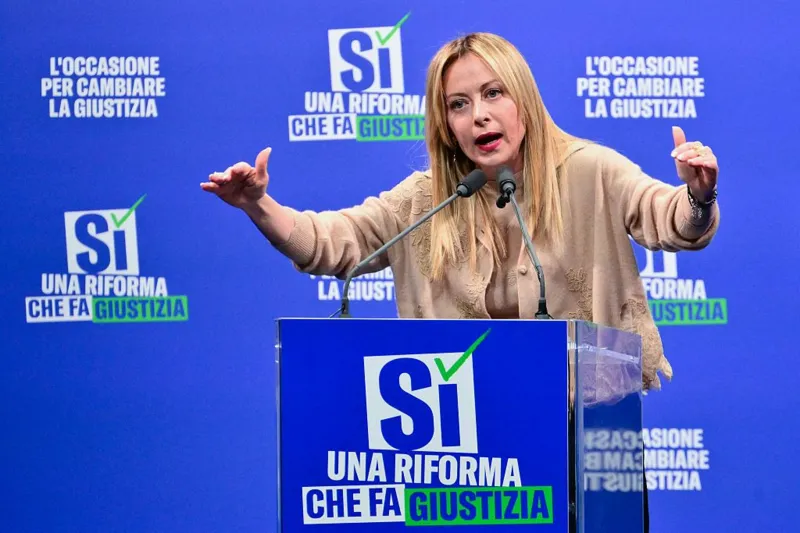

Italy, Lazio (Rome): Giorgia Meloni’s constitutional reform referendum sparks fierce political debate, with opposition framing it as a critical test of democratic balance
Italy is heading into a decisive constitutional referendum that could reshape its judicial system and redefine the political standing of Prime Minister Giorgia Meloni. What began as a technical reform proposal has evolved into a deeply polarised national vote, widely viewed as a referendum on Meloni herself.
The right-wing leader, in power for over three years, is now facing one of the most significant political challenges of her tenure. Meloni has taken an unconventional approach to mobilise support, reaching beyond traditional political platforms.
In a notable move, she appeared on a popular podcast hosted by a rapper and a fitness influencer, targeting younger voters who are often disengaged from formal politics. Her message remained consistent: the reforms would create a judicial system that is “more meritocratic, more efficient, and more accountable.”
The proposal focuses on separating the career paths of judges and prosecutors, alongside establishing independent governing bodies and a new disciplinary court. However, critics argue that the changes do little to address Italy’s longstanding issue of slow and overloaded courts.
Instead, they fear the reforms could weaken judicial independence and tilt the balance of power in favour of the executive. Opposition parties, trade unions, and civil society groups have rallied against the proposal, framing it as a potential threat to democracy.
Large demonstrations in Rome have underscored these concerns, with protesters calling for the preservation of constitutional safeguards established after World War II. The Italian constitution, drafted in the aftermath of fascism, is widely regarded as a cornerstone of democratic balance.
Any attempt to amend it, especially by a right-wing government, carries symbolic and political weight. Meloni and her allies have rejected accusations of authoritarian intent. They argue that the current system allows excessive influence by internal factions within the judiciary, often referred to as “correnti.”
Supporters of the reform claim that closer ties between judges and prosecutors create conflicts of interest. Some legal experts believe that separating their roles could enhance fairness and transparency. Yet the referendum’s complexity has left many voters confused about its actual implications.
This lack of clarity risks turning the vote into a broader expression of public sentiment toward the government. Recent polling suggests that low voter turnout could favour the “no” campaign.
Unlike other referendums, there is no minimum participation threshold, meaning the outcome depends solely on the majority of votes cast. This dynamic has intensified efforts on both sides to mobilise supporters.
Meloni’s strategy has focused on energising her base while appealing to undecided voters through direct and informal communication channels.
At the same time, the opposition has capitalised on growing dissatisfaction over economic pressures. Rising energy costs and global instability have weighed heavily on Italian households, influencing public perception of the government.
International developments have also played a role. Meloni’s perceived alignment with U.S. policies, particularly amid controversial conflicts abroad, has sparked criticism among voters wary of foreign entanglements.
Political analysts warn that these external factors could significantly impact the referendum outcome. For many Italians, the vote represents an opportunity to voice broader frustrations rather than a judgment on judicial reform alone.
Despite the high stakes, Meloni has made it clear she will not resign if the referendum fails. However, a defeat would likely weaken her political authority and embolden her opponents.
Her government has so far been marked by relative stability, a rarity in Italy’s often turbulent political landscape. A loss in the referendum could disrupt this stability and complicate her legislative agenda.
Looking ahead, Meloni has signalled ambitions for further constitutional changes, including expanding the powers of the prime minister’s office. A victory in this vote would strengthen her mandate to pursue those goals. Conversely, a rejection could slow or halt such plans, forcing a reassessment of her strategy.
It may also reshape alliances within her governing coalition. Within Italy’s political spectrum, opinions remain divided. Even some critics of Meloni support aspects of the reform, viewing it as a necessary correction to systemic flaws.
Others remain deeply sceptical, citing concerns about the concentration of power and the erosion of institutional checks and balances. These contrasting perspectives highlight the complexity of the issue. As voting approaches, the atmosphere remains tense and uncertain.
Campaign messages have grown increasingly personalised, reflecting the referendum’s transformation into a broader political contest. For voters, the decision carries implications beyond the technicalities of judicial reform.
It touches on questions of governance, accountability, and the future direction of Italian democracy. For Meloni, the stakes are equally high. A win would reinforce her leadership and validate her reform agenda. A loss, while not immediately threatening her position, would mark a significant political setback.
It would signal vulnerabilities at a time when domestic and international challenges are mounting. Ultimately, the referendum represents a critical moment for Italy. It will not only determine the fate of judicial reforms but also shape the trajectory of the country’s political landscape in the years ahead.
As the nation prepares to cast its votes, the outcome remains finely balanced. In a contest described by analysts as “too close to call,” every ballot could prove decisive.
This article was created using automation technology and was thoroughly edited and fact-checked by one of our editorial staff members