



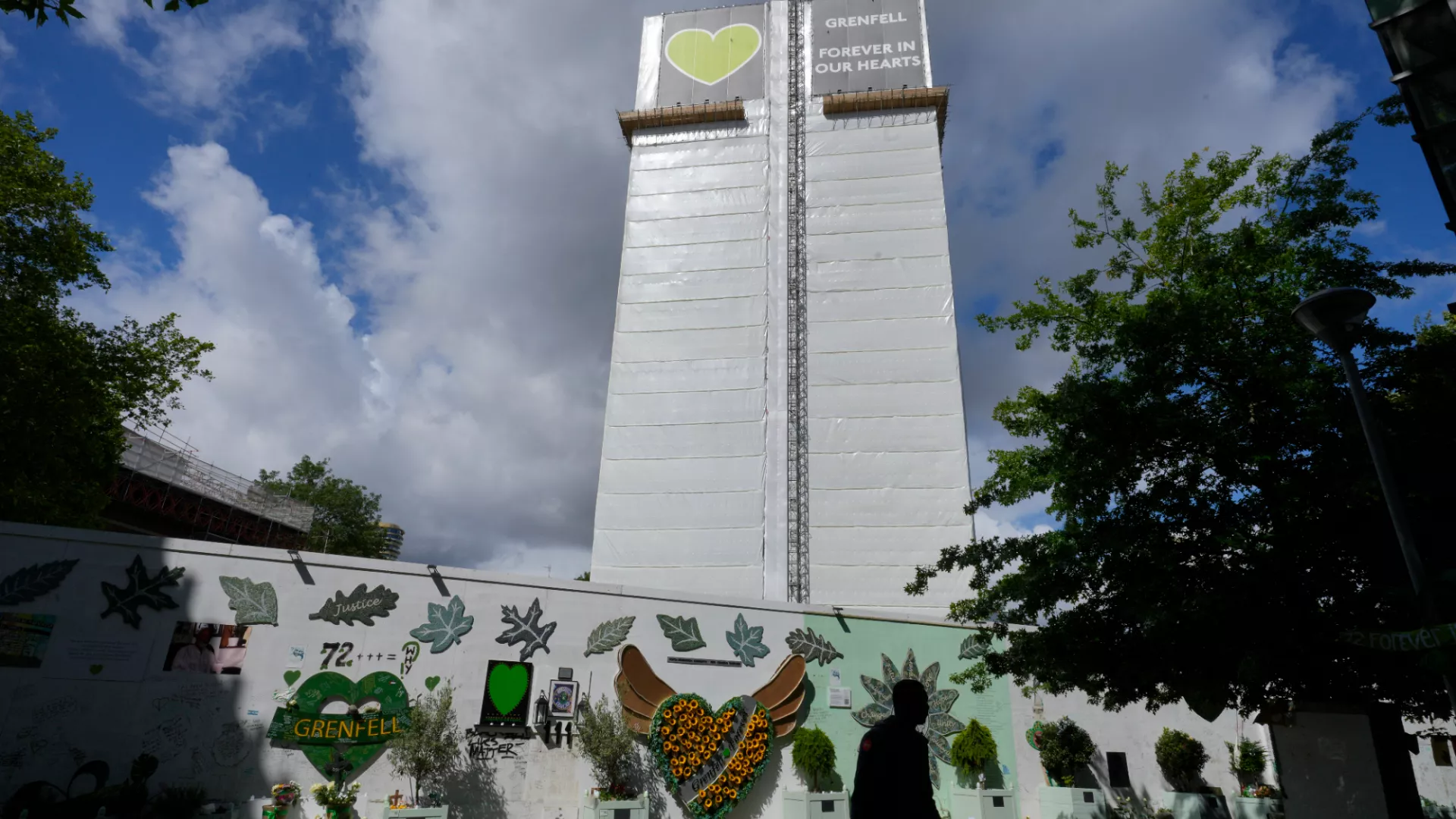

LONDON – The British government is facing mounting criticism over its decision to demolish Grenfell Tower, with some bereaved families calling the move “disgraceful and unforgivable.”
The charred remains of the 24-storey tower block in North Kensington, London, have stood as a stark reminder of the tragic fire that claimed 72 lives on June 14, 2017—the deadliest residential fire in the UK since World War II.
Covered in layers of protective wrapping, the building has been the subject of ongoing debate over its future.
On Wednesday evening, UK Deputy Prime Minister Angela Rayner informed those affected by the disaster that the tower would be pulled down.
The announcement has been met with a divided response, with some survivors and bereaved families expressing anger, while others acknowledge the necessity of the decision.
Bereaved Families Split Over Decision
Grenfell United, a group representing survivors and bereaved families, condemned the decision, accusing the government of disregarding their voices.
“Today’s meeting showed just how upset bereaved and survivors are about not having their views heard or considered in this decision,” the group said in a statement.
“Ignoring the voices of bereaved on the future of our loved one’s gravesite is disgraceful and unforgivable,” it added.
Some members of the community had hoped for the tower—or part of it—to be preserved as a memorial to the victims.
However, another group, Grenfell Next of Kin, said it understood the government’s stance, citing safety concerns.
“It (Grenfell Tower) cannot be propped up indefinitely due to safety concerns. As people who have lost families to tragedy, we would never want the responsibility of endangering anybody else,” the group stated.
While acknowledging the emotional significance of the structure, they expressed support for an alternative memorial to be established.
Grenfell Fire: A Preventable Tragedy
The fire, which began due to a faulty refrigerator, spread rapidly because of the building’s combustible cladding. A public inquiry into the disaster has exposed shocking negligence and failures in fire safety regulations.
Sir Martin Moore-Bick, chairman of the Grenfell Tower Inquiry, concluded that the tragedy was preventable. In a damning report, he attributed the fire’s escalation to “systematic dishonesty” by companies involved in manufacturing and selling flammable materials.
“The simple truth is that the tower’s residents were badly failed by authorities through incompetence and, in some cases, through dishonesty and greed,” Moore-Bick stated.
The Metropolitan Police confirmed last year that criminal charges related to the fire would not be announced until the end of 2026, adding to frustrations among survivors and bereaved families who are still waiting for justice.
Uncertain Future
The government has assured that no demolition work will take place before the eighth anniversary of the disaster in June 2025, giving families time to process the decision. However, discussions over the site’s future remain contentious.
Many continue to call for a permanent memorial to honor the victims and ensure such a tragedy is never repeated. Yet, for some, the demolition represents another painful chapter in a saga of governmental failings and broken promises.
As Grenfell Tower’s fate hangs in the balance, the debate over remembrance, accountability, and justice continues.