



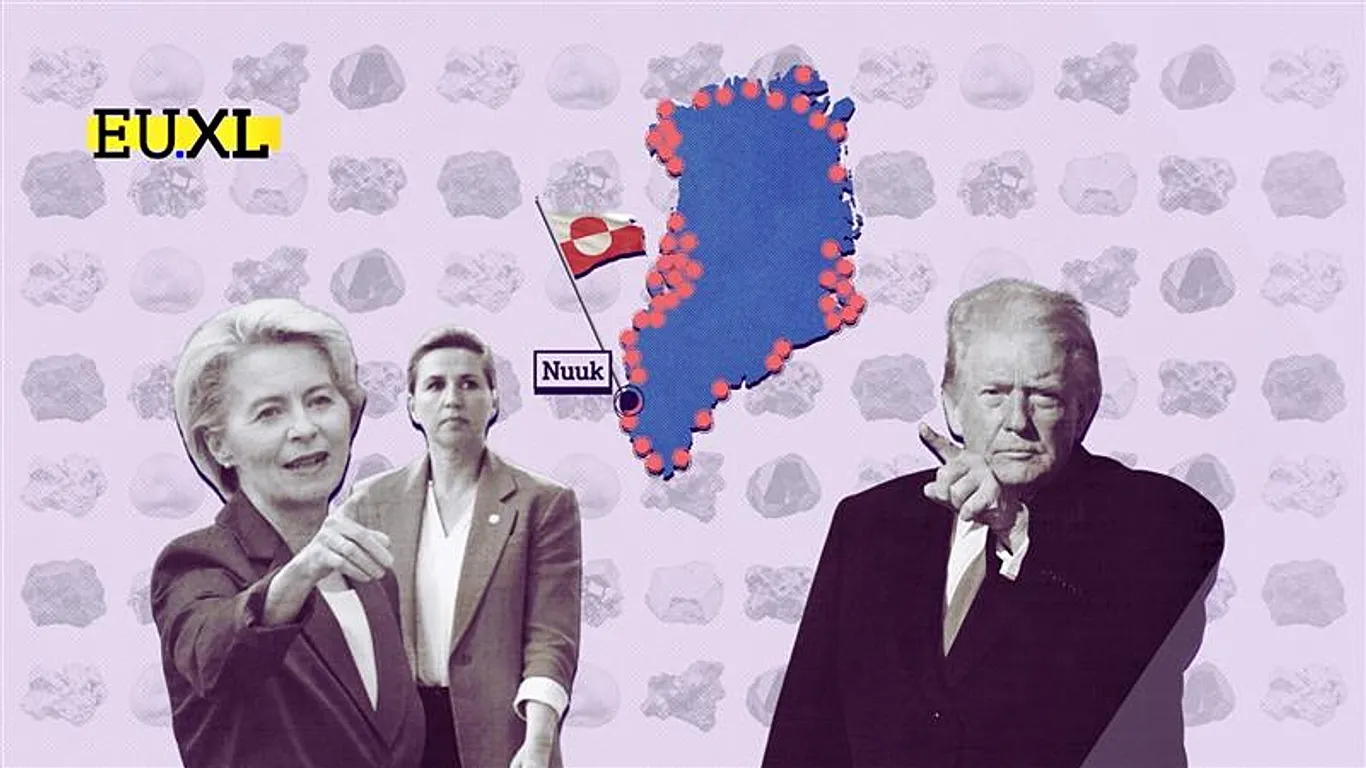

Greenland, the world’s largest island, has emerged as a critical battleground in the global race for rare earths and strategic minerals, drawing growing interest from both Europe and the United States.
As tensions rise over supply chains, tariffs, and geopolitical influence, the Arctic territory’s underground wealth is increasingly shaping international relations.
Rare earth elements are essential components in modern life. They are used in electric vehicles, wind turbines, smartphones, computer chips, and advanced military systems. While demand for these materials is soaring, China currently dominates global production and processing, supplying the vast majority of the world’s rare earths.
This dependence has alarmed Western governments, particularly as trade disputes and strategic rivalries with Beijing intensify.
Greenland’s mineral deposits offer a potential alternative. The island is believed to hold some of the world’s largest undeveloped reserves of rare earth elements, along with significant uranium resources.
Among the most prominent sites is Kvanefjeld in southern Greenland, which has long been viewed as a cornerstone of future critical mineral supply for Western economies.
For the United States and Europe, access to Greenland’s minerals represents more than an economic opportunity. Control over critical raw materials is increasingly seen as a matter of national security.
These resources underpin renewable energy transitions, digital technologies, and defense systems, making them central to long-term strategic planning.
However, this growing interest has not come without controversy. Disputes have emerged over mining licenses, environmental risks, and the role of foreign investment. Greenland’s government has faced internal political pressure, particularly over uranium extraction and its potential impact on the fragile Arctic environment.
In recent years, elections on the island have reflected deep divisions between economic development ambitions and environmental protection concerns.
The geopolitical stakes have also risen. Europe and the US are eager to secure reliable supplies without creating new dependencies, while China has previously shown interest in Greenland’s mining sector.
This competition has heightened scrutiny of foreign involvement and sparked debates over sovereignty, investment rules, and trade policies. In some cases, discussions around tariffs and trade restrictions have further complicated the picture.
Despite its small population, Greenland now sits at the center of a global contest over the future of technology and green energy. Its strategic location in the Arctic, combined with its mineral wealth, amplifies its importance far beyond its borders.
As climate change makes Arctic regions more accessible, international attention on Greenland is only expected to grow.
The challenge ahead lies in balancing global demand with local priorities. Greenland’s leaders must navigate competing international interests while ensuring that any development benefits its people and protects its environment.
As the world accelerates toward a greener and more technologically driven future, Greenland’s rare minerals may prove pivotal in reshaping global power dynamics.