



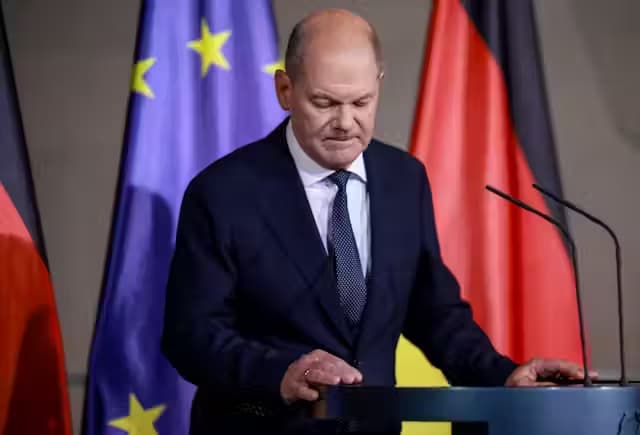

Germany is on the brink of a political crisis following the collapse of Chancellor Olaf Scholz’s governing coalition. The country is now set to hold national elections on 23 February, pending a series of formal procedures.
The crisis erupted after Scholz, from the Social Democrats, dismissed his finance minister and coalition partner, Christian Lindner of the Free Democrats (FDP), amid escalating tensions within the ruling coalition.
The rift came to a head last week during a heated debate in the Bundestag, Germany’s federal parliament, over the 2025 budget.
Scholz fired Lindner, accusing him of betraying his trust and prioritizing the interests of his party over the needs of the nation. Lindner, in turn, lambasted Scholz for leading Germany into a period of political uncertainty, further escalating the turmoil.
The decision to propose the 23 February election date is part of a broader political process. While still subject to formal approval, the timeline has received general support from the major parties involved.
According to the German press agency DPA, Scholz will face a confidence vote on 16 December. If the vote fails, as is widely expected, the proposal for the election will be submitted to President Frank-Walter Steinmeier.
Once the proposal reaches the president, Steinmeier will have 21 days to dissolve the Bundestag, setting the stage for the upcoming election.
The political landscape is currently in flux, with both Scholz’s Social Democrats and the opposition parties, particularly the Christian Democratic Union (CDU), preparing for what is expected to be a highly contested vote.
The crisis has sent shockwaves through Germany and beyond. As Europe’s largest economy, the fallout from the collapse of Scholz’s coalition is expected to reverberate across the continent.
The instability comes at a time of heightened uncertainty about the future of the European Union, particularly after the recent victory of Donald Trump in the United States presidential election, which has raised concerns over global security and economic stability.
Scholz had initially proposed holding the no-confidence vote in January, followed by elections in mid-March. However, opposition leader Friedrich Merz of the CDU rejected this plan, insisting that elections be held sooner.
As a result, both major parties, including the Greens and the FDP, have reportedly agreed on the 23 February date as the most feasible solution.
The immediate aftermath of the coalition’s collapse has left Germany in a state of disarray, with key political figures scrambling to adjust to the rapidly shifting situation.
Scholz’s decision to fire Lindner has fractured the once-stable coalition, and the uncertain political climate has cast doubt on Germany’s ability to effectively address the challenges it faces domestically and internationally.
With the election date now on the horizon, all eyes will be on the political maneuvering that will unfold in the coming weeks.
The outcome of the confidence vote on 16 December will be crucial in determining the exact course of events, as Germany prepares for one of its most uncertain political moments in recent history.
This article was created using automation technology and was thoroughly edited and fact-checked by one of our editorial staff members