



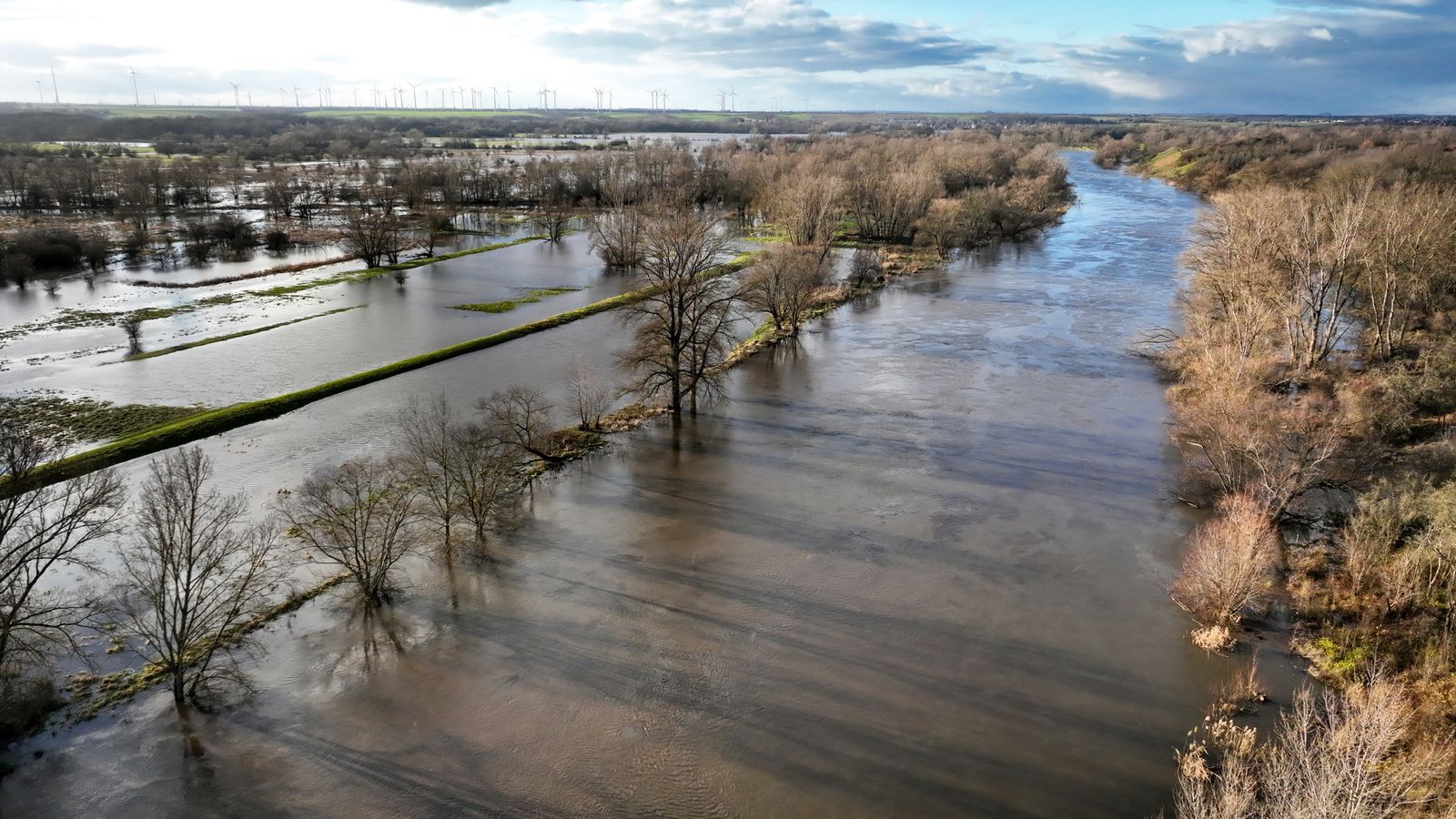

Towns in northern Germany and the Netherlands are grappling with severe flooding, prompting evacuations, emergency responses, and the reinforcement of dykes as rivers and streams overflow due to relentless heavy rain.
Germany’s northern and eastern regions have been particularly hard-hit, with fresh downpours exacerbating an already saturated ground.
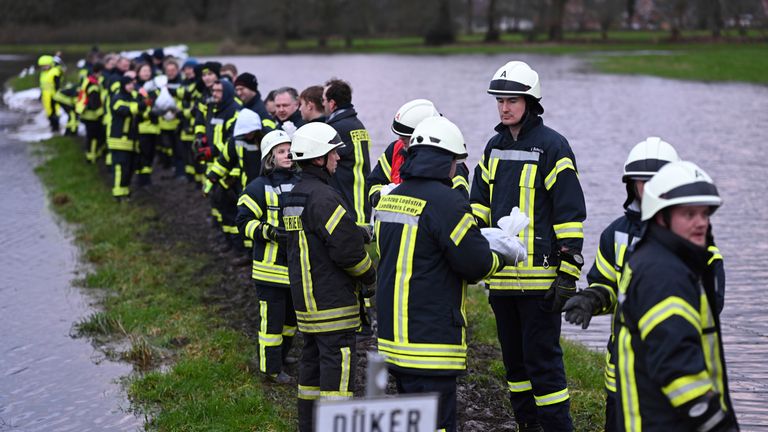
Firefighters and volunteers are working tirelessly to bolster dykes and contain the rising floodwaters. In Braunschweig, an innovative approach involving an artificial dyke—a long tube filled with water from the surging river—has been employed to safeguard the downtown area.
The situation remains critical despite these efforts, and more flooding is anticipated in the coming hours, according to German news outlet MDR.
In Braunschweig, roads have been closed, and the city is on high alert. It is located just 43 miles (70km) east of Hanover. The town of Windehausen, approximately 90 miles (144km) to the south, has not been spared either.
Hundreds of residents have been compelled to leave their homes as the town lost power, exacerbating the challenges faced by authorities.
A photo from the Nordhausen District Office reveals widespread flooding, raising concerns about the potential impact on homes and infrastructure.
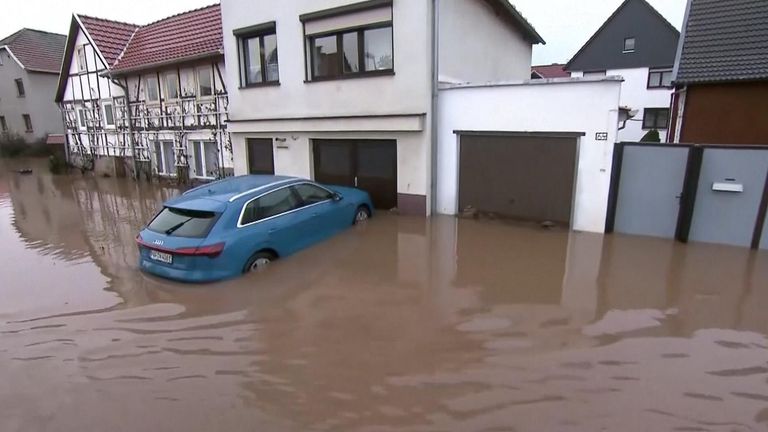
Although the situation is currently deemed “stable” in Windehausen, the Saxony-Anhalt region grapples with persistently high water levels affecting rail travel.
The Helme area, near the Kelbra dam, is under the highest alert level of four. Further south, the Saale River has breached its banks, submerging extensive areas between Halle and Roepzig.
The aftermath of the flooding has been felt in Uplengen, near Bremen in northern Germany, where volunteers and firefighters have worked tirelessly to reinforce flood defences with sandbags.
Meanwhile, in the eastern Netherlands, several floodplains are underwater, and temporary dykes are being erected using large sandbags to counteract the surging waters.
The various branches of the Rhine, flowing through the Netherlands, are expected to peak on Thursday, adding to the challenges Dutch authorities face.
Dutch Prime Minister Mark Rutte acknowledged the gravity of the situation, stating that “the high water causes problems in parts of the country.”
As the crisis unfolds, communities on both sides of the German-Dutch border are grappling with the immediate impacts of the floods and preparing for the challenges that may lie ahead.
The resilience of the affected towns and the collaborative efforts of emergency responders and volunteers stand as a testament to the communities’ determination to weather this natural disaster.
However, with more rain in the forecast and water levels expected to rise further, the region remains on high alert, emphasizing the need for continued vigilance and support from local and national authorities.