



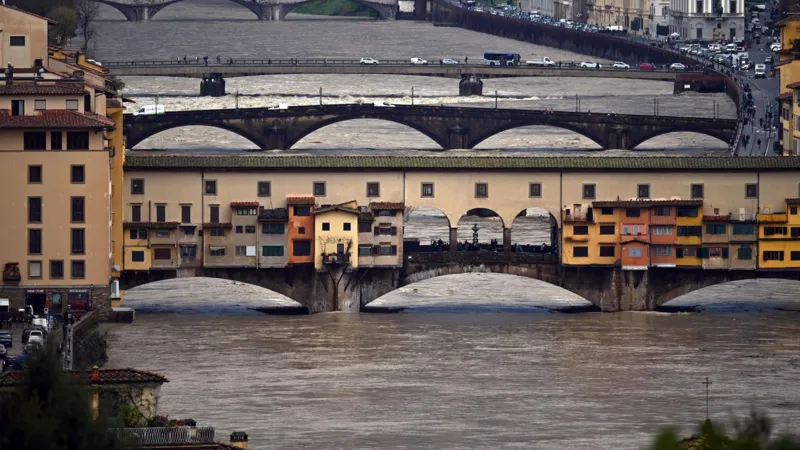

Torrential rain has triggered severe flooding and landslides across northern Italy, prompting red weather alerts in parts of Tuscany and Emilia-Romagna, including major cities such as Florence and Pisa. Authorities have urged residents to remain cautious as heavy rainfall continues to impact the region.
Florence saw nearly a month’s worth of rainfall in just a few hours on Friday morning, with landslides and mudslides reported in Bologna. Emergency services have been working around the clock to respond to distress calls, particularly in areas affected by rising river levels and flooded roads.
Heavy Rainfall and Widespread Disruption
According to the national fire brigade, dozens of calls for assistance were received after the Rimaggio river overflowed, inundating the Sesto Fiorentino area on the northern outskirts of Florence. In Pisa, flood barriers were being erected along the Arno River as water levels surpassed the first flood-risk threshold.
Road closures and fallen trees have made travel difficult across affected regions. Officials in Florence advised residents to avoid all non-essential travel after sections of the A1 motorway were partially shut down due to flooding. Schools were closed in more than 60 municipalities, while several campuses of the University of Florence also suspended operations.
A family of four was rescued from a landslide in Badia Prataglia, Tuscany, on Thursday evening, local media reported. Authorities have so far not reported any casualties, but the situation remains critical as further rainfall is expected.
Record Rainfall and River Swells
Florence has received more than double its average March rainfall of 61mm over the past three days. More than 53mm of rain fell in just six hours on Friday morning, adding to the 36mm recorded overnight. The relentless downpour has overwhelmed drainage systems, leading to localized flash floods.
In Emilia-Romagna, where some rivers were already swollen from previous downpours, concerns are growing over the potential for further flooding. The region has a history of extreme weather events, with more than 1,000 people evacuated last September when Storm Boris battered the area.
Ongoing Weather Alerts and Climate Concerns
The Italian Civil Protection Department has warned that red weather alerts will remain in effect throughout Friday as heavy rain and thunderstorms continue to move across the northern half of the country. However, forecasts indicate that drier weather may begin to set in by Saturday.
Meteorologists attribute the extreme weather to an area of high pressure in the northeast Atlantic, which has disrupted the usual path of low-pressure systems. Instead of moving towards northwestern Europe, these systems have been diverted through the Mediterranean, bringing severe storms to Italy.
Experts have also highlighted the role of climate change in intensifying such extreme weather patterns. Europe is the fastest-warming continent, and scientists from the World Weather Attribution group have previously linked similar floods in Emilia-Romagna to rising global temperatures.
A warmer atmosphere holds more moisture, leading to heavier rainfall and increased flood risks. As emergency teams continue their response efforts, residents of affected areas remain on high alert, bracing for potential further disruptions before the storm subsides.
This article was created using automation technology and was thoroughly edited and fact-checked by one of our editorial staff members