




Finland, Northern Ostrobothnia: New cross-border passenger service reconnects northern Finland with Sweden, strengthening Nordic rail links and wider European travel
A new passenger train service linking Finland and Sweden has officially begun operations, restoring a historic cross-border railway connection that had been absent for nearly four decades. The twice-daily service connects the Finnish coastal city of Oulu with Haparanda in northern Sweden, creating a renewed transport link between the neighbouring Nordic countries.
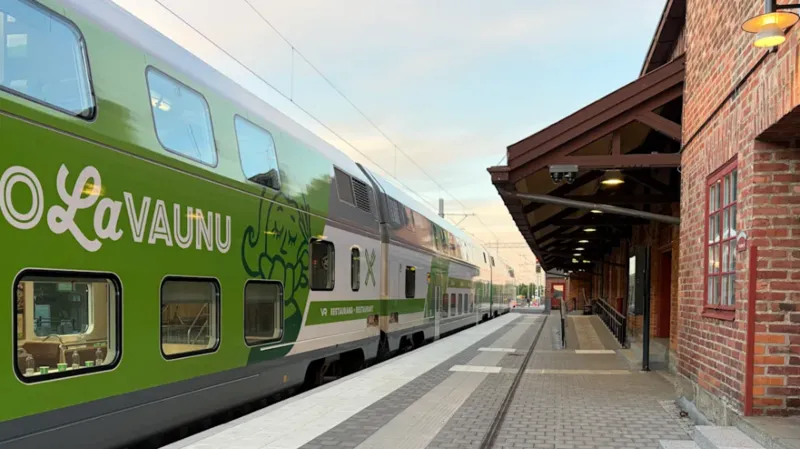
The inaugural train departed Oulu shortly after 05:00 local time on Monday, beginning its journey towards the Finnish-Swedish border. The double-decker train travelled along Finland’s western coast before reaching the Torne River, which forms part of the international border between Finland and Sweden. Its arrival marked an important moment for regional rail travel.
As the inaugural service crossed the Torne River and entered Sweden, the train continued towards Haparanda station, where crowds gathered to welcome the passengers. People waved Finnish and Swedish flags as the train arrived, reflecting the significance of restoring regular passenger rail travel between the two neighbouring countries after decades of interruption.
The renewed service is being viewed as an important development for transport cooperation between Finland and Sweden. It also creates opportunities for passengers travelling beyond northern Scandinavia, providing a connection into Sweden’s wider railway network. Although passengers continuing south must transfer trains at Haparanda, the route nevertheless expands international rail possibilities.
Historic Railway Connection Returns
The passenger connection was previously suspended between the late 1980s and early 1990s, following years of relatively low passenger demand. Technical differences between Finland’s railway infrastructure and the systems used elsewhere in Europe also created difficulties. Those challenges contributed to the disappearance of regular cross-border passenger services on the route.
One of the major technical differences concerns railway track gauge. Finland uses a wider track gauge than the European standard found across much of continental Europe. The system is partly a historical legacy of Finland’s period as a Grand Duchy under the Russian Empire during the nineteenth and early twentieth centuries.
Finland’s railway gauge was developed to match the wider Russian system, creating an infrastructure difference that remains relevant for international railway operations today. The country is currently working on railway projects intended to bring parts of its network closer to the European standard, although such changes require significant planning, investment and technical coordination.
The reopening of the Oulu-Haparanda service demonstrates that these differences do not necessarily prevent cross-border passenger travel. Instead, railway operators can develop connections that allow passengers to transfer between compatible services. The new route therefore represents a practical step towards improving travel between Finland, Sweden and the wider European railway network.
A 100-Minute Cross-Border Journey
The new journey between Oulu and Haparanda takes approximately 100 minutes and operates twice daily. The service follows Finland’s western coastline before reaching the international border. For residents and visitors in northern Finland, the connection offers a new public transport option for reaching Sweden without relying entirely on road transportation or air travel.
Haparanda holds particular importance because of its location directly alongside the Finnish town of Tornio. Together, the neighbouring towns form an important cross-border urban area where Finnish and Swedish communities interact closely. The restored railway connection strengthens this relationship while providing passengers with easier access to transport networks on both sides.
However, passengers travelling onward from Haparanda will need to change trains before continuing towards southern Sweden. The Finnish service does not operate directly through Sweden, meaning that travellers must transfer at the border station. Despite this limitation, the connection provides an important link between Finland’s railway system and Sweden’s extensive national rail network.
The new service could become increasingly valuable if passenger demand grows and connections with other trains are improved. Better coordination between Finnish and Swedish railway operators could eventually make longer international journeys easier for passengers. The immediate service, however, already represents a significant improvement over the absence of regular cross-border passenger trains.
Connecting Northern Finland With Europe
The renewed railway link has significance beyond the relatively short journey between Oulu and Haparanda. By connecting northern Finland with Sweden’s railway network, it creates opportunities for passengers to continue travelling south through Scandinavia and eventually into continental Europe using a combination of international train services and transfers.
The connection also makes possible an extraordinary rail journey of around 5,000 kilometres between Portugal’s Algarve region and Kolari, Finland’s northernmost train station. Although such a journey would require multiple connections, the restored Finnish-Swedish link provides an important piece of the railway network needed to connect Europe’s far northern and southwestern regions.
The development comes as rail travel experiences renewed popularity across Europe. Governments and railway operators have increasingly focused on improving international connections, while passengers have shown growing interest in travelling by train between European countries. The Finnish-Swedish service adds another cross-border option to this expanding network.
For northern Finland, the development could be particularly significant because of the region’s geographical distance from major European transport centres. A functioning rail connection through Sweden gives passengers another route towards the rest of the continent. It could support tourism, business travel and regional economic activity if demand continues to increase.
Helsinki and Stockholm Linked by Rail
The new connection also creates the possibility of travelling between Finland’s capital, Helsinki, and Sweden’s capital, Stockholm, by train in approximately 24 hours. Although the journey remains considerably longer than flying, it provides an alternative for travellers who prefer rail transportation and want to avoid short-haul air travel.
The Helsinki-Stockholm journey would require passengers to use several railway services and make connections along the route. Nevertheless, the restored Oulu-Haparanda link helps strengthen the wider Scandinavian railway network. It demonstrates how relatively short regional connections can contribute to much longer international journeys across multiple European countries.
Finland’s transport minister welcomed the return of the cross-border service, saying cooperation between Finland and Sweden was continuing to grow. The minister described the renewed railway connection as another example of closer cooperation between the two Nordic neighbours, particularly in the area of transportation and regional connectivity.
The Finnish government sees stronger connections with Sweden as valuable for both countries. Improved rail services can facilitate movement between communities, support tourism and provide passengers with alternatives to private cars and aircraft. The reopening therefore carries significance not only for railway enthusiasts, but also for wider regional transport planning.
Railway Travel Enters a New Phase
Elisa Markula, chief executive of Finland’s state-owned railway operator VR, also expressed optimism about the future of the new service. She said she hoped the route would benefit from what she described as a renaissance in train travel across Europe, where passenger numbers have been increasing in recent years.
Markula told AFP that train travel was experiencing renewed interest throughout Europe and that Finland was also seeing significant growth in passenger numbers. Her comments highlight the broader environment in which the Oulu-Haparanda service has been launched, as European travellers increasingly consider trains for international journeys.
The renewed interest in rail travel has encouraged countries to strengthen cross-border services and improve connections between national railway systems. While trains cannot always compete with aircraft on journey times, they can offer passengers a different travel experience while connecting city centres and reducing the need for additional airport transfers.
For Finland, expanding railway connections towards Sweden is particularly important because the country occupies Europe’s northeastern edge. Sweden provides the most direct land-based railway route towards the rest of the continent. The Haparanda connection therefore has strategic importance for Finland’s efforts to strengthen its position within Europe’s broader international rail network.
Challenges Still Remain
Despite the enthusiasm surrounding the reopening, several challenges could influence the future success of the route. Passengers travelling beyond Haparanda must currently transfer to another train, while differences in railway infrastructure continue to complicate seamless international services. Future improvements will depend on passenger demand, infrastructure investment and cooperation between railway operators.
Finland’s plans to update parts of its railway infrastructure to match European standards could eventually make international train operations more straightforward. However, changing railway infrastructure across an extensive national network is a complex and expensive undertaking. For now, cross-border services will continue relying on operational solutions that accommodate existing differences between railway systems.
Passenger numbers will ultimately determine whether the restored connection becomes a major international rail corridor. If demand remains strong, railway authorities could have greater incentives to improve schedules, connections and infrastructure. Increased tourism and business travel between northern Finland and Sweden could also provide additional support for the service.
The initial launch nevertheless represents an important milestone. After nearly four decades without regular passenger trains on the route, travellers once again have a direct service connecting Oulu with Haparanda. Its success could encourage further investment in cross-border railway connections and strengthen the role of rail travel across northern Europe.
A New Chapter for Nordic Rail Travel
The first passenger train from Oulu to Haparanda represents more than the return of a 100-minute journey between two neighbouring cities. It restores a railway connection that disappeared decades ago and provides northern Finland with renewed access to Sweden and, through onward connections, the wider European continent.
The service also arrives at a time when European countries are seeking to improve international railway networks. Cross-border trains can connect communities that have historically been separated by national boundaries, while offering passengers alternatives to cars and aircraft. The Finnish-Swedish route demonstrates how regional services can contribute to broader international connectivity.
For travellers, the twice-daily service provides a new way to cross the Finnish-Swedish border and potentially continue much farther south. For businesses and communities, improved transport links could encourage tourism, economic activity and closer cooperation. Its long-term importance will depend heavily on passenger numbers and the development of future railway connections.
For now, the arrival of the inaugural train in Haparanda marks the beginning of a new chapter in Nordic rail travel. After nearly 40 years of interruption, Finland and Sweden once again have a regular passenger railway connection, creating new possibilities for journeys across Scandinavia and Europe.