



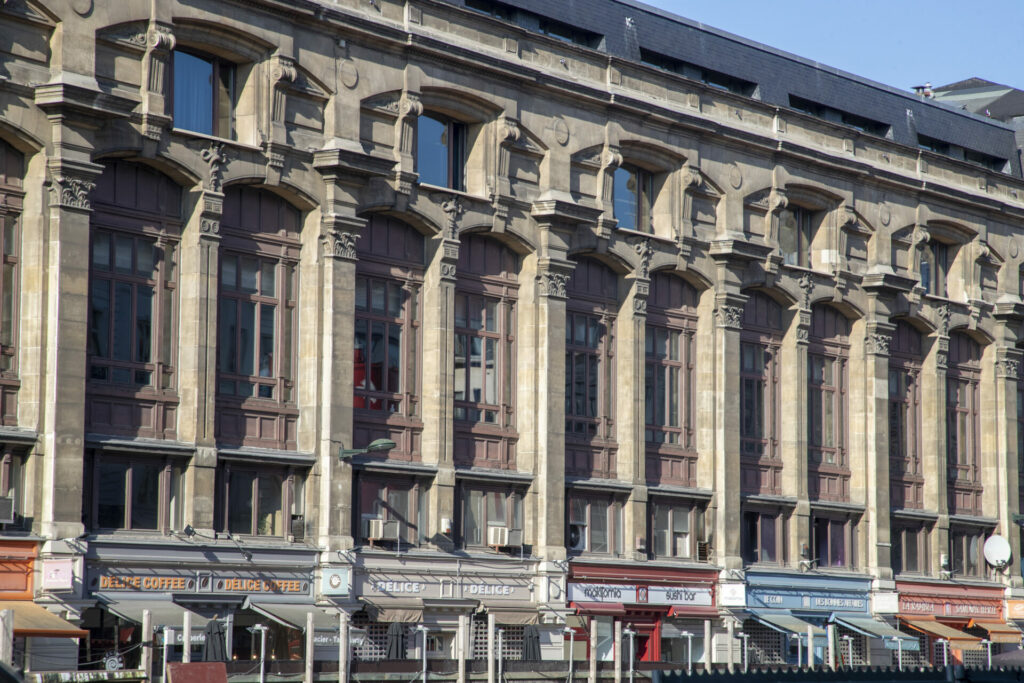

Belgium, Brussels-Capital Region: Mayor Philippe Close postpones public consultations as uncertainty surrounds demolition permits and Metro 3 construction timeline
Brussels Mayor Philippe Close has announced that consultations with residents and tenants around the Palais du Midi will not begin until there is greater clarity regarding the timeline for demolition and reconstruction permits. The decision underscores growing uncertainty surrounding one of the Belgian capital’s most ambitious infrastructure projects—the Metro 3 line.
Speaking during a special committee meeting on Tuesday, Close confirmed that while preparations for related works are moving ahead, critical aspects of the project remain unresolved. Chief among these is the planned demolition of the interior of the Palais du Midi, a historic structure owned by the City of Brussels.
The Metro 3 project, designed to improve north-south connectivity across Brussels, has encountered several technical challenges, particularly in the section that runs beneath the Palais du Midi.
Engineers had initially planned to use a technique known as “jet grouting” to stabilize the subsoil during tunnelling operations. However, this method has proven unsuitable due to unexpected ground conditions.
Close explained that extensive test drillings were conducted, particularly in the building’s parking areas, in an effort to assess feasibility. While these tests provided useful insights, significant complications arose when attempts were made to evaluate conditions in the cellars.
Low ceilings and occupied spaces hindered thorough testing, limiting engineers’ ability to fully understand the underground environment. “These constraints have made it difficult to apply the originally planned construction methods,” Close noted during the hearing.
As a result, authorities are now reassessing technical solutions, which has contributed to delays in finalizing permits for both demolition and reconstruction.
The mayor emphasized that launching consultations without clear timelines would risk creating confusion and frustration among residents. “It would be premature to engage with local communities when we cannot provide precise information about the project’s schedule,” he said.
Residents living near the Palais du Midi, as well as tenants within the building, have been awaiting updates on how the project will affect them. Concerns include potential displacement, noise disruption, and long-term changes to the neighborhood’s character.
Local advocacy groups have called for greater transparency, urging city officials to involve the public as early as possible. Despite these concerns, Close maintained that meaningful consultations must be based on concrete information.
He stressed that multiple procedural steps remain, including approvals for demolition and reconstruction permits, which could still be subject to revisions or legal challenges.
The Palais du Midi itself holds cultural and historical significance in Brussels. Its future has become a focal point in debates over balancing urban development with heritage preservation. While the exterior of the building is expected to be retained, the need to demolish its interior has sparked criticism from preservationists.
City officials argue that the Metro 3 project is essential for addressing Brussels’ growing transportation demands. The line is expected to significantly reduce travel times and alleviate congestion on existing routes. However, the complexities involved in constructing tunnels beneath densely built urban areas have made progress slower than anticipated.
In parallel with these developments, Close confirmed that renovation works on Avenue de Stalingrad are set to begin in October. This aspect of the project is moving forward independently of the uncertainties surrounding the Palais du Midi.
The planned renovation of Avenue de Stalingrad is part of a broader effort to modernize public spaces and improve mobility in the area. The works are expected to cause temporary disruptions, but city officials have pledged to minimize inconvenience to residents and businesses.
The juxtaposition of progress on Avenue de Stalingrad and delays at the Palais du Midi highlights the uneven pace of the Metro 3 project. While some components are advancing, others remain stalled due to technical and administrative hurdles.
Close reiterated that the City of Brussels remains fully supportive of the Metro 3 initiative. He emphasized that the project is being led by the Brussels-Capital Region, with the city playing a cooperative role. “We have consistently backed the decisions taken at the regional level,” he said.
Nevertheless, the mayor acknowledged that the situation is far from straightforward. The discovery of unsuitable subsoil conditions beneath the Palais du Midi has forced planners to reconsider their approach, potentially leading to increased costs and extended timelines.
Urban planning experts note that such challenges are not uncommon in large-scale infrastructure projects, particularly in historic cities like Brussels. The combination of aging buildings, complex underground networks, and limited space often complicates construction efforts.
For residents, however, these technical explanations offer limited reassurance. Many are eager for clear answers about when works will begin, how long they will last, and what impact they will have on daily life. The absence of definitive timelines has fueled uncertainty and, in some cases, frustration.
Local business owners are also closely monitoring developments. The area around the Palais du Midi is a hub of commercial activity, and prolonged disruptions could have economic consequences. Some have called for financial support measures to mitigate potential losses during construction.
As the situation evolves, the timing of consultations will be a key issue. Close indicated that once there is clarity on permits and schedules, the city will move quickly to engage with affected communities. “We are committed to an open dialogue, but it must be based on reliable information,” he said.
In the meantime, the Metro 3 project continues to be a test of Brussels’ ability to navigate the competing demands of modernization and preservation. The outcome will not only shape the city’s transport network but also influence how it approaches future infrastructure challenges.
With October marking the start of visible works on Avenue de Stalingrad, attention will increasingly turn to the unresolved questions surrounding the Palais du Midi. For now, residents and stakeholders remain in a holding pattern, awaiting decisions that will determine the next phase of this complex and closely watched project.
This article was created using automation technology and was thoroughly edited and fact-checked by one of our editorial staff members