



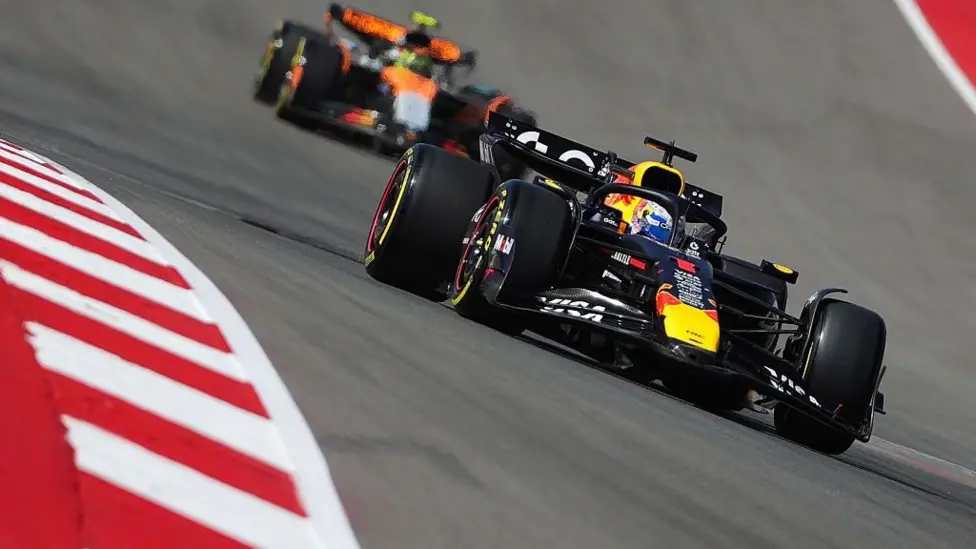

United States, Texas: Max Verstappen criticises Circuit of the Americas track conditions as Lando Norris backs concerns over bumps, spinal impacts and driver safety
Max Verstappen has described the bumps at the Circuit of the Americas in Austin, Texas, as unacceptable and out of control, renewing concerns about track safety ahead of this weekend’s United States Grand Prix. The Red Bull driver says previous repairs have failed to address the underlying problem.
The four-time world champion acknowledged his affection for the American circuit, praising its layout, facilities and location. However, he argued that repeated attempts to address individual sections had failed to resolve the broader deterioration, calling for a more comprehensive and expensive solution.
Verstappen believes the circuit requires substantial work rather than temporary repairs that merely cover up deeper problems. He said organisers would need to open up significant sections of the track to tackle the causes of the uneven surface, despite the time and financial commitments involved.
The Dutchman explained that the bumps were not simply the result of an ageing racing surface. In his assessment, movement beneath the ground was contributing to irregularities that could be difficult for drivers to anticipate, particularly when travelling at high speed or braking into corners.
Spinal Impacts Raise Concerns About Driver Safety
Verstappen highlighted the physical consequences of driving over the circuit’s uneven sections, revealing that some impacts had subjected his spine to vertical loads exceeding nine times the force of gravity. He contrasted these figures with the approximately five-to-six-g forces experienced in certain corners.
The Red Bull driver said these impacts were particularly unpleasant and increasingly concerning as drivers progressed through their careers. While physical stress is an established feature of elite motorsport, he argued that preventable jolts caused by poor track conditions should not simply be accepted as an unavoidable part of racing.
Verstappen also rejected the suggestion that the site’s underlying soil conditions could excuse the persistent problems. The circuit was constructed on former marshland, presenting challenges for maintaining a stable surface, but he argued that organisers should have accounted for those conditions when developing and reinforcing the track.
He maintained that understanding the ground beneath the circuit should have informed its construction and maintenance. In his view, the continued presence of severe bumps indicates that previous interventions have not sufficiently addressed the underlying causes, leaving drivers exposed to impacts that could potentially be reduced through more extensive engineering work.
New Formula 1 Regulations Could Make Bumps More Severe
Verstappen warned that the circuit’s existing problems could become more pronounced under the latest Formula 1 technical regulations. Although the cars used between 2022 and 2025 generally ran with lower ride heights, he believes the latest aerodynamic configuration can produce particularly harsh impacts in certain braking zones.
The regulation changes affect how the cars behave between straights and corners. With the front and rear wings adjusting between low-drag configurations and their cornering settings, the cars can move closer to the track surface during braking, increasing the risk of bottoming out over uneven sections.
Verstappen explained that braking was already a stressful moment for the cars around Austin because several sections contained substantial bumps. When the suspension and underside of a car encounter unexpected surface changes, the resulting impacts can be particularly uncomfortable for drivers and place additional demands on the vehicle.
He also pointed to the unpredictable nature of the circuit’s irregularities. Unlike ordinary wear on an ageing surface, movement in the underlying ground can create awkward changes in elevation, making it difficult for drivers to know precisely what to expect when approaching a corner or running slightly away from the racing line.
These conditions can be especially challenging because drivers have limited opportunities to assess every part of the track at speed. A small change in line may expose them to a bump they have not encountered during previous laps, increasing uncertainty at moments when precise control is essential.
Verstappen said medical checks on his spine had contributed to his concerns about the long-term consequences of repeated impacts. He acknowledged that physical discomfort can accompany professional racing but warned that accepting the current conditions could expose drivers to further damage, particularly after several seasons of physically demanding cars.
Lando Norris Backs Verstappen’s Assessment
McLaren driver Lando Norris, the reigning world champion according to the supplied report, also criticised the condition of the Austin circuit. He agreed that the surface fell short of expectations for modern Formula 1 racing and supported Verstappen’s argument that the problem deserved greater attention.
Norris noted that regulations governing the construction of new circuits set relatively tight tolerances for track surfaces. Although Austin is an established venue rather than a newly built circuit, he argued that the extent of its bumps remained a significant concern for drivers competing under modern Formula 1 conditions.
The McLaren driver described the physical discomfort associated with navigating the uneven surface, saying the impacts could cause drivers to strike their heads against their headrests. He added that the bumps were severe enough for him to take headache tablets before going out on track.
His comments highlighted the practical effects of the problem beyond lap times and vehicle performance. Drivers must manage the physical consequences of repeated impacts while maintaining concentration, controlling the car and preparing for the demands of a Grand Prix weekend.
Norris also acknowledged that drivers had raised the issue repeatedly but recognised the limits of what they could achieve through complaints alone. Nevertheless, he agreed with Verstappen’s assessment that the track conditions were problematic, adding support to calls for organisers to address the situation more effectively.
George Russell Calls for More Consistent Track Surfaces
Mercedes driver George Russell offered a somewhat different perspective, describing Austin’s bumps as part of the challenges associated with racing. While acknowledging that the surface was not ideal, he suggested that regular resurfacing could help Formula 1 venues maintain more consistent conditions.
Russell argued that circuits should potentially be repaved every few years to prevent deterioration from creating additional difficulties. He pointed to venues where asphalt was beginning to lift or break apart, suggesting that surface maintenance had become an increasingly important consideration across the sport’s calendar.
His comments highlighted the broader challenge facing circuit operators as Formula 1 cars continue to evolve. Tracks must accommodate high-performance machinery while maintaining surfaces that offer predictable grip and manageable physical demands, particularly in braking zones and corners where drivers experience substantial forces.
Although Russell did not dismiss the concerns raised by Verstappen and Norris, his response placed greater emphasis on routine maintenance and consistency. The differing perspectives illustrate the balance between accepting the physical demands of racing and ensuring that avoidable surface defects do not compromise drivers’ comfort or safety.
Circuit Maintenance Becomes a Wider Formula 1 Issue
The debate at Austin raises questions about how established Formula 1 venues should adapt to changing car designs and increasingly demanding performance characteristics. Circuits built decades ago may require substantial investment to maintain surfaces capable of accommodating modern machinery and the forces generated during competition.
Resurfacing can improve consistency, but addressing problems associated with unstable ground may require more extensive engineering. Verstappen’s comments suggest that treating isolated bumps individually will not necessarily resolve the underlying issue if movement beneath the surface continues to affect the circuit.
The financial and logistical challenges are considerable, particularly when extensive reconstruction requires sections of a track to be closed. Organisers must balance those demands against the importance of providing a predictable racing surface for drivers, teams and championship officials.
For the drivers, the immediate concern is the physical experience of tackling the circuit at speed. Severe impacts can affect comfort and concentration, while unexpected changes in the surface may complicate braking and car control. However, the precise risks and appropriate remedies require technical assessment rather than assumptions based solely on individual experiences.
Focus Turns to the United States Grand Prix
As teams prepare for the United States Grand Prix, attention will focus on how the circuit’s surface affects practice sessions, qualifying and the race itself. The drivers’ comments have placed track maintenance firmly in the spotlight before competitive running begins.
Verstappen’s criticism is particularly notable because it combines praise for the venue with a clear demand for improvement. He considers Austin one of Formula 1’s best layouts but believes the current condition of its surface undermines the experience and places unnecessary physical demands on those competing.
Norris’s support adds weight to the concerns, while Russell’s proposal for more frequent resurfacing offers a practical starting point for a broader discussion about circuit maintenance. Their comments differ in emphasis, but all three acknowledge that uneven surfaces remain a challenge for modern Formula 1 racing.
Ultimately, resolving Austin’s problems may require more than temporary repairs. Whether organisers pursue extensive reconstruction or other engineering measures, the central question is how to preserve the circuit’s character while providing a consistent surface suited to today’s cars. For Verstappen, the existing situation has gone beyond acceptable limits.
This article was created using automation technology and was thoroughly edited and fact-checked by one of our editorial staff members