



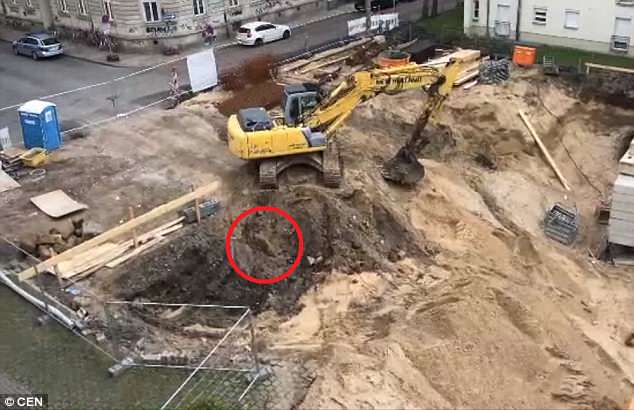

DRESDEN, GERMANY – A 250-kilogram World War II-era bomb was discovered on Wednesday during demolition work on the Carola Bridge in Dresden, prompting authorities to prepare for a large-scale evacuation in the city’s downtown area.
The bomb, of British origin, was found buried in the Elbe River while construction crews were working on the remains of the bridge, which partially collapsed last September.
According to the German newspaper Bild, the unexploded ordnance (UXO) is in a deteriorated state, making its disposal more complicated.
Authorities have determined that the bomb must be defused on-site due to the condition of its detonator, which can no longer be safely unscrewed.
Evacuation and Safety Measures
A safety perimeter of one kilometer around the site will be established during the bomb disposal operation, with significant parts of Dresden’s downtown expected to be evacuated.
Local authorities have urged residents and businesses in the affected area to prepare for temporary displacement and to follow official directives for their safety.
Emergency services, including bomb disposal experts and police units, have been mobilized to secure the site.
Dresden’s fire department has confirmed that specialized bomb disposal units are assessing the best approach to neutralize the device without triggering an uncontrolled detonation.
Historical Context and Recent Discoveries
Germany has frequently encountered unexploded bombs from World War II, as Allied forces heavily bombed cities such as Dresden during the conflict.
The city, known for its historic architecture, suffered devastating air raids in February 1945, leaving behind a legacy of undetonated explosives that are occasionally unearthed during construction projects.
The discovery of World War II ordnance is not uncommon in Germany, with bomb disposals occurring regularly in urban centers like Berlin, Munich, and Frankfurt.
However, the location of this particular bomb, in the heart of Dresden, presents a greater logistical challenge due to its proximity to key infrastructure and densely populated areas.
Impact on the City
The planned evacuation is expected to disrupt public transportation and local businesses, with authorities advising residents to stay informed through official announcements.
Temporary shelters will be made available for those unable to find alternative accommodations during the operation. Additionally, road closures and restricted access to the downtown area are anticipated as bomb disposal experts work to neutralize the threat.
Officials have not yet provided a precise timeline for the defusal, stating that safety remains the top priority. Authorities have urged patience and cooperation from the public as they work to mitigate the risk posed by the unexploded bomb.
Ongoing Developments
Dresden’s police department and emergency services continue to coordinate efforts to ensure a smooth evacuation process.
Further updates will be issued as the situation develops, with authorities stressing that all necessary precautions are being taken to protect residents and infrastructure.
As Germany continues to uncover remnants of its wartime past, the discovery in Dresden serves as a reminder of the enduring impact of World War II on modern-day urban development.
Authorities remain vigilant in addressing these historical hazards while prioritizing public safety.
This article was created using automation technology and was thoroughly edited and fact-checked by one of our editorial staff members