
- Advertisement -
Home Europe Norway Restores Bomb Shelter Mandate Citing Russian Security Concerns

Norway Restores Bomb Shelter Mandate Citing Russian Security Concerns

The government plans to incorporate two types of shelters: those designed to protect against chemical and radioactive weapons, and others for conventional weapon attacks. Existing structures, such as subway stations and parking garages, may be repurposed to serve as conventional shelters

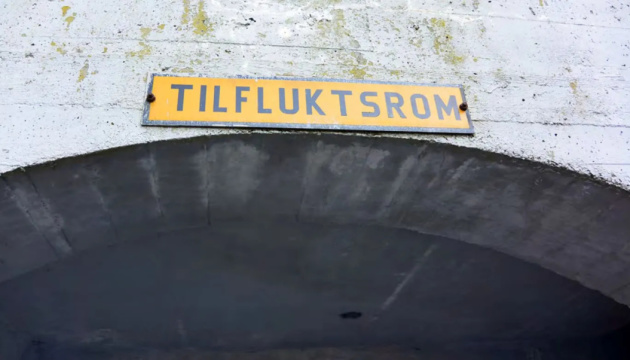
The Norwegian government has announced plans to reintroduce mandatory bomb shelters in new buildings, a requirement that was abandoned in 1998.

This move comes in response to escalating global security concerns, particularly due to Russia’s ongoing war against Ukraine and its aggressive posture toward neighboring countries.

“There’s more uncertainty around us. We must take care of the civilian population in case of a ‘worst-case scenario’ with war or armed attack,” said Norwegian Minister of Justice and Public Security Emilie Enger Mehl in an interview with public broadcaster NRK. “In that case, shelters are one of the protective measures we need,” she added.

Under the new proposal, bomb shelters will be required in all major residential complexes larger than 1,000 square meters.

The government plans to incorporate two types of shelters: those designed to protect against chemical and radioactive weapons, and others for conventional weapon attacks.

Existing structures, such as subway stations and parking garages, may be repurposed to serve as conventional shelters.

This renewed focus on civil defense is part of a broader preparedness report comprising over 100 recommendations. The report aims to enhance Norway’s resilience to potential threats, including war, extreme weather events, and crises like pandemics.

The decision reflects Norway’s strategic concerns about its neighbor, Russia, with whom it shares a border in the Arctic Circle.

The report highlights that “Russia’s willingness to use military force to achieve political goals shows that Norway will likely have to deal with an unpredictable and risk-averse neighbor for a long time to come.”

Strengthening Civil and National Security

The reintroduction of bomb shelters is part of a broader trend of bolstering national security measures in the region. Norway is also considering constructing a fence along its border with Russia to mitigate potential threats.4

This initiative aligns with Sweden and Norway’s decision to slow their transition to cashless societies, citing concerns that fully digital payment systems could leave them vulnerable to Russian cyberattacks.

While Norway is not directly involved in the war in Ukraine, the conflict has amplified security concerns across Europe. The proximity to Russia and the unpredictable nature of its actions underscore the need for proactive measures to protect the civilian population and critical infrastructure.

Historical Context

Before the regulation was scrapped in 1998, Norwegian law required all significant residential developments to include bomb shelters.

This mandate was part of Cold War-era civil defense policies aimed at protecting citizens from potential attacks. With the return of geopolitical tensions, Norway sees value in revisiting this long-abandoned practice.

The planned shelters will provide protection against modern threats, including chemical and radioactive weapons, marking an evolution in civil defense infrastructure.

The government’s initiative reflects a broader effort to modernize Norway’s preparedness in light of contemporary risks.

Preparing for the Unpredictable

As nations across Europe reassess their defense strategies in response to Russia’s aggression, Norway’s proactive stance underscores the importance of preparedness.

By investing in bomb shelters and other security measures, the country aims to safeguard its citizens and infrastructure against an increasingly volatile geopolitical landscape.4


Stay Connected

700FansLike
1,000FollowersFollow
34SubscribersSubscribe

Must Read

Swiss Glaciers Lose More Than 5% of Ice After Extreme Summer Heatwaves

More than 5% of Switzerland’s remaining glacier ice disappeared during the past year, according to researchers, as unusually intense heatwaves stripped snow from Alpine peaks and accelerated melting at elevations where glaciers were previously expected to remain protected

Verstappen Leads Malaysian Grand Prix Practice as Formula 1 Returns to Sepang

Max Verstappen topped the opening Malaysian Grand Prix practice session at Sepang, beating George Russell by 0.383 seconds as Formula 1 made its long-awaited return to the circuit following changes to the 2026 calendar

Russian Strikes Force Ukraine Steel Giant to Shut Down, Deepening Economic Strain

Zaporizhstal, a major employer in Zaporizhzhia, has shut indefinitely after four Russian attack waves destroyed equipment and killed workers, highlighting mounting economic damage across Ukraine’s steel industry, threatening livelihoods and intensifying uncertainty for industrial communities already weakened by war

France Moves to End One-In, One-Out Migration Deal With UK

France is set to end its one-in, one-out migration agreement with Britain after Paris and London struggled to sustain cooperation over irregular Channel crossings and asylum arrangements under the pilot scheme

Related News

Swiss Glaciers Lose More Than 5% of Ice After Extreme Summer Heatwaves

More than 5% of Switzerland’s remaining glacier ice disappeared during the past year, according to researchers, as unusually intense heatwaves stripped snow from Alpine peaks and accelerated melting at elevations where glaciers were previously expected to remain protected

Verstappen Leads Malaysian Grand Prix Practice as Formula 1 Returns to Sepang

Max Verstappen topped the opening Malaysian Grand Prix practice session at Sepang, beating George Russell by 0.383 seconds as Formula 1 made its long-awaited return to the circuit following changes to the 2026 calendar

Russian Strikes Force Ukraine Steel Giant to Shut Down, Deepening Economic Strain

Zaporizhstal, a major employer in Zaporizhzhia, has shut indefinitely after four Russian attack waves destroyed equipment and killed workers, highlighting mounting economic damage across Ukraine’s steel industry, threatening livelihoods and intensifying uncertainty for industrial communities already weakened by war

France Moves to End One-In, One-Out Migration Deal With UK

France is set to end its one-in, one-out migration agreement with Britain after Paris and London struggled to sustain cooperation over irregular Channel crossings and asylum arrangements under the pilot scheme

Esteban Ocon Fights to Keep Formula 1 Career Alive After Haas Exit

Esteban Ocon is facing a difficult fight to remain in Formula 1 after Haas announced his departure, although the French driver remains determined to continue racing and prove he deserves another opportunity on the grid next season
Ankara Escort