



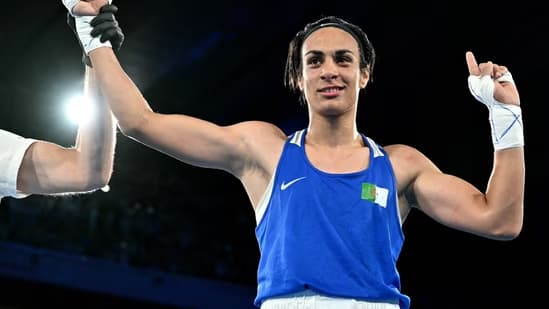

Imane Khelif, the Algerian boxer who recently clinched gold in women’s boxing at the 2024 Summer Olympics in Paris, has found her gender identification thrust into the spotlight due to a leaked medical report.
The document, obtained by French journalist Djaffar Ait Aoudia, raises significant questions about Khelif’s biological characteristics, revealing that she has internal testicles and XY chromosomes, a condition associated with 5-alpha reductase insufficiency.
The report, drafted by experts from the Kremlin-Bicêtre Hospital in Paris and the Mohamed Lamine Debaghine Hospital in Algiers in June 2023, outlines Khelif’s biological traits, including the existence of internal testicles and the absence of a uterus.
It further details that an MRI scan has shown the presence of a micropenis, conditions that have sparked a heated debate about gender identity and fairness in women’s sports.
This controversy is not unprecedented; Khelif’s unique biological attributes had been previously acknowledged.
In 2023, the International Boxing Association (IBA) banned her from competing in the World Championship Gold Medal fight in New Delhi, citing concerns over her eligibility in women’s events.
This ruling came after Khelif’s XY chromosome status was made known to the association, raising alarms about the integrity of female competition.
The latest revelations have intensified discussions about the policies surrounding gender verification in sports, particularly in light of the growing inclusivity within athletic competitions.
Many advocates argue for a re-evaluation of existing regulations that govern female participation, advocating for a more nuanced understanding of gender beyond binary definitions. However, critics assert that biological factors should be considered to ensure fair competition.
Khelif’s rise to prominence in boxing, marked by her Olympic gold medal win, has also become a focal point for discussions about identity and representation in sports.
While some view her as a symbol of resilience and success, others question the implications of her biological attributes on competitive fairness.
The leak of the medical report has prompted responses from various stakeholders, including athletes, sports officials, and medical experts.
Supporters of Khelif have rallied around her, emphasizing the importance of focusing on her achievements rather than her biology.
They argue that her hard work and dedication should be recognized and celebrated, regardless of the controversy surrounding her gender identity.
Conversely, some sports authorities are calling for more stringent policies to address issues related to gender and competition.
This incident has reignited calls for clarity in the rules governing athletes with differences in sexual development (DSDs), prompting international sports federations to consider reforms that balance inclusivity with competitive equity.
As the dust settles from this controversy, the future of Imane Khelif’s boxing career remains uncertain. With her Olympic triumph overshadowed by the leaked report, the debate surrounding her eligibility in women’s boxing is likely to continue.
This case has not only put a spotlight on Khelif but has also opened up broader discussions about gender, identity, and the evolving landscape of competitive sports in the 21st century.