



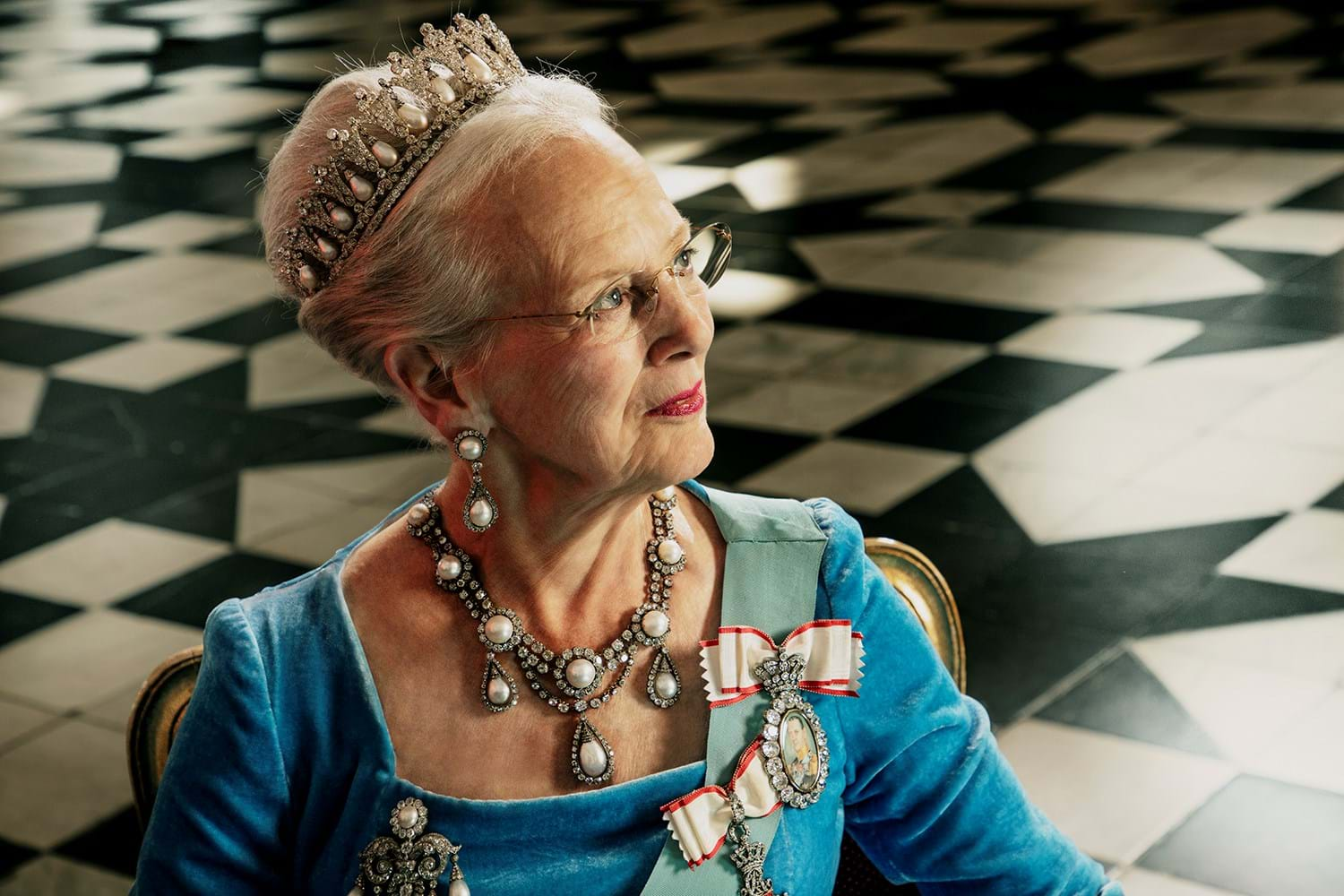

Denmark’s Queen Margrethe II has revealed her decision to abdicate the throne in a New Year’s TV address.
The 83-year-old monarch, the world’s only reigning queen and Europe’s longest-serving current monarch, will step down on 14 January, precisely 52 years since she ascended to the throne.
The surprise announcement came as Queen Margrethe reflected on her future following back surgery earlier in 2023. In her televised address, she explained, “The surgery naturally gave rise to thinking about the future – whether the time had come to leave the responsibility to the next generation.”
She disclosed her choice to relinquish the throne, expressing gratitude to the Danish public for their unwavering support throughout her reign.
Prime Minister Mette Frederiksen extended her heartfelt thanks to Queen Margrethe for her dedicated service. “On behalf of the entire population, I would like to extend a heartfelt thank you to Her Majesty The Queen for her lifelong dedication and tireless efforts for the Kingdom,” the Prime Minister stated.
She acknowledged the historic nature of the decision, noting that the duty and position of regent have been passed down for over a millennium.
“Many of us have never known another regent. Queen Margrethe is the epitome of Denmark and throughout the years has put words and feelings into who we are as a people and as a nation,” the Prime Minister’s statement continued, reflecting the sentiment of a nation facing an imminent change in leadership.
Unlike British royal tradition, where a formal crowning ceremony marks the ascension of a new monarch, there will be no such elaborate event for Crown Prince Frederik.
At 55, he will succeed his mother as King of Denmark and head of state, inheriting the constitutional monarchy’s responsibilities that extend to Greenland and the Faroe Islands.
The decision to bypass a formal coronation aligns with the understated style that has characterized Queen Margrethe’s reign.
Instead, the announcement of Crown Prince Frederik’s accession will emanate from Amalienborg Castle in Copenhagen on the designated day. This departure from tradition is emblematic of Denmark’s modern and pragmatic approach to its monarchy.
Crown Prince Frederik, a respected figure in Denmark, is poised to assume a pivotal role in the nation’s history.
As he steps into the role of king, he inherits the responsibilities of a constitutional monarch and the symbolic significance attached to the monarchy in shaping Denmark’s identity.
Queen Margrethe’s reign has been marked by an enduring commitment to her role and a profound connection with the Danish people.
Throughout the years, she has weathered numerous challenges and celebrated triumphs, contributing to Denmark’s contemporary history narrative.
As her son prepares to ascend the throne, the nation anticipates a seamless transition rooted in continuity and respect for tradition.
Denmark, known for its progressive and egalitarian values, will likely witness a smooth power transfer. With his years of preparation for this moment, Crown Prince Frederik brings a wealth of experience and a deep understanding of the expectations placed upon him.
The legacy of Queen Margrethe II will endure, shaping Denmark’s collective memory and identity. Her decision to step aside at a time of her choosing reflects a thoughtful consideration of the nation’s future.
As Denmark prepares for a new era under King Frederik, the Danish people are poised to embrace the continuity and stability that the monarchy represents, cherishing the values embodied by their departing queen and embracing the promise of a future guided by the next generation.
This article was created using automation technology and was thoroughly edited and fact-checked by one of our editorial staff members